Reviewed in order: TP-Link Deco 7 Pro BE63 Tri-Band WiFi 7 BE10000 Whole Home Mesh System (3-Pack) · NETGEAR Orbi 770 Series Tri-Band WiFi 7 Mesh Network System RBE773 (Router + 2 Satellites) · ASUS ZenWiFi BQ16 Pro Quad-Band WiFi 7 Mesh Router (2-Pack) · TP-Link Deco XE75 Pro AXE5400 Tri-Band WiFi 6E Mesh System (3-Pack) · Amazon eero 6+ mesh wifi system (3-Pack) · Google Nest Wifi Pro Wi-Fi 6E Mesh Router (3-Pack, Snow)
Best Wi-Fi Mesh Systems in 2026: Coverage, Setup, and Hidden Costs
The right mesh kit is not just the fastest box. Check the ports, backhaul, paid controls, older-node compatibility, and 6 GHz placement traps before you commit.
A buyer-focused ranking of TP-Link Deco, NETGEAR Orbi, ASUS ZenWiFi, eero, and Google Nest mesh systems by coverage, setup, ports, firmware trust, subscription limits, smart-home fit, and current new-Amazon buying details.
00 · quick verdict
TP-Link Deco BE63 is the best overall pick for most mesh shoppers because it pairs Wi-Fi 7 with unusually useful 2.5GbE ports on every node. NETGEAR Orbi 770 is the cleaner premium large-home pick, ASUS ZenWiFi BQ16 Pro is the power-user hardware play, TP-Link Deco XE75 Pro is the value pick, eero 6+ is the simple setup pick, and Google Nest Wifi Pro makes the most sense for Google Home households that accept its limits.
Current winner
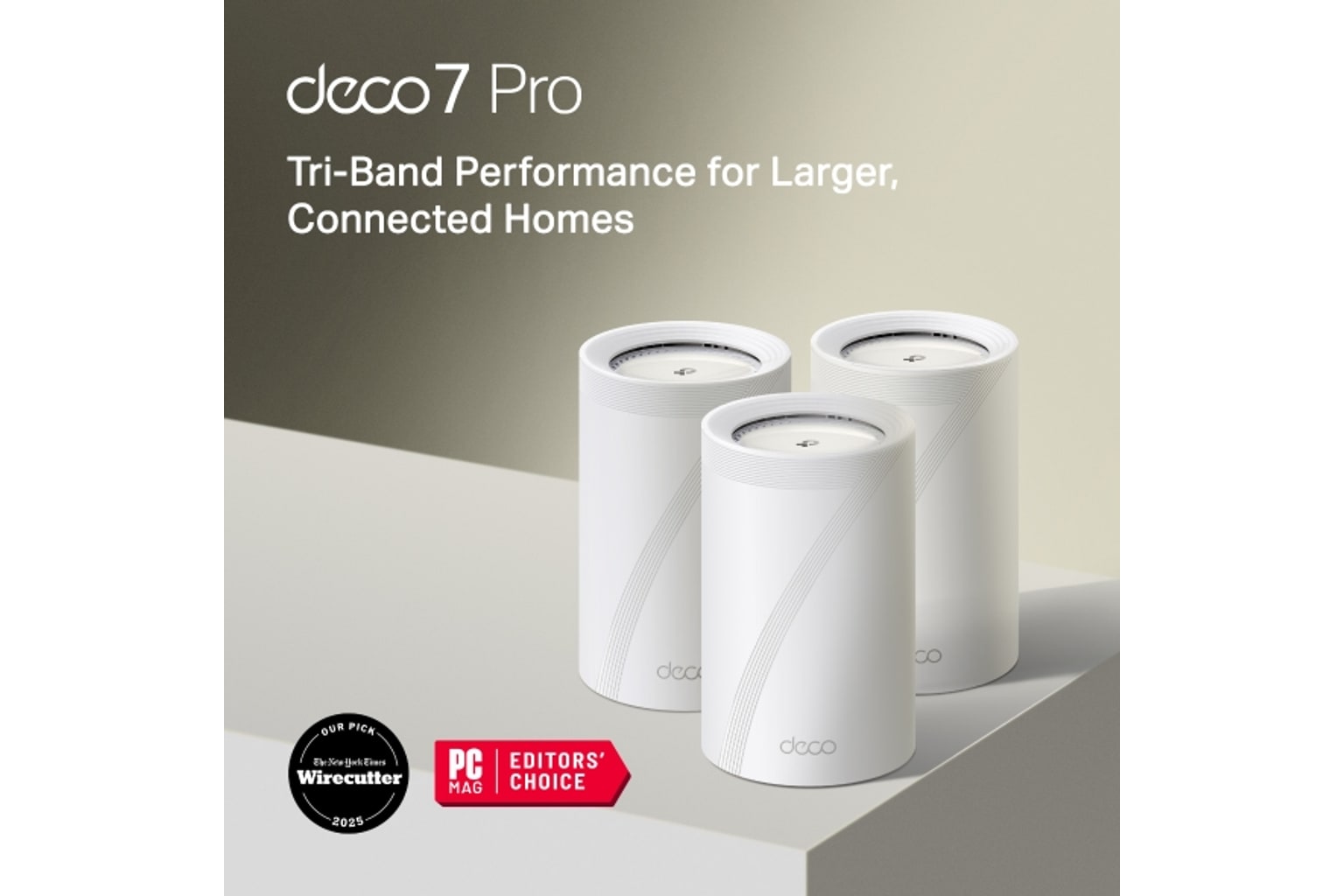
TP-Link Deco 7 Pro BE63 Tri-Band WiFi 7 BE10000 Whole Home Mesh System (3-Pack)
It pairs Wi-Fi 7 with four 2.5GbE ports per node, wired or wireless backhaul, recent firmware activity, and a current price that is easier to justify than Orbi or ASUS. The tradeoffs are TP-Link’s paid HomeShield boundary and the usual 6 GHz placement/client caveat.
MSRP
$799.99
Amazon
$449.99
at writing · 2026-05-06
01 · best picks
The short list worth starting with.
#1 · Best overall
TP-Link Deco 7 Pro BE63 Tri-Band WiFi 7 BE10000 Whole Home Mesh System (3-Pack)
MSRP
$799.99
Amazon
$449.99
at writing · 2026-05-06
It pairs Wi-Fi 7 with four 2.5GbE ports per node, wired or wireless backhaul, recent firmware activity, and a current price that is easier to justify than Orbi or ASUS. The tradeoffs are TP-Link’s paid HomeShield boundary and the usual 6 GHz placement/client caveat.
#2 · Best large-home pick
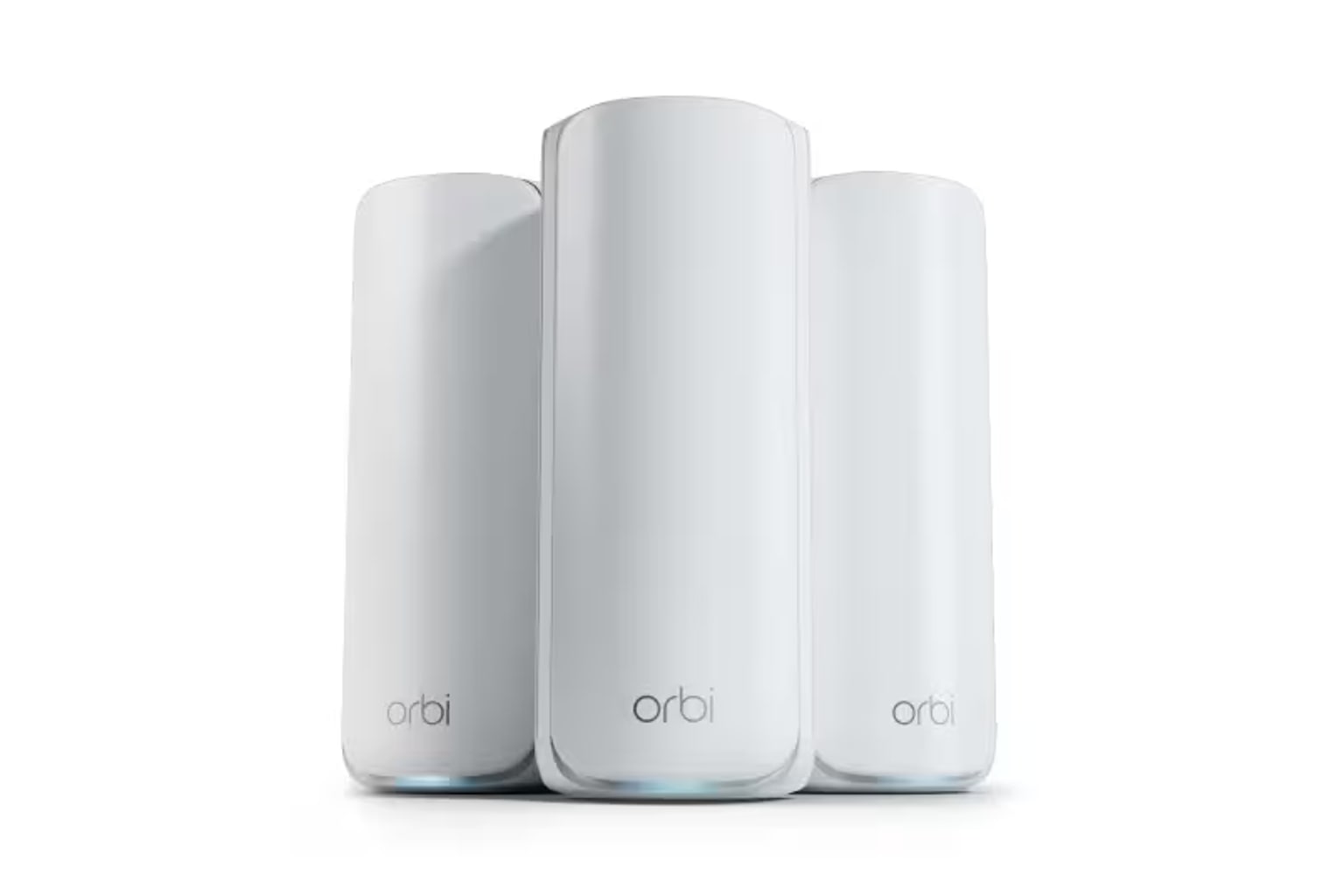
NETGEAR Orbi 770 Series Tri-Band WiFi 7 Mesh Network System RBE773 (Router + 2 Satellites)
MSRP
$699.99
Amazon
$629.99
at writing · 2026-05-06
It is the polished premium pick for buyers who want broad coverage and app-led setup more than maximum Ethernet density. The paid Armor/parental-control path and lack of 10G/USB keep it behind Deco for many homes.
#3 · Best power-user pick
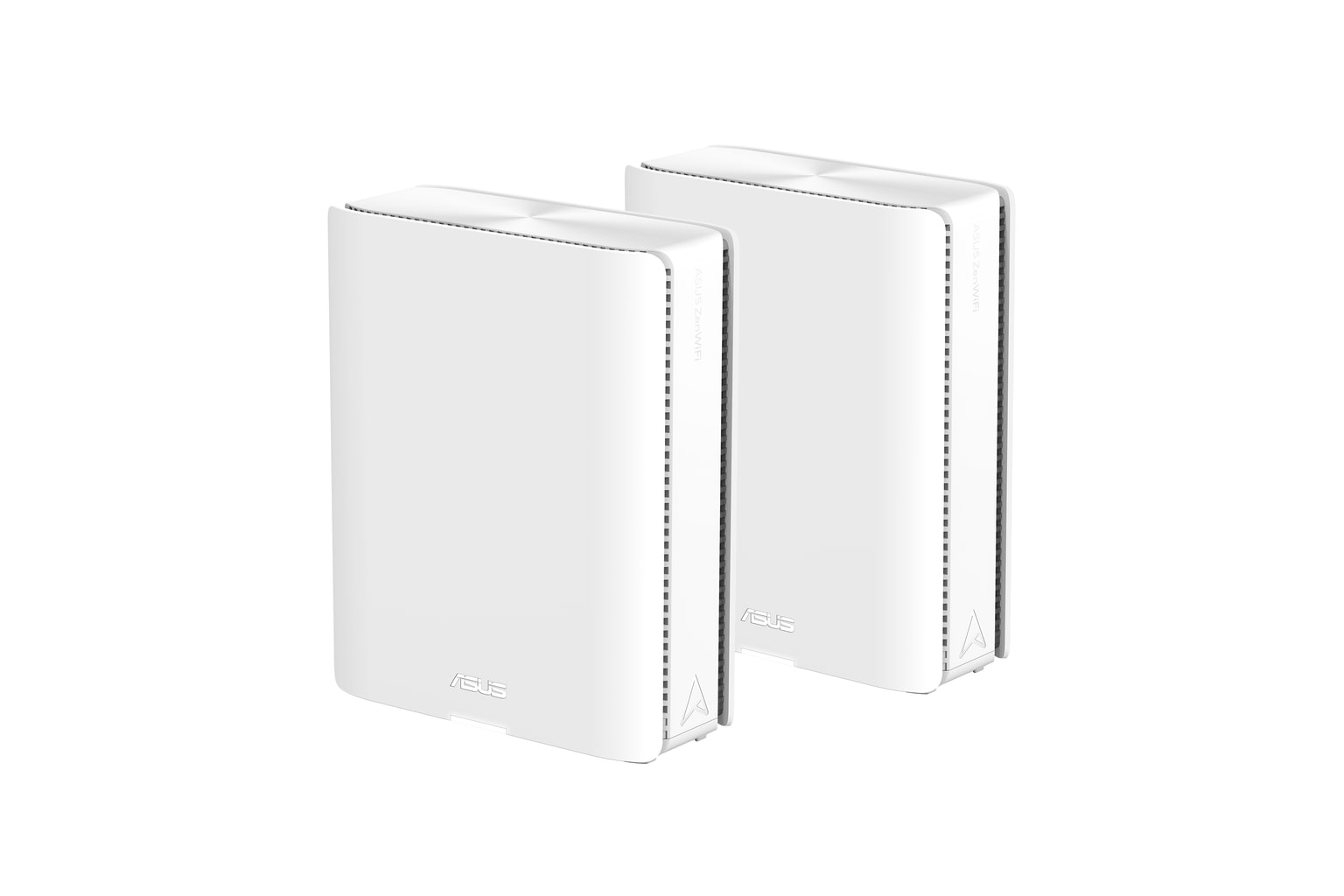
ASUS ZenWiFi BQ16 Pro Quad-Band WiFi 7 Mesh Router (2-Pack)
MSRP
$1,099.99
Amazon
$929.99
at writing · 2026-05-06
It has the strongest hardware and control surface here, especially dual 10G ports and subscription-free AiProtection, but the price, two-node pack, and ASUS complexity make it a fit-specific recommendation.
02 · Before You Buy
Mesh Wi-Fi looks like a simple fix until the box is open and the satellites have to survive your actual house. Every kit promises whole-home coverage, smooth video calls, and an app that “just works.” The expensive surprises are quieter: a satellite stuck behind the wrong wall, a gigabit port choking a multi-gig plan, parental controls that turn paid after the trial, an older node that cannot join the new mesh, or a shiny Wi-Fi 7 system mostly serving Wi-Fi 5 and Wi-Fi 6 devices.
That is why this ranking is not just a speed-chart contest. TP-Link Deco BE63 wins because it turns Wi-Fi 7 into practical household flexibility: lots of 2.5GbE ports, strong reviewed throughput, and a current price that is easier to swallow than Orbi or ASUS. Orbi 770 is the polished large-home pick. ASUS BQ16 Pro is the power-user monster. Deco XE75 Pro is the value play. Eero 6+ is the calm Wi-Fi 6 baseline. Nest Wifi Pro is the Google Home/Matter fit with real limits.
Before you buy, map the boring stuff first: square footage, wall materials, Ethernet runs, ISP speed, smart-home devices, and whether you need parental controls without another bill. Then use the product links to check today’s price, seller, pack size, return terms, and exact ASIN. If this keeps the wrong mesh kit out of your cart, those links also help support KB4UB.
03 · score comparison
Compare the grades before you chase details.
| Grade | #1TP-Link Deco 7 Pro BE63 Tri-Band WiFi 7 BE10000 Whole Home Mesh System (3-Pack) | #2NETGEAR Orbi 770 Series Tri-Band WiFi 7 Mesh Network System RBE773 (Router + 2 Satellites) | #3ASUS ZenWiFi BQ16 Pro Quad-Band WiFi 7 Mesh Router (2-Pack) | #4TP-Link Deco XE75 Pro AXE5400 Tri-Band WiFi 6E Mesh System (3-Pack) | #5Amazon eero 6+ mesh wifi system (3-Pack) | #6Google Nest Wifi Pro Wi-Fi 6E Mesh Router (3-Pack, Snow) |
|---|---|---|---|---|---|---|
| Overall UX | 8/10 | 8/10 | 8/10 | 8/10 | 7/10 | 7/10 |
| Coverage & roaming reliability | 8/10 | 9/10 | 8/10 | 8/10 | 7/10 | 7/10 |
| Setup & app clarity | 8/10 | 9/10 | 7/10 | 8/10 | 9/10 | 8/10 |
| Backhaul & port flexibility | 9/10 | 8/10 | 9/10 | 8/10 | 6/10 | 6/10 |
| Firmware stability & support | 8/10 | 8/10 | 7/10 | 8/10 | 8/10 | 7/10 |
| Controls & subscription posture | 7/10 | 6/10 | 9/10 | 7/10 | 6/10 | 6/10 |
| Performance headroom | 9/10 | 9/10 | 8/10 | 8/10 | 7/10 | 7/10 |
| MSRP | $799.99 | $699.99 | $1,099.99 | $399.99 | — | $399.99 |
05 · product-by-product breakdown
Why each pick landed where it did.
#1 · Best overall
TP-Link Deco 7 Pro BE63 Tri-Band WiFi 7 BE10000 Whole Home Mesh System (3-Pack)
MSRP
$799.99
Amazon
$449.99
at writing · 2026-05-06
TP-Link has become the value-heavy mesh brand many buyers cross-shop against Orbi and eero, and the Deco BE63 is its mainstream Wi-Fi 7 answer. The promise is not subtle: tri-band BE10000 Wi-Fi, 6 GHz, Multi-Link Operation, wired/wireless backhaul, USB, and four 2.5GbE ports on every node. It ranks first because those specs solve boring real-house problems: a wired office, a wired satellite, a multi-gig modem, and fast newer clients without stepping into flagship pricing.
liked
The praise centers on speed plus ports. PCMag wrote that the BE63 “performed wonderfully” and highlighted “four multi-gig wired networking ports per node” plus rare USB connectivity. TP-Link’s app setup also shows up as guided rather than expert-only, and the support trail includes recent firmware notes for reliability and roaming.
complaints
The catches are familiar for modern mesh. Advanced parental controls, deeper security, and antivirus-style protection sit behind HomeShield paid tiers or trials. Wi-Fi 7 benefits also depend on compatible clients and careful 6 GHz placement, and the official coverage trail was less clean than the Amazon/listing claim, so do not buy by square-foot number alone.
best for
Multi-gig homes, wired-backhaul layouts, people with desktop/console/NAS wiring, and buyers who want Wi-Fi 7 without Orbi or ASUS money.
skip if
Not for buyers who want 10G ports, subscription-free advanced security, or a no-account/no-app router experience.
Biggest issue
Check the exact BE63/Deco 7 Pro 3-pack ASIN, decide whether the paid HomeShield features matter, and place 6 GHz satellites carefully.
Deco BE63 is the best default because it is fast where reviewers measured it and generous where mesh kits often cheap out: Ethernet ports.
#2 · Best large-home pick
NETGEAR Orbi 770 Series Tri-Band WiFi 7 Mesh Network System RBE773 (Router + 2 Satellites)
MSRP
$699.99
Amazon
$629.99
at writing · 2026-05-06
NETGEAR’s Orbi line is the familiar premium mesh option for people who want a big-home Wi-Fi fix without building a prosumer network. The 770 Series brings that pitch into Wi-Fi 7 with a router-plus-two-satellite RBE773 kit, tri-band BE11000-class radios, 2.5GbE ports, and an app built around setup, device lists, speed tests, and security tiles. It ranks second because the coverage and app story are strong, but the paid-software and port tradeoffs are real.
liked
Coverage was the strongest repeat theme. PCMag described Orbi 770 as easy to install and noted strong signal testing, while other review evidence made it feel like a less painful path into Wi-Fi 7 for big homes. The LEDs also go dark after setup, which sounds tiny until a satellite lives in a bedroom.
complaints
The subscription line is hard to ignore. PCMag says that after trials, parental controls cost $7.99/month and Armor jumps to $99.99/year after the first year. It also lacks 10GbE ports, USB, and Deco-level Ethernet density, so the premium is mainly buying coverage polish, not every possible port.
best for
Large homes, many-device families, and buyers who want a polished app-guided Wi-Fi 7 kit more than deep configuration.
skip if
Not for shoppers who want the most ports per dollar, subscription-free controls, or 10G wired networking.
Biggest issue
After the first setup glow, decide whether you will keep paying for Armor/parental controls and whether the 2.5G port layout is enough.
Orbi 770 is the premium mainstream pick: expensive, but easier to recommend for large homes than most half-step Wi-Fi 7 kits.
#3 · Best power-user pick
ASUS ZenWiFi BQ16 Pro Quad-Band WiFi 7 Mesh Router (2-Pack)
MSRP
$1,099.99
Amazon
$929.99
at writing · 2026-05-06
ASUS is the router brand for people who would rather have more knobs than fewer, and the ZenWiFi BQ16 Pro is the monster of this group. It is a two-node quad-band Wi-Fi 7 system with dual 6 GHz radios, two 10G Ethernet ports per node, AiMesh, VPN features, Smart Home Master networks, USB, and subscription-free AiProtection. It ranks third because its ceiling is the highest here, but its best buyer is narrower than TP-Link’s or NETGEAR’s.
liked
The hardware is the draw. PCMag called it “one of the best-performing Wi-Fi 7 mesh systems” it had tested and highlighted dual 10Gbps ports, dual 6 GHz radios, USB, and free network security/parental-control software. That matters when TP-Link, NETGEAR, and eero all put some advanced protections behind paid tiers.
complaints
ASUS asks more of the buyer. One review trail pointed to settings that needed adjustment before performance made sense, and community/forum signals look more firmware-watchful than plug-and-forget calm. AP mode can also affect AiProtection availability, which matters if this will sit behind another router.
best for
Multi-gig fiber, 10G switches or NAS, wired-backhaul homes, VPN-heavy households, and buyers who hate router subscriptions.
skip if
Not for a buyer who wants the simplest phone-app setup, the lowest price, or three smaller nodes for tricky placement.
Biggest issue
Buy it for 10G and controls, not because a two-pack with a huge spec sheet automatically fits every house better.
BQ16 Pro is the enthusiast pick: thrilling if you will use the hardware, wasteful and potentially fussy if you will not.
#4 · Best value
TP-Link Deco XE75 Pro AXE5400 Tri-Band WiFi 6E Mesh System (3-Pack)
MSRP
$399.99
Amazon
$249.98
at writing · 2026-05-06
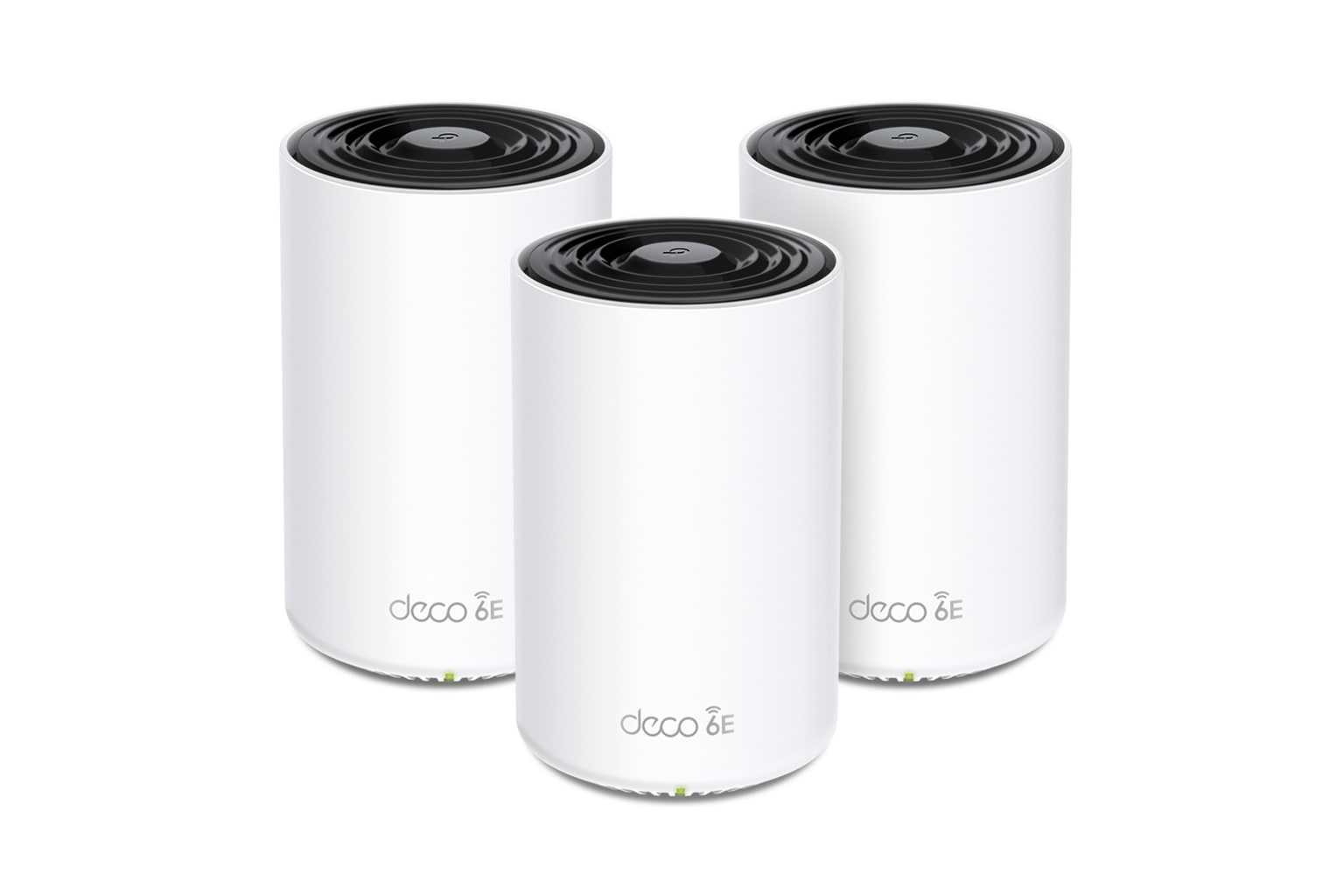
The Deco XE75 Pro is TP-Link’s older-generation value counterpunch: a three-node Wi-Fi 6E kit that keeps the easy Deco app but adds a 6 GHz band and one 2.5GbE port per unit. It is not trying to beat Wi-Fi 7 on paper. It is trying to give large-home buyers a cleaner backhaul/client lane and a multi-gig entry point without charging BE-class money.
liked
The value story is strong. Review evidence praised easy setup, strong Wi-Fi 6E throughput, 6 GHz backhaul flexibility, and the useful 2.5GbE port that separates the Pro from the non-Pro XE75. PCMag called the system “a breeze to install and manage,” and TP-Link’s support page showed firmware activity into 2026.
complaints
The Pro name can make it sound more limitless than it is. One 2.5G port per node is useful but not enough for every multi-gig WAN/LAN/backhaul combination. 6 GHz is also shorter-range through walls, and HomeShield’s better controls still have paid tiers.
best for
Budget-conscious large homes, 1–2.5G internet users, and people who can place nodes carefully or use Ethernet backhaul.
skip if
Not for Wi-Fi 7 client buyers, 5G/10G internet, heavy wired-device setups, or homes where 6 GHz has to cross dense floors and walls.
Biggest issue
Make sure it is the XE75 Pro, not the non-Pro, and do not assume the sale price includes every HomeShield feature forever.
XE75 Pro is the value pick because it gives the most useful midrange upgrades for the least current-new money.
#5 · Best simple setup
Amazon eero 6+ mesh wifi system (3-Pack)
MSRP
—
Amazon
$299.99
at writing · 2026-05-06
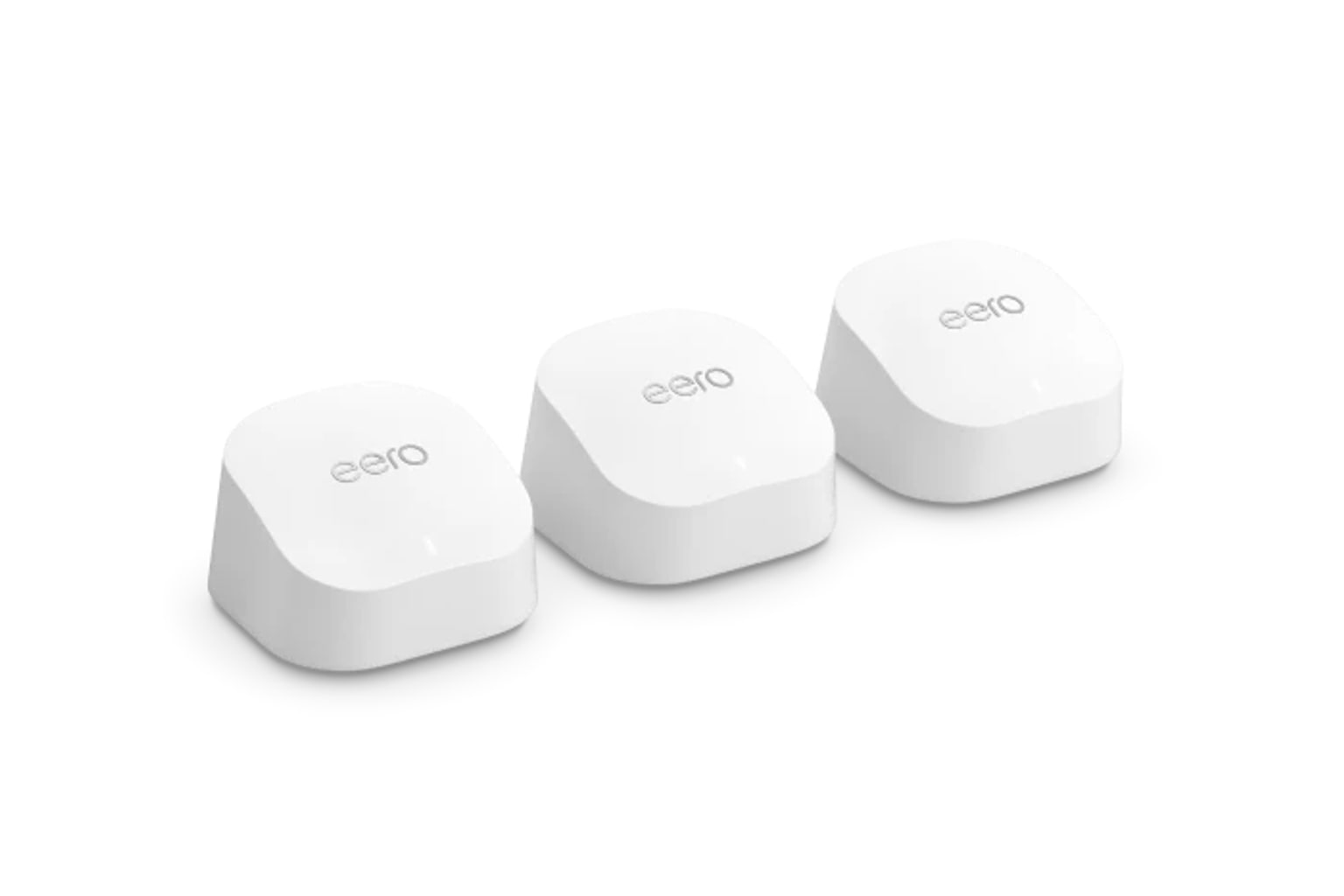
Amazon’s eero 6+ is the simple baseline in this group: three small Wi-Fi 6 nodes, a strong app reputation, gigabit-class claims, smart-home hub features, and very little interest in exposing router-admin complexity. It is the system for people who want the network to stop being a weekend project. It ranks below the newer kits because its ceiling is modest now, but its day-one calm still matters.
liked
Setup and consistency are the reasons to buy it. PCMag called eero 6+ “a snap to install” and praised its test performance for a Wi-Fi 6 mesh system. The official page also emphasizes 75+ devices, 4,500 sq ft coverage, Thread/Zigbee hub features, and backward compatibility with earlier eero hardware.
complaints
The limits are not hidden if you look closely: no 6 GHz, no Wi-Fi 7, no 2.5GbE, and only two gigabit ports per node. CNET also flagged privacy/data-collection controls, and eero Plus puts advanced security/privacy and parental controls behind $9.99/month or $99.99/year after trials.
best for
Apartments, smaller houses, Amazon/eero households, and buyers who value a simple app more than futureproof networking hardware.
skip if
Not for multi-gig internet, NAS-heavy homes, advanced router controls, or buyers who want to avoid paid security/parental features.
Biggest issue
It is easy to live with, but check whether your next ISP plan or privacy expectations already outgrew it.
Eero 6+ is still the calm pick, just no longer the spec pick.
#6 · Best Google Home fit
Google Nest Wifi Pro Wi-Fi 6E Mesh Router (3-Pack, Snow)
MSRP
$399.99
Amazon
$349.95
at writing · 2026-05-06

Google Nest Wifi Pro is the friendly-looking Wi-Fi 6E option for Google Home households. It uses the Google Home app, supports Matter and Thread, adds a 6 GHz band, and turns each node into an interchangeable router with two Ethernet ports. The pitch is clean smart-home Wi-Fi rather than networking horsepower. It ranks last here because the ownership tradeoffs are sharper than the design suggests.
liked
The setup is simple, the hardware is attractive, and the smart-home angle is real. Official specs include WPA3, automatic security updates, Matter, Thread border-router support, and up to 6,600 sq ft from the three-pack. PCMag called it “tastefully designed and easy to install,” which matches the product’s whole personality.
complaints
Gigabit Ethernet is the hard ceiling, settings are limited, and older Google Wifi/Nest Wifi nodes cannot join a Nest Wifi Pro mesh. Review evidence also noted that 6 GHz speed benefits depend on compatible clients and range, while Google’s higher-power 6E feature can involve phone-location collection for regulatory compliance.
best for
Google Home users who want Wi-Fi 6E, Matter/Thread support, attractive nodes, and simple household controls.
skip if
Not for multi-gig internet, advanced network tuning, older Google mesh upgrades, or buyers who want the fastest measured Wi-Fi 6E/7 performance.
Biggest issue
The design feels premium, but the ports and settings are basic; do not buy it as a power-user router.
Nest Wifi Pro is good when Google Home simplicity is the point. It is weaker when the point is raw networking headroom.
05 · How This Review Works
This guide compares six current Wi-Fi mesh systems that were available new on Amazon at writing using official specs and support pages, current Amazon listing checks, formal reviews, community reports, and 312 saved source passages. We did not bench-test these kits ourselves. The useful work here is pulling out the ownership details that get flattened when every box says “whole home” and every listing leads with the biggest speed number.
The score grid uses six measures: coverage and roaming reliability, setup and app clarity, backhaul and port flexibility, firmware and support trust, controls/subscription/privacy posture, and real-world performance headroom. Price sits separately because a sale can make a good fit better, but it should not hide a subscription, a gigabit port limit, a 6 GHz placement problem, or a pack-size mismatch.
Repeated patterns matter more than one dramatic complaint. A single gripe becomes a note. A recurring subscription boundary, port limitation, migration gotcha, firmware worry, or setup win can move the ranking.
06 · Best Fit for You
Choose TP-Link Deco BE63 if you want the best all-around Wi-Fi 7 mesh kit here: multi-gig internet support, wired backhaul flexibility, and enough 2.5GbE ports for an office, console, NAS, or media cabinet.
Choose NETGEAR Orbi 770 if your priority is broad large-home coverage and a polished app, and you are comfortable with NETGEAR’s Armor/parental-control upsells after the trials.
Choose ASUS ZenWiFi BQ16 Pro if you will actually use 10G ports, VPN features, network segmentation, wired backhaul, and subscription-free security controls.
Choose TP-Link Deco XE75 Pro if you want the value move: Wi-Fi 6E, a 6 GHz lane, one 2.5GbE port per node, and a much lower current price than the Wi-Fi 7 kits.
Choose Amazon eero 6+ if you want a low-drama Wi-Fi 6 setup for a smaller or simpler home and can live without 6 GHz, 2.5GbE, or deep router controls.
Choose Google Nest Wifi Pro if Google Home, Matter, Thread, and attractive nodes matter more than advanced settings, old Nest compatibility, or multi-gig hardware.
07 · What to Do Next
Start with the part of your home marketing copy cannot see. If you have Ethernet in the walls, Deco BE63, Orbi 770, Deco XE75 Pro, and ASUS all become easier to place well. If everything will be wireless, 6 GHz backhaul can be fast but less forgiving through dense walls and floors. If your internet plan is already above 1 Gbps, eero 6+ and Nest Wifi Pro may be the wrong long-term fit even if the app looks friendlier.
Then inspect the listing carefully. Confirm the exact pack size, new condition, ASIN, seller, return path, and whether the visible price is the current new product rather than a renewed or used offer. TP-Link model names can blur together, Orbi security copy can hide the trial-versus-paid line, eero can bundle Plus, Google sells multiple colors and packs, and ASUS has one-pack/two-pack variants.
When the kit arrives, test it before you commit. Put nodes where they will actually live, run a speed test near each trouble spot, check whether devices roam, verify wired backhaul if you have it, try the parental/security settings you care about, and listen for the family member who says “the internet is weird in this room.” That comment is often the real benchmark.
Feedback loop
Tell us what this page missed.
These pages get better when real buyer complaints make it back into the scoring model. If something important is underweighted, say it.
Rate this review
Give it a score from 1-10 and tell us what to improve.
0/4000 characters