
The recommendation
Folding cups and a wider headband make Sony an appealing everyday carry choice, with buttons plus a touch plate for controls.
Grades at a glance
| Product | Overall | Carry and fit | Ordinary controls | Connection and storage |
|---|---|---|---|---|
| Sony WH-1000XM6 | 8.2 | 9.0 | 8.5 | 7.0 |
Does it fit your life?
Who should choose the WH-1000XM6?
The Sony WH-1000XM6 is the most balanced choice here for someone who packs headphones often, likes having buttons for power and pairing, and is willing to learn a touch surface for everyday playback. Folding earcups and a wider headband give it a persuasive physical design. The main cable caveat is easy to miss: PCMag reports that wired listening uses the 3.5mm jack, rather than USB-C. If your desk revolves around a single USB-C cable, settle that detail before choosing Sony.
Our everyday-use score is 8.2/10. That covers carry and fit, ordinary controls, and connection or storage chores. The strongest part is carry and fit at 9/10; controls earn 8.5/10, and connection or storage chores earn 7/10. A buyer with a crowded backpack may put more emphasis on the folding design than someone who leaves the headphones on a desk. A buyer who dislikes gestures may reverse that preference.
The useful question is whether Sony's division of tasks matches your habits. Power and pairing have a button; playback and calls also involve a gesture surface. You are choosing a combination of two control styles. That can be a comfortable compromise if you want direct access to the essentials without requiring a separate button for every action.
Folding makes the bag decision easier
PCMag's review identifies two changes to the physical design: the earcups fold, and the headband is wider across the top of the head. The reviewer links the folding mechanism to a slimmer carrying case and the wider band to better weight distribution. Those are concrete reasons to put the XM6 on a travel shortlist. They describe the shape you carry and the way the band sits, rather than a promise that everybody will find the same fit.
Consider the case as part of your everyday load. A pair that folds may be easier to accommodate beside a notebook or a lunch container, but the relevant comparison is the space available in your own bag. Open the headphone compartment you actually use and imagine taking the case out without unloading everything else. If it would live on top of other belongings, its closed shape matters more than how tidy the bare headphones look in a product photo.
The headband observation also gives you a useful starting point for trying them on. Place the band where you naturally wear it, then adjust the cups instead of accepting the first position. Notice the contact at the top of your head as well as around your ears. The favorable reviewer observation supports trying the XM6; it does not replace your own judgment about head shape, glasses, or where the cups settle.
Buttons for the essentials, gestures for playback
SoundGuys describes a power/Bluetooth pairing button and a separate mode button on the left earcup. The back of the right earcup is a capacitive touch plate used for calls and playback. That arrangement makes the distinction between locating a button and remembering a gesture central to the buying decision. Someone who already prefers swipes may welcome it; someone who wants to feel a dedicated playback button should compare the Bowers & Wilkins Px7 S3 or Sonos Ace. The left-right separation gives you a simple way to evaluate it: find power or pairing on the left, then move your hand to the right for playback. If your instinct is to search for another button on the same cup, that is the habit the Sony layout asks you to change. Try that transition before judging the whole arrangement from either the buttons or the touch plate alone.
During a demonstration, try the sequence you repeat most often. Put the headphones on, start playback, change the volume, pause, then take them off and pick them up again. You are looking for whether you can remember where to put your hand without interrupting what you are doing. The value of a familiar control scheme comes from those repeated actions, not from the number of functions listed beside it.
Keep the physical controls separate from the companion app in your decision. A historical CNET review found plenty of settings to navigate in Sony's app. That is a reason to inspect the settings you expect to use, rather than assuming that a good button layout makes every part of setup simple. App screens can change, so use the version on your own phone when checking where your preferred options live.
Check the listening cable, not just the socket shape
PCMag states that the XM6 uses its 3.5mm jack for wired listening and does not accept listening audio over USB-C. This is the practical limitation behind the lower connection score. A USB-C socket can look like a natural match for a laptop without serving the listening route you had in mind. Buyers who specifically want to use a USB-C listening cable should resolve that requirement before treating the XM6 as their default.
Write down the two devices you would connect most often and the connection you intend to use with each. If one is an analog output, a 3.5mm route may fit your routine neatly. If the plan is to move a single USB-C lead between devices, Sony's reported cable arrangement changes that plan. Check the device's actual ports and any adapter you would carry; an attractive headphone case does not make an extra cable disappear. For example, a laptop with an available headphone jack presents a different packing question from a device where your intended wired route is USB-C. Inspect the output on the actual device rather than counting the USB-C sockets on both products. Then put the needed listening lead beside the case: that is the complete combination you are choosing to carry.
This is also a useful way to compare a desk purchase with a bag purchase. At a desk, a particular cable may stay in place. In a bag, you need somewhere to keep it and a habit of returning it after use. Decide which situation describes you, then weigh the folding advantage against the cable you would need. Neither requirement is complicated once it is made explicit.
When another model makes more sense
The Px7 S3 is the clearer alternative if identifying physical playback controls by touch is your priority. Mark Ellis describes its textured play/pause button and physical controls, while also finding its case fairly large. The Sonos Ace offers tactile buttons and a slider, with favorable fit observations from SoundGuys. Its historical device-switching caveat deserves a separate check if you move frequently between a phone and computer.
Soundcore Space One Pro is worth comparing when folded bulk matters most. PCMag describes folding cups and a compact folded shape, but also an included soft bag rather than a hardshell case. Momentum 4 Wireless makes a different argument with organized case storage: PCMag describes accessory bands and a mesh pocket. Its large touch surface has both favorable and critical reports, so it is another model to handle before choosing.
Choose the XM6 when the combined package fits: a folding design, a wider band, essential buttons and a touch plate, and an analog listening route that works with your devices. If one of those details would create a daily workaround, use the six-model comparison to choose around that specific need.
Sony WH-1000XM6
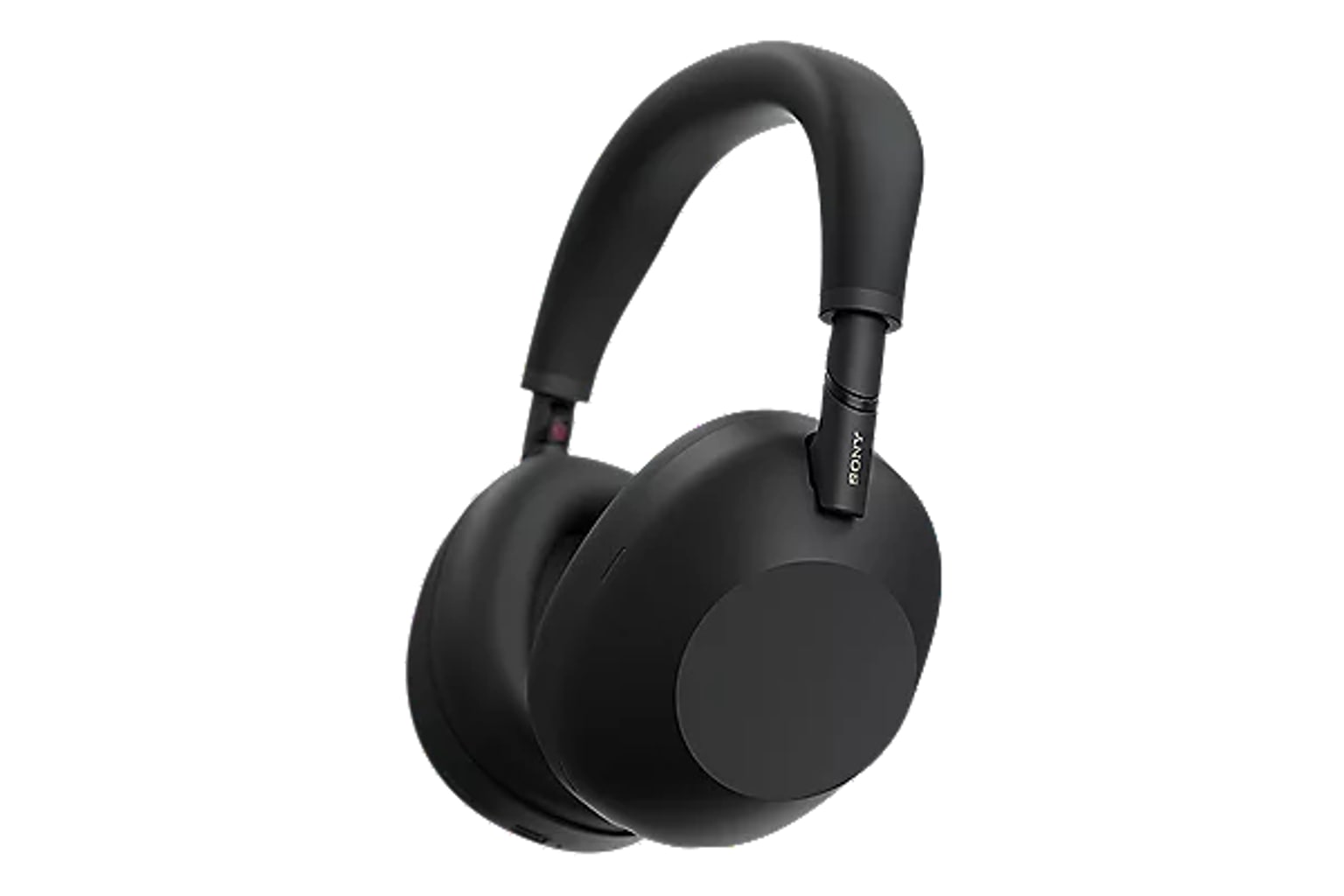
Sony
Buyers who want folding headphones and accept a 3.5mm listening cable route.
Folding cups and a wider headband make Sony an appealing everyday carry choice, with buttons plus a touch plate for controls.
Reasons to choose it
- Folding earcups and wider headband described by PCMag.
- Buttons provide essential inputs alongside a right-side touch plate.
Tradeoffs to know
- Wired listening uses the analog jack rather than USB-C.
- Playback gestures are a separate control style to learn.
Think twice if: Your wired setup depends on USB-C listening, or you want a physical playback key.
Published specifications
- Selection focus
- Carry and fit; ordinary controls; connection and storage
Further reading
Ratings
Editorial score 8.2
Carry and fit9
Folding cups reduce the case burden; wider headband distributes weight.
Ordinary controls8.5
Separate buttons and right touch plate give direct access, with a gesture learning step.
Connection and storage7
Analog cable route is available but USB-C is not a listening cable route.
Sources & further reading
pcmag.com review
soundguys.com review
Keep reading
Something changed? Help us keep this useful.
Send a correction →