Bose QuietComfort Ultra Headphones (2nd Gen) Review (2026): The Comfort-First Premium Pick
Bose’s second-gen flagship is for people who want quiet headphones they can wear for hours, with USB-C audio and a few control quirks hiding behind the comfort.
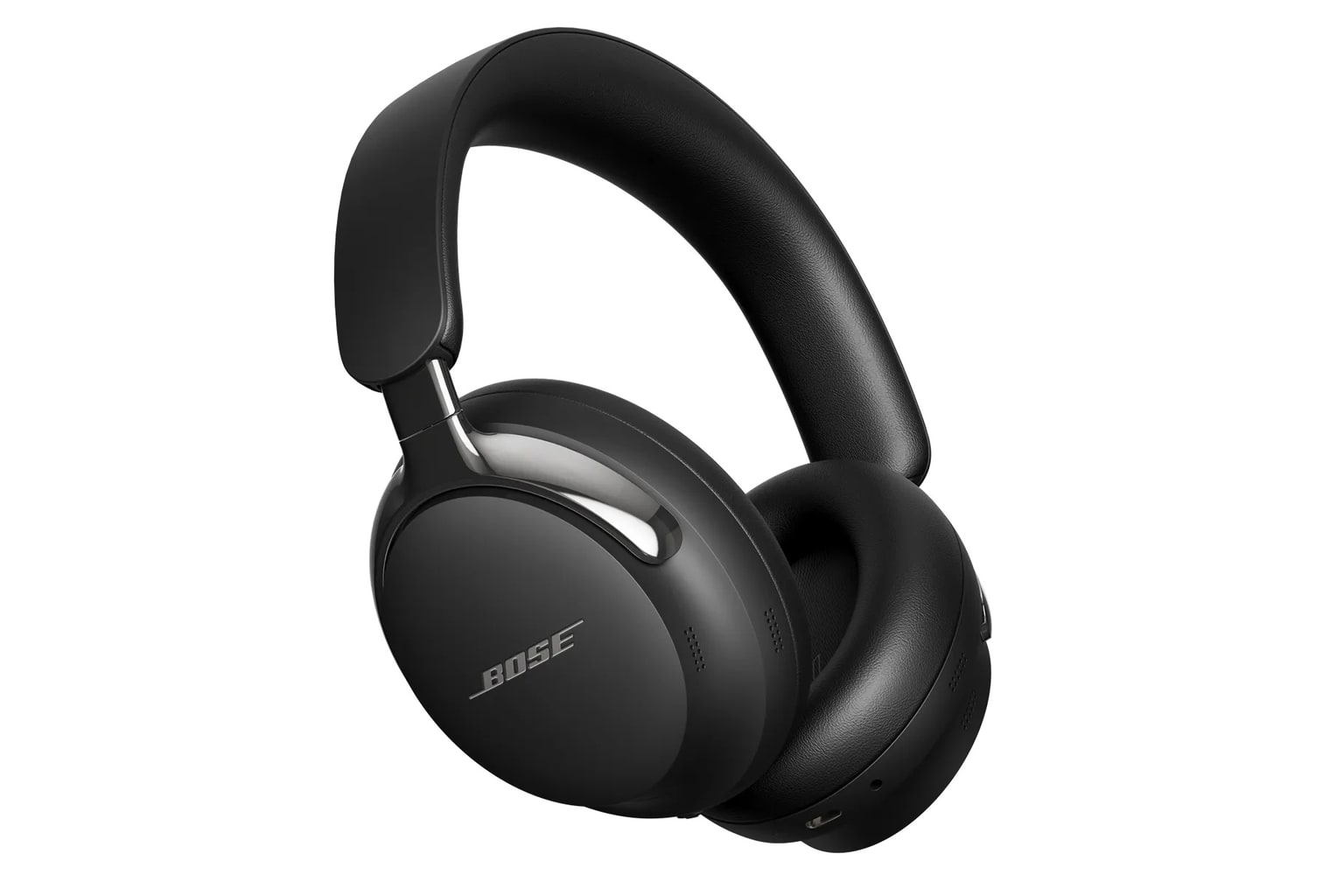
Bose is the premium comfort pick: soft wear, strong ANC, natural-feeling awareness, foldable travel design, and USB-C audio. It gives up Sony-level app depth, Sennheiser battery life, and some control certainty, so seller and firmware details are worth checking before checkout.
MSRP
$449
Amazon
$399
at writing · 2026-05-05
Buyer fit
The easiest premium pick if comfort, natural quiet, and travel friendliness matter most. Bose gives up some Sony-style app depth and Sennheiser battery life, but it is the pair most likely to disappear on your head.
MSRP
$449
Amazon
$399
at writing · 2026-05-05
Score breakdown
How this product scored
Same rubric, but focused on one product so the reasons behind the score stay readable.
Noise cancellation quality
Bose remains a top-tier quiet machine for planes, buses, offices, and cafes, even if Sony has the slight overall edge in this set.
Comfort and wearability
This is Bose’s strongest reason to exist: plush padding, manageable weight, low clamp fatigue, and many reports of easy long-session wear.
Transparency and call mics
Aware Mode is useful for conversations and surroundings, and calls are fine for normal work, though noisy open offices can still expose the mic limits.
Sound quality and codec flexibility
The sound is punchy and easy to like, USB-C audio is a real win, but the EQ is too limited for serious tweakers.
Controls, app, and multipoint
The Bose app is approachable and multipoint can be convenient, but the button/strip layout and firmware-dependent behavior are the main owner annoyance.
Travel, battery, and portability
Foldability, case design, USB-C audio, and a 30-hour ANC rating make it a clean travel pick, not a battery champion.
Ownership trustworthiness
Comfort and brand support help. Premium price, seller caveats, no IP rating, and firmware complaints keep the recommendation cautious instead of glowing.
Quick Verdict
Bose built the QuietComfort Ultra Headphones (2nd Gen) for the buyer who does not want headphones to become a hobby. The promise is classic Bose: soft over-ear comfort, strong noise cancellation, useful Aware Mode, a folding travel case, simple app controls, and now USB-C audio for wired listening from a phone or laptop.
That is why it ranked #2 in the main noise-canceling headphones guide as the best comfort ANC pick, with an overall score of 8/10. PCMag found the extra weight over the first-gen model “imperceptible” on the head and said the headphones keep “the same clamp force and plush padding under the headband.” Owner-style reviews say the same thing in less lab-coat language: these are the headphones people reach for when two hours usually turns into discomfort.
The catch is that Bose simplicity cuts both ways. The app is easier than Sony’s, but also less powerful. The controls mix buttons with a capacitive volume strip, and some owner reports complain about firmware changes, prompt changes, or device-switching behavior. SoundGuys put the control issue bluntly: “The controls are still weird with an odd mix of capacitive touch controls and the buttons that do too many things at once.”
In the price snapshot, the Amazon-new listing for ASIN B0FDKR293G was captured at $399 on 2026-05-05T21:24:00Z. Use the product links here to check today’s price, seller, condition, and availability—and to support KB4UB if this saves you from buying the wrong pair.
Score Breakdown
- Noise cancellation quality: 9/10. Bose remains a top-tier quiet machine for planes, buses, offices, and cafes, even if Sony has the slight overall edge in this set.
- Comfort and wearability: 9/10. This is Bose’s strongest reason to exist: plush padding, manageable weight, low clamp fatigue, and many reports of easy long-session wear.
- Transparency and call mics: 8/10. Aware Mode is useful for conversations and surroundings, and calls are fine for normal work, though noisy open offices can still expose the mic limits.
- Sound quality and codec flexibility: 7/10. The sound is punchy and easy to like, USB-C audio is a real win, but the EQ is too limited for serious tweakers.
- Controls, app, and multipoint: 7/10. The Bose app is approachable and multipoint can be convenient, but the button/strip layout and firmware-dependent behavior are the main owner annoyance.
- Travel, battery, and portability: 8/10. Foldability, case design, USB-C audio, and a 30-hour ANC rating make it a clean travel pick, not a battery champion.
- Ownership trustworthiness: 7/10. Comfort and brand support help. Premium price, seller caveats, no IP rating, and firmware complaints keep the recommendation cautious instead of glowing.
Treat the score as a comfort-first map. Bose is not the deepest or longest-lasting headphone here; it is the one most likely to stay on your head without becoming the story.
What Feels Great After Setup
The winning Bose trait is physical relief. The QuietComfort Ultra 2 is the pair for flights, desk days, and open-office blocks where a little less app control is worth it if the pads and clamp do not nag at you.
The second-gen upgrades are also more useful than they look. USB-C audio means you can plug into a laptop or phone for wired listening while charging, and improved head detection can wake the headphones when you put them on and settle them into low power when you take them off. That is the kind of convenience that sounds boring until you stop thinking about battery and cables.
What Gets Annoying
The biggest Bose annoyance is control confidence. The app is easy, but the EQ is limited. The physical controls are small and partly capacitive. Some owners also report firmware changes that altered voice prompts or made source switching more app-dependent than they expected.
Call quality is good enough for normal calls, not a dedicated open-office headset. And because the captured Amazon buy path was not clearly first-party Bose/Amazon at research time, a fresh seller check before purchase matters more here than it does for Sony.
How It Compares
Bose QuietComfort Ultra Headphones (2nd Gen) is the premium pick for people who know comfort will decide the whole purchase.
- Sony WH-1000XM6: Best overall. Sony is the stronger all-around package for ANC, app depth, calls, folding travel, codec flexibility, and current availability. Bose fights back with a softer, simpler wear-it-for-hours feel.
- Sennheiser Momentum 4 Wireless: Best battery and sound. Sennheiser is the better value if 60-hour battery life and music quality matter more than Bose’s comfort-first quiet.
- Bowers & Wilkins Px7 S3: Best premium sound. Better for buyers chasing nicer materials, physical controls, and aptX support; less obvious if maximum comfort and easy travel matter most.
- Soundcore Space One Pro: Best lower-price pick. Soundcore keeps the price sane and still folds down neatly, but it is not the same class for comfort polish, mics, or flagship quiet.
- Sonos Ace: Best for Sonos TV audio. Buy Sonos for the TV handoff; buy Bose for planes, offices, and long stretches where you just want the headphones to disappear.
For the full ranking, feature table, and product-card links, go back to Best Noise-Canceling Headphones in 2026.
Who Should Buy It
Best for: Frequent travelers, office workers, and buyers who know soft long-session comfort will decide whether they actually wear ANC every day.
Skip if: You are a codec hunter, a deep EQ tweaker, firmware-wary, or looking for the longest battery per charge.
Bottom line: Bose is the comfort-first premium pick—the pair to buy when your main demand is “make it quiet, make it soft, and don’t make me fuss with it.”
Before buying, check fit tolerance, return window, current Amazon seller, firmware/app behavior, call needs, and whether your priority is maximum quiet, all-day comfort, music, TV audio, or saving money.
Tell us what this page missed
These pages get better when real buyer complaints make it back into the scoring model. If something important is underweighted, say it.
Rate this review
Give it a score from 1-10 and tell us what to improve.
0/4000 characters