
The recommendation
Willow Go can suit a buyer who prizes its self-contained form. For someone seeking a shorter total routine, the historical assembly and drying reports are a strong reason to compare alternatives.
Grades at a glance
| Product | Overall | Controls and feedback | Parts and daily handling | Carrying and physical setup |
|---|---|---|---|---|
| Willow Go Wearable Breast Pump | 5.2 | 5.5 | 3.0 | 7.0 |
Does it fit your life?
Convenience across the full routine
Willow Go illustrates the gap between convenience while pumping and convenience across the full routine. One owner valued being able to move and use the pump at work. Another found the disassembly and washing inconvenient enough that the design did not save her time overall. Those accounts can both be accurate descriptions of personal use because the value of freeing your hands depends partly on what comes before and after.
A self-contained unit removes the need to place a separate motor and route tubing to it. That is a meaningful change in the physical arrangement. It also means the collection unit is the thing you have to wear, remove, open and rebuild. The purchase decision should include all those stages rather than end at the moment the pump goes into a bra.
The documented accounts do not tell us how many minutes another person would save or lose. They do give a useful way to judge the appeal: decide whether your biggest frustration is the external setup during a session or the handling afterward. Willow Go makes its clearest case for the first problem, with a less reassuring record of experiences around the second.
Independent controls and feedback
Reviewers appreciated being able to control the two sides independently. That is a useful feature for someone who wants separate adjustments rather than a single shared setting. It is an interface observation, not evidence that one combination will be suitable for every user.
The same reviews described feedback limitations. One reviewer could not connect the app in her historical experience and used another timer. Another wanted a clearer visible reference for the level. These accounts help explain the 5.5 controls and feedback grade: the pump can be operated and has useful independent adjustment, while the information available to the user was less satisfying.
These are historical connection and feedback reports; current software behavior was not checked here. Software can change, and the source reports concern particular experiences. The buying implication is to consider how much you rely on visible settings and timing, rather than assuming that app association alone means the feedback workflow will meet your expectations.
Assembly and drying are the main tradeoff
One owner described repeatedly taking the pieces apart and trying the assembly again before it would latch as expected. Another emphasized drying as the biggest burden in her routine. A third found washing and disassembly inconvenient enough to outweigh the benefit during use. These reports differ in detail but converge on the same practical concern: getting the wearable ready again can require more attention than its tidy appearance suggests.
A hands-on review provides a more favorable view of the pump. That counterevidence matters. The design is not impossible to live with, and some people valued it. The recommendation should preserve that variation while still acknowledging that the difficult accounts concern ordinary handling tasks rather than obscure edge cases.
Willow Go receives 3.0 for parts and daily handling because those accounts describe substantial work between sessions. Look at the actual pieces and the assembly sequence before buying it mainly to simplify that work. The key question is whether you are willing to repeat the opening, washing, drying and rebuilding routine in exchange for fewer external objects during use. A buyer who values that exchange may still prefer Go; someone whose main frustration is already reassembly has a clear reason to compare further.
The cup shape and posture limits
Reviewers liked the form of the cups, including a flatter shape in one account. An owner also described being able to move and hold her older baby while using them. Those are reasons the wearable arrangement can be valuable. They are personal observations about particular clothing, bodies and activities, not a universal promise of discretion or unrestricted movement.
The open pour opening remains a limitation. The reviewed accounts describe posture and spilling concerns rather than treating the pump as sealed for every position. That detail should be part of how you imagine wearing it. An arrangement that works well while seated or moving upright may not suit a task that requires leaning over repeatedly.
The carrying and physical setup grade is 7.0. It recognizes the useful self-contained arrangement while keeping the cup profile and open pour opening in view. Battery duration and outlet freedom do not enter that score. For your own comparison, picture the activity that motivated you to consider a wearable. If it involves repeated leaning, the posture concern deserves particular attention. If your priority is removing the motor from a nearby surface, Go addresses that physical task more directly.
Reading older app and parts complaints
One owner also discussed difficulty finding replacement or extra parts at the time of her report. That helps explain why drying and readiness felt especially restrictive in her own routine. It does not establish a current shortage. A historical frustration can be relevant to the experience of using a pump without being a reliable description of today's stock.
The same boundary applies to the app accounts. A failed connection in a review is evidence of that reviewer's experience, not a permanent software condition. Consider how important on-pump feedback is to you and whether needing another timer would detract from the self-contained arrangement.
These distinctions make the recommendation more useful. The most durable concern is the structure of the handling task shown and described: separate pieces need careful assembly and the unit must be ready again before the next use. Current availability, current software behavior and current package contents are separate checks. Do not infer them from a review that was trying to explain a personal routine.
Where Go fits on a shortlist
Willow Go's overall editorial grade is 5.2, combining 5.5 for controls and feedback, 3.0 for parts and daily handling, and 7.0 for carrying and physical setup. Its form is the strongest reason to consider it; the full daily handling routine is the weakest. That is more informative than a single label such as convenient or frustrating.
The updated-display M5 is a relevant alternative if visible timer and level information matter, with the important qualification that those observations belong to the revision in the review. Elvie Stride is relevant if you prefer the motor clipped elsewhere, but its documented accounts also raise parts and seal concerns. A conventional bottle pump may deserve attention if simplifying the wearable assembly task matters more than keeping everything inside clothing.
Go belongs on a shortlist when removing the external motor is valuable enough to justify careful handling afterward. The favorable reviewer account shows why that trade appealed to someone; the more difficult owner accounts explain why others found it disappointing. Compare the routine you want to change with the routine you would take on. That is especially useful if the word wearable first attracted you: it describes the arrangement during use, while the assembly and drying reports describe the rest of ownership.
If saving time is your priority
The most useful Go comparison begins before putting the pump on and ends after the pieces are ready again. During use, the self-contained arrangement can be valuable: no separate motor needs a place, and independent controls allow separate adjustment. After use, the accounts describe opening, washing, drying and careful assembly. A purchase intended to save time should consider both halves.
One owner's favorable account included convenience at work, while another felt the dismantling and washing consumed the time saved. That difference suggests asking which minutes you most need to recover. Free hands during a session can be extremely valuable even if the overall equipment routine is longer. A different buyer may prefer a more stationary arrangement if it makes the after-session work feel simpler.
Separate the value of those two periods when comparing Go with your current setup. You may care more about having fewer external objects during use than about reducing total handling. Or you may be changing pumps specifically because opening and rebuilding parts has become tiresome. The owner reports support both priorities without settling the balance for you. A view of the dismantled unit is particularly useful here, because it puts the work after wearing the pump back into the purchase decision.
If your existing frustration is repeated assembly, the Go accounts are a reason to slow down and look at the parts rather than assume a wearable will solve it. If your existing frustration is an external motor and tubing during use, the self-contained form may address that directly. Naming the problem makes the convenience claim specific enough to evaluate.
Comparing the full wearable routine
A polished view of a wearable inside clothing tells you little about the point at which it has to be rebuilt. For Go, that rebuilding task is central to the documented owner reports. Look for a view of the separated components as well as the worn form, and pay attention to how the pieces come together. That is a more informative comparison than choosing by the smooth outer shell alone.
The M5 review provides a useful contrast because the reviewer explicitly demonstrated care with a soft seal. Its updated display improves the feedback story, but its assembly still asks for attention. Stride changes the motor placement and provides hub and phone adjustment, while its own accounts include difficult sealing experiences. The alternatives should be compared at the task level, rather than assumed to remove every Go compromise.
A conventional bottle pump offers a different trade: more external arrangement during use, with a parts layout that some buyers may find more familiar to understand. That is an alternative workflow, not evidence that conventional pumps universally clean faster. The right comparison is the actual dismantling and assembly process you are willing to repeat.
Go also needs to be distinguished from other Willow models. The open pour opening and the particular controls discussed here belong to Go. Features advertised for another Willow design should not be used to promise different posture freedom or feedback. The name alone is not enough to transfer a feature.
For a buyer still interested after those comparisons, the remaining decision is whether the complete routine fits. The self-contained form removes a separate motor and tubing arrangement, and independent adjustment may also appeal. In return, the repeated assembly, washing and drying reports deserve serious attention. Those are specific tasks you can inspect before ordering. If they are the very chores you hoped a wearable would remove, keep comparing; if the during-use arrangement is your priority, Go's appeal is easier to understand.
How much should the app reports matter?
They should inform how you think about feedback, rather than be treated as proof of today's app behavior. A reviewer who used another timer was describing the routine she had at the time. That experience is relevant if you strongly prefer the pump to provide every reference directly, but it does not establish a permanent connection problem.
The more substantial recurring concern in these accounts is the physical handling of the pieces. Reassembly, washing and readiness affect the full routine even if software later changes. A buyer choosing Go should be comfortable with that work, rather than assume a software improvement will answer every complaint in an older review.
The self-contained form remains the positive reason to consider it. Keeping that advantage separate from feedback and parts handling is the most useful way to interpret the mixed experiences.
Willow Go Wearable Breast Pump
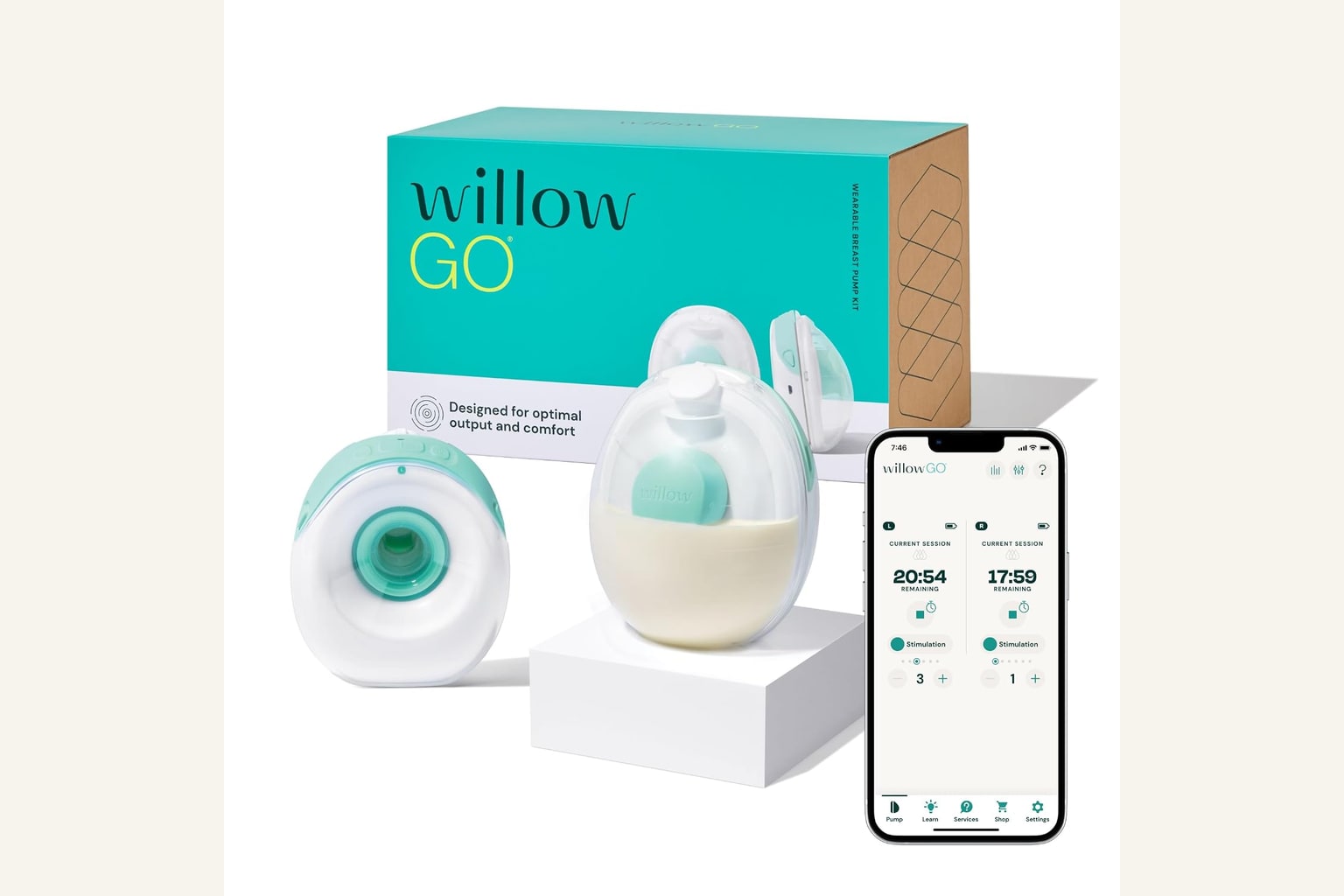
Willow
A person who particularly wants self-contained wearable units and accepts careful assembly between sessions.
Willow Go offers a self-contained wearable arrangement, and some reviewers valued its shape and independent side controls. The experiences also show why convenience during use can be offset afterward: owners described careful assembly, drying and washing as substantial chores. Historical app and feedback frustrations add another consideration. Go is a narrow recommendation for someone who values that wearable arrangement enough to accept the rebuilding routine, rather than an automatic time-saving upgrade.
Reasons to choose it
- The self-contained arrangement removes a separate external motor and its placement task.
- Reviewers appreciated independent side adjustment and the cup shape.
- A favorable reviewer account provides a counterweight to the difficult assembly reports.
Tradeoffs to know
- Owners described repeated assembly adjustments, drying and washing as burdensome.
- Reviewers described historical feedback or app frustration.
- The open pour opening limits posture; wearable does not mean spill-proof.
Think twice if: Your main goal is fewer after-session chores or a consistently visible reference for the current setting.
Published specifications
- collection arrangement
- Self-contained wearable collection
Further reading
Ratings
Editorial score 5.2
Controls and feedback5.5
Independent adjustment was appreciated, while historical app and visible-feedback frustrations complicated the workflow. The judgment concerns the reported interface, not a claim of a current app outage.
Parts and daily handling3
Owners described careful assembly, drying and washing as substantial burdens. A favorable reviewer experience remains relevant, but does not remove the repeated handling concerns in those accounts.
Carrying and physical setup7
The self-contained cups remove a separate motor-placement task, while the open pour opening and personal posture concerns limit the arrangement. Battery autonomy and runtime are excluded.
Sources & further reading
User reports at Reddit
youtube.com review
youtube.com review
youtube.com review
youtube.com review
User reports at Reddit
Keep reading
Something changed? Help us keep this useful.
Send a correction →