
The recommendation
The S1 is a sensible shortlist choice for visible controls and a conventional routine if its bulk fits your space. Choose it for that arrangement and reported unplugged convenience, with room reserved for the separate parts.
Grades at a glance
| Product | Overall | Controls and feedback | Parts and daily handling | Carrying and physical setup |
|---|---|---|---|---|
| Spectra S1 Plus Electric Breast Pump | 7.2 | 9.0 | 7.0 | 5.5 |
Does it fit your life?
Why consider the S1?
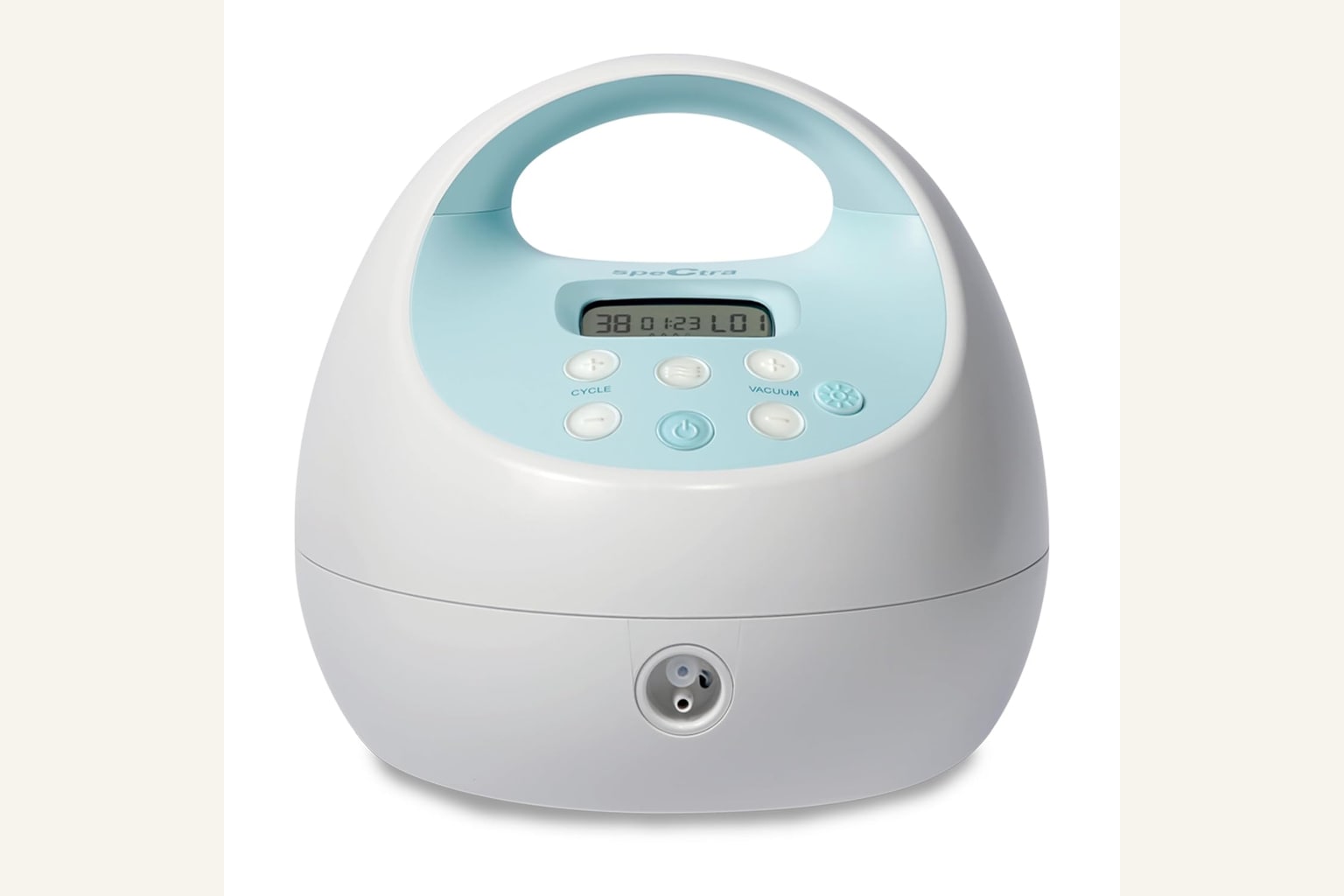
The S1 is easiest to understand as a tabletop pump that can be carried to another place. In a detailed comparison, a reviewer showed the motor's handle, its small display, the cycle buttons, the vacuum controls, the mode button and the nightlight. Those are practical features because you can see what you are adjusting and return your attention to the same physical control area. They do not tell us what setting will suit another person, but they make the adjustment task easier to follow.
The same reviewer repeatedly called the motor big. That observation deserves as much attention as the rechargeable appeal. A handle helps you lift something; it does not reduce the space it occupies when you pack it. If your plan is to use the S1 in several rooms, the handle may matter more than bag size. If your plan involves a crowded work bag, the motor's shape becomes part of the decision before any bottle or spare component is added.
Two owners separately described valuing the ability to use an S1 without staying plugged in. That is useful context for choosing between the S1 and S2. It is a report about their routines rather than a battery endurance test. We would not turn those comments into a promised number of sessions between charges, a lifespan estimate or a guarantee about a particular unit.
Separate controls and visible feedback
The control advantage is separation. Cycle and vacuum adjustment have their own buttons in the reviewer's demonstration, so the interface does not make every change depend on interpreting one multifunction gesture. The screen gives a nearby reference while the mode button provides a distinct way to change the pattern. For someone who wants to understand what changed between two sessions, that arrangement is more informative than a motor that only indicates that it is running.
The reviewer liked the screen's visibility and the nightlight. Both keep useful references near the controls, which can matter if you prefer to leave your phone elsewhere. In her comparison, the S1's physical interface remained the relevant advantage: a screen you can consult and separate controls you can recognize. Her discussion also covered the Medela Sonata, so match any feature that catches your attention to the correct motor. The S1 recommendation rests on the controls shown on the S1 itself.
Allow some time to learn where the controls are and what each adjustment changes. The display helps you keep track of choices once you understand the layout; it does not make learning the layout unnecessary. This is the useful question to ask while watching the demonstration: can you follow each change without losing track of the previous one? If separate buttons and visible feedback make that sequence clearer to you, the S1 has a practical interface advantage worth weighing against its bulk.
The collection parts after a session
A cleaning demonstration covering the Spectra S1 and S2 takes the collection assembly apart into familiar separate components. Bottles, valves and backflow pieces are part of the routine rather than a single cup that can be lifted away intact. That provides a concrete picture of the work involved after a session: several pieces have to be accounted for before the setup is ready again. The demonstration is useful for understanding the arrangement, not for replacing the instructions supplied with your pump.
One S1 owner was glad she had unpacked the pump and learned the assembly before she needed it. Her useful observation is the difference between recognizing the pieces and facing an unfamiliar set of components. When comparing pumps, look beyond the assembled product photograph. A view of the dismantled collection unit helps you see which pieces will need your attention each time. That is especially relevant if the motor's clear controls are what first drew you toward the S1.
Nothing in these accounts establishes that the S1 takes less time to clean than the other conventional pumps here. A repeatable routine can still feel like work when it is repeated often. If the main reason you are changing pumps is to reduce handling after each session, compare the dismantled assembly rather than relying on the familiar look of the motor. The motor's controls and the collection parts solve different tasks.
Carrying the whole setup
The handle and bottle rest are small conveniences with specific uses. The handle gives you somewhere intentional to hold the motor, while the bottle rest gives one assembly a temporary home as you deal with another item. These details can make a fixed pumping spot easier to organize. They do not make all the separate components a single portable object, and the reviewer still found travel packing awkward.
Think about the route you actually expect the pump to take. Moving from a shelf to a nearby table is a different carrying problem from fitting everything beside a laptop. The S1 can be a reasonable answer to the first problem even if the second remains frustrating. Look at the available bag compartment, the motor shape, and where the bottles will sit separately. A reviewer's difficulty finding a suitable bag is a useful warning to make that physical check before buying.
Our carrying and physical setup grade is 5.5 out of 10. It weighs those helpful handling details against the large motor and exposed collection arrangement. It excludes battery autonomy and runtime, just as it does for every pump in this comparison. That is why an S1 owner can value unplugged use while the S1 still receives a modest grade for physical setup.
What the grade pattern means
The S1 receives 9.0 for controls and feedback, 7.0 for parts and daily handling, and 5.5 for carrying and physical setup, with an overall editorial grade of 7.2. The useful pattern is clearer than the overall number: the interface is the strongest part of this recommendation, while bulk is the recurring compromise. The parts score describes a satisfactory conventional routine with chores, rather than a special cleaning advantage.
Use that pattern to decide what deserves more attention before purchase. If you want to see each adjustment clearly, the screen and separate buttons are worth examining closely. If you already like your current controls and mainly want less equipment in your bag, the large motor is the more important finding. The score can point to that trade, but the bag compartment or pumping spot may settle it more decisively than a small numerical difference between models.
The S1 and S2 also have separate evidence histories. Their different parts grades should not be read as proof that their collection hardware requires a different amount of washing. The S2 accounts specifically discussed replacement-part convenience, while the S1 evidence is stronger on preparation and dismantling. That distinction matters if you are tempted to turn a small overall score difference into a claim of superior hardware.
S1, S2 or a smaller motor?
Start the S1 versus S2 decision with the power arrangement you want, then keep the physical bulk question separate. Owners of the S2 described frustration about being tied to a plug, while S1 owners appreciated unplugged use. Both Spectra reviews show a substantial tabletop motor with separate bottles. Moving from S2 to S1 therefore addresses one kind of inconvenience without turning the setup into a wearable.
BabyBuddha 2.0 is the more relevant comparison if the motor itself is the problem. A reviewer using BabyBuddha 2.0 described fitting that motor in clothing pockets, while still using her own separate flange and backflow arrangement. The trade becomes a smaller motor with a different control style and an accessory setup that needs attention. That is a more useful comparison than assuming every portable pump offers the same experience.
If your main wish is to collect inside a bra, the Medela Hands-free and Elvie Stride take a different route again. They change the collection arrangement rather than merely reducing a tabletop motor. Choose which physical problem you are trying to solve before treating the S1's rechargeable convenience as the answer to every kind of movement.
From a home spot to a work bag
For a person who usually pumps in one place at home but carries the pump elsewhere occasionally, the S1's advantages and disadvantages can coexist comfortably. The motor can have a regular position beside the collection assemblies, the controls remain visible, and the handle helps when the setup is moved. The reviewer's bag complaint becomes less important if carrying is occasional and the chosen bag has a compartment that actually accommodates the motor.
For someone packing it alongside work equipment every day, that same complaint deserves more weight. The motor does not travel alone. The collection assemblies need their own place, and a useful bottle rest on the motor is not storage for the dismantled pieces. Before choosing the S1 because it is rechargeable, picture the full set of objects leaving the house and returning. That is a physical planning exercise, not a reason to buy extra accessories automatically.
A small motor such as BabyBuddha 2.0 changes this particular trade more directly. Its reviewer described pocket carrying, whereas the S1 review emphasizes a handle on a large body. If the bag compartment is the hard limit, reducing motor bulk may matter more than preserving the S1 interface. If the interface is what makes your routine feel understandable, accepting a larger bag compartment may be the better compromise.
A regular home spot and a daily work bag can therefore lead to different choices. In one setting, the screen, handle and bottle rest may earn their space by making the routine easier to organize. In the other, the motor may occupy room you would rather reserve for other belongings. Decide which setting you expect to repeat most often. The S1 makes its clearest case when you want its visible controls enough to reserve space for the motor and the separate collection parts.
Before ordering the S1
The most useful visual check is the whole collection arrangement, not just the motor photograph. Compare the handle, screen location and bottle rest with the place you intend to use the pump. Then look at the disassembled collection pieces in the Spectra demonstration. Those two views answer different questions: whether the pumping spot will be workable, and whether the between-session routine is one you understand.
The review does not establish the exact accessory bundle at every seller, nor does it verify compatibility with every existing bottle or cup system. Avoid treating a personal modification shown elsewhere as part of the standard S1. If you already own equipment you hope to reuse, the exact component names and documented connections are more useful than a general statement that the pump is adaptable.
The strongest purchase case remains consistent across those checks: you want visible separate adjustments, you accept a conventional parts routine, and you have space for the motor. Reported unplugged convenience can then be an additional reason to favor S1 over S2. It should come after understanding the whole physical arrangement, rather than conceal that arrangement behind the word portable.
Spectra S1 Plus Electric Breast Pump
Spectra
A person who wants visible settings and a conventional bottle setup, and can give a large motor a regular place at home or in a bag.
The Spectra S1 Plus makes its strongest case at a settled pumping spot: separate adjustment buttons, a visible display, a nightlight and a place to rest a bottle. A reviewer demonstrated those details and also found the motor awkwardly large for ordinary bags. Owners valued using it without remaining plugged in, but that convenience does not make the motor or separate bottle assemblies disappear. Its appeal is a familiar, visible routine that you can move between locations, provided you have room for the whole setup.
Reasons to choose it
- Separate cycle and vacuum controls keep different adjustments distinct in the reviewed demonstration.
- A visible screen and nightlight help keep feedback close to the motor.
- A handle and bottle rest give the large body useful handling details.
Tradeoffs to know
- The reviewer found the motor large and hard to fit into ordinary bags.
- Bottles, valves and backflow pieces still create a dismantling and reassembly routine.
- Unplugged use leaves the large motor, tubing and separate collection assemblies to arrange.
Think twice if: You want a compact motor in a pocket or collection cups inside your bra, or you expect a rechargeable pump to be small.
Published specifications
- collection arrangement
- Separate motor, tubing and collection assemblies
Further reading
Ratings
Editorial score 7.2
Controls and feedback9
Separate cycle and vacuum buttons, a visible screen and nightlight made the reviewed controls easy to follow. Finding preferred settings still took learning; the advantage is keeping different adjustments distinct and visible.
Parts and daily handling7
The demonstrated bottle, valve and backflow arrangement has a repeatable dismantling routine, with several pieces to handle. An owner valued learning assembly ahead of use; no cleaning-time advantage is established.
Carrying and physical setup5.5
A useful handle and bottle rest help, but the reviewer found the motor large and hard to fit into ordinary bags. This is a physical handling judgment; battery autonomy and runtime are excluded.
Sources & further reading
User reports at Reddit
youtube.com review
youtube.com review
youtube.com review
bemybreastfriend.com review
youtube.com review
youtube.com review
Keep reading
Something changed? Help us keep this useful.
Send a correction →