
The recommendation
Medela’s cup handling is the reason to shortlist this model. Accept the limited feedback and external arrangement deliberately, and keep its power options separate from expectations about how freely you can move.
Grades at a glance
| Product | Overall | Controls and feedback | Parts and daily handling | Carrying and physical setup |
|---|---|---|---|---|
| Medela Pump in Style Hands-free | 6.8 | 5.5 | 8.0 | 7.0 |
Does it fit your life?
The appeal starts with the cups
The Hands-free name describes where the collection cups go, not the absence of an external motor. The reviewer of this Hands-free model showed the motor and the tubing alongside the cups. She liked that the cups did not put a motor on top of each collection unit, and found their shape sat well inside her bra. That is a particular person's fit experience, but it explains the design's appeal clearly.
Her favorite part of the pump was the collection arrangement. She liked pouring from the opening and the fact that there were three cup pieces to wash. Those are useful observations for a buyer who is deciding which part of a pumping session most needs to change. A person frustrated by handling cups afterward may care about that more than another set of control options.
The hands-on observations here come from one reviewer of this exact Hands-free model. Medela's own information corroborates the three-part cups and clarifies the power options. That gives a useful, specific buying case: cups the reviewer liked to wear and pour from, paired with a motor whose feedback she found lacking. If cup handling is the change you want most, the positive account deserves attention. If visible settings are essential to you, the motor's missing screen is just as relevant.
Three pieces and a firm closure
The manufacturer describes three parts to clean in each hands-free cup, matching the reviewer's account of the washing routine. A small parts count is easy to understand and gives a buyer a concrete image of dismantling the cup. It does not establish a measured cleaning-time advantage or remove the need to follow the instructions for the specific components.
The same seal the reviewer appreciated also made opening the cup relatively difficult for her. That is the important counterweight to a simple parts count. A routine can involve few pieces and still demand effort when you separate them. She appreciated the firm closure even though pulling it apart added effort to the handling routine.
Pouring was a positive part of her experience. She found the shape of the opening satisfying and easy to work with. The manufacturer also describes the pour spout. Together those observations support the 8.0 parts and daily handling grade: useful dismantling and pouring features with a manageable opening chore. They do not tell us how the same cup will feel in someone else's hands, or whether it will be easier than every alternative.
Where hands-free use has limits
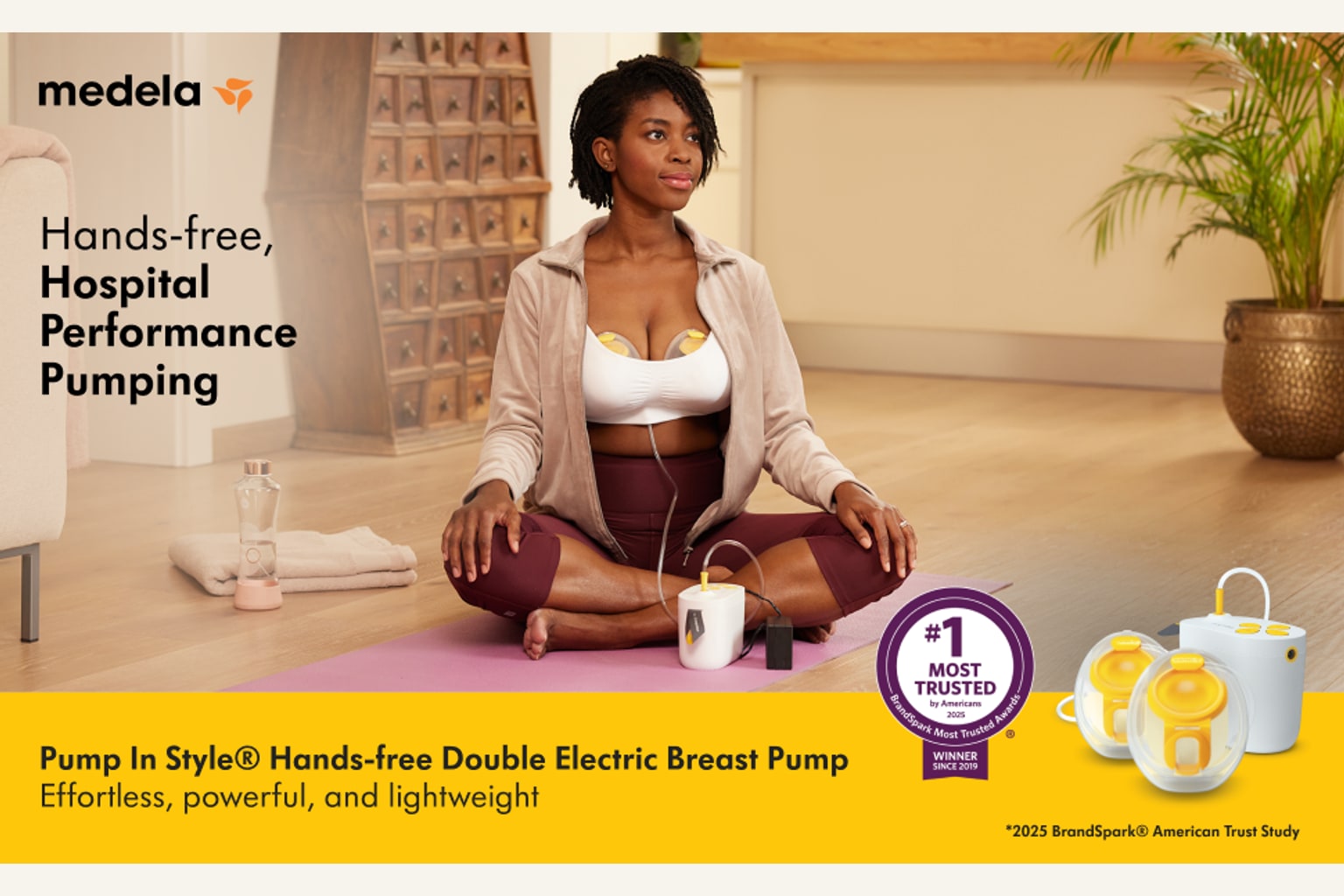
The cup shape removes the need to position a motor on top of the cup, a detail the reviewer liked. The motor still needs a place of its own, and tubing still connects the pieces. That makes the arrangement different from a wearable with its motor built into the collection unit. Consider where the external items will go as well as how the cups fit under clothing.
The manufacturer says the cups are not designed for bending completely or intense activity because milk can spill through the opening. That is a specific product limitation rather than a general judgment about what people should do while pumping. It prevents the word hands-free from becoming a promise that every posture is available.
For carrying and physical setup, this model receives 7.0. The cups offer a useful arrangement, balanced by the separate motor, tubing and posture constraints. As with every pump here, the category excludes battery autonomy and runtime. Being able to power the motor another way does not change where the tubes and cups sit or close the pour opening.
The external eight-AA power option
The reviewer's use of the adapter could leave a reader with the impression that the pump always has to remain connected to a wall. The manufacturer's exact-model page lists an external battery pack taking eight AA cells, with the cells not included. That is another power option and changes the factual description of the model.
It is still an external pack. It should not be described as a built-in rechargeable battery or used to promise a duration of outlet-free use. The useful point is simply that the reviewer's adapter-based routine is not the only supported power arrangement. If that option matters to your purchase, check the contents of the exact package rather than assuming a listing or reseller bundle matches every illustration.
The power distinction also does not erase the physical setup. Cups, tubing, motor and potentially an external pack are still objects to arrange. A buyer may find that completely acceptable, especially if the cup handling is the main reason for choosing Medela. Another buyer may prefer the self-contained structure of a wearable. Both decisions can be sensible without misdescribing this model as wall-only or fully wireless.
Comparing other cup designs
The Medela receives an overall editorial grade of 6.8, with 5.5 for controls and feedback, 8.0 for parts and daily handling, and 7.0 for carrying and physical setup. That uneven profile is useful. It points toward a buyer who values the cup routine and can accept sparse feedback, rather than someone looking for the most informative motor interface.
Elvie Stride is the closer comparison if you want cups connected to a separate hub. Its demonstrated hub and app controls provide a different adjustment workflow, while the documented accounts raise more substantial assembly and sealing concerns. Willow Go removes the separate hub arrangement but brings its own careful assembly, drying and feedback questions. Neither comparison is a simple upgrade in every part of the day.
The useful comparison comes down to which interruption bothers you most. Medela's reviewer wanted to see the current level but liked dismantling and pouring from the cups, despite their firm opening action. A buyer who frequently checks settings may find the missing display hard to overlook. Someone who is more concerned with the collection units may welcome the three-part design. Keeping those priorities separate explains why the cups can earn a favorable recommendation while the motor controls receive a more modest grade.
When the cups matter more than the screen
Suppose your biggest frustration with a conventional setup is handling bottles that project away from your body. The Medela cups change that part of the arrangement, while the separate motor stays elsewhere. The reviewer's positive response to the cup shape gives a concrete reason to consider the design. It is more informative than a general claim that all hands-free pumps make life easier.
The trade is feedback. If you like being able to glance at a number to confirm the current level, her complaint about the missing screen is directly relevant. The plus and minus buttons can be understandable while leaving you without the reference you want. A timer or setting display on a Spectra-style motor may be a more valuable convenience to another buyer than the Medela cup arrangement.
The parts routine then adds a second trade. Three cup pieces are an attractive description, but the reviewer found opening the firm seal relatively difficult. A buyer who dislikes keeping track of many pieces might welcome the count; a buyer who dislikes a tight opening action might focus on that limitation. Neither reaction is contradicted by the same favorable review.
This is why the recommendation is strongest for someone who prioritizes the collection units. The motor interface is not the standout feature, and the external arrangement remains. The purchase makes sense if the cups address the recurring task you want to change and the other compromises are acceptable, rather than if the Hands-free name is being used as shorthand for every kind of convenience.
Finding room for the external pieces
The useful mental picture has several objects: cups inside the bra, tubing leading away, and the motor in its own location. If using the alternate power option, an external battery pack is also part of that picture. These are physical placement questions even before considering runtime. The official eight-AA information resolves a mistaken wall-only description without turning the whole system into a self-contained wearable.
Look at where the motor would go in the settings you actually intend to use. A regular nearby surface may make the external arrangement straightforward. A situation with no obvious place for a separate motor may make a self-contained wearable more appealing. The reviewer's adapter use is one example; it should not be generalized into the only possible arrangement.
Posture is a separate check. The manufacturer describes limitations because the pour opening can spill when bending completely or during intense movement. That boundary belongs in the buying decision even if the cups fit well. A comfortable-looking shape in a review is not proof that it suits every activity you hope to do.
Finally, distinguish the exact Hands-free model from older Pump in Style versions shown elsewhere. Different collection systems can share part of a name. The review here concerns these cups, this external arrangement and the feedback gap described by the reviewer. Confirming the full model name is a practical way to make sure the feature you liked is the one you are actually buying.
What three cup parts mean in practice
A three-part cup gives you relatively few pieces to keep track of after opening it. The reviewer valued that, and Medela confirms the design. Opening the closure was a separate task she found relatively difficult. When you compare cup designs, look at both the number of pieces and the action needed to separate them. A short parts list is useful, but it cannot tell you everything about the routine of removing, opening, pouring from and rebuilding a collection cup.
That is the distinction to keep in view when comparing cup designs. Count the pieces, but also look at the actions involved in taking them apart and putting them together. Medela's favorable handling recommendation includes that opening chore rather than pretending the part count tells the whole story.
Medela Pump in Style Hands-free
Medela
A buyer who values in-bra collection and a small number of cup pieces more than visible level feedback on the motor.
The Pump in Style Hands-free combines in-bra collection cups with a separate motor and tubing. One exact-model reviewer liked the cup shape, pouring and three-piece washing routine, but wanted a display showing the current level and found the cups relatively difficult to open. The manufacturer confirms another power option through an external eight-AA battery pack, so this model should not be described as wall-only. Its main appeal is the collection arrangement, with clear limits around feedback, external components and posture.
Reasons to choose it
- The reviewer of this Hands-free model liked the cup shape and fit in her bra.
- The reviewer valued pouring and three cup pieces to wash; the manufacturer corroborates the three-part cup design.
- An external battery-pack option corrects the impression that the model only works at a wall outlet.
Tradeoffs to know
- The reviewer missed a screen showing the current level.
- The cup seal was relatively difficult for her to open.
- A separate motor and tubing remain, and the manufacturer describes posture limits around the open pour opening.
Think twice if: You want a self-contained wearable, a screen identifying your setting, or freedom to bend fully while wearing collection cups.
Published specifications
- collection arrangement
- In-bra cups with separate motor and tubing
Further reading
Ratings
Editorial score 6.8
Controls and feedback5.5
The reviewer could use the simple mode and plus/minus buttons but missed a screen identifying the current level. Sparse feedback is a substantial compromise despite the understandable buttons.
Parts and daily handling8
The reviewer liked three cup pieces and pouring, with the manufacturer corroborating the three-part design. The firm cup closure was relatively difficult for her to open, tempering the handling advantage.
Carrying and physical setup7
The reviewer liked the in-bra cup shape, while the separate motor and tubing need a place. Manufacturer posture limits qualify the arrangement. Battery autonomy and runtime are excluded, including the external-pack option.
Sources & further reading
youtube.com review
youtube.com review
youtube.com review
youtube.com review
medela.com product information
youtube.com review
youtube.com review
youtube.com review
User reports at Reddit
User reports at Reddit
Keep reading
Something changed? Help us keep this useful.
Send a correction →