
The recommendation
The Viper V3 Pro is our first choice here for a simple gaming layout. Its revised shape and favorable click feel give it a clear case, but the fuller body and intrusive charging cable deserve attention before you commit.
Grades at a glance
| Product | Overall | Shape and grip fit | Buttons and control layout | Power and setup convenience |
|---|---|---|---|---|
| Razer Viper V3 Pro | 8.8 | 9.0 | 9.0 | 8.0 |
Does it fit your life?
Who should buy it
Buy the Viper V3 Pro when your priorities are clear clicks, accessible basic side controls and a fuller symmetrical shape that you already find comfortable. It leads this group on those combined everyday qualities. The purchase is harder to justify if the body feels too large or if you are already planning around a shortage of buttons.
For someone changing from another simple gaming mouse, the most useful comparison is not the sensor name. Ask whether the new shell gives your hand a better resting position and whether its controls solve a frustration you actually have. If the answer to both is yes, the Viper has a persuasive case. If you are satisfied with your existing fit and controls, the reviews do not establish a need to replace it for a promised competitive improvement.
Shape and grip: where your hand settles
The Viper V3 Pro makes its strongest case through the parts of a mouse you touch constantly: the shell, the main buttons and the two side controls. Reviews describe a revised body with flatter sides and a fuller hump, alongside a coating that feels grippy to the reviewers. Those changes matter because buying another Viper does not necessarily mean getting the same hand position as an earlier one. Treat the shape as a new fit decision rather than an automatic replacement for whatever Viper you already own.
The favorable handling reports should also be read alongside the size warning. A reviewer who found the shape familiar and easy to use still thought it could be too large. A fuller body can provide a useful contact point for one hand and occupy space another hand needs to move its fingers. That is why we would start with how much room you want beneath your palm, rather than treating a symmetrical outline as a guarantee of an unobtrusive fit.
For a relaxed claw hold, pay attention to where the rear of the shell meets your hand when you pull the mouse toward you. For a more extended finger position, look at whether the front controls remain comfortable without moving your whole hand forward. These are practical fit checks, not promises that a particular grip name will work. The positive reports justify putting the Viper on a shortlist; they do not remove the need to match it to your own reach.
The coating is another reason to try the mouse in your normal posture. The reviewers’ favorable descriptions tell us that the surface can help the mouse feel secure, but grip still depends on where you apply pressure. If you find yourself squeezing harder to keep a familiar grip position, pause before assuming the problem will disappear through software adjustment. Sensitivity settings can change cursor travel; they cannot move the shell out of the way of your fingers.
Power and setup: the routine to expect
Synapse is part of the Viper’s configuration routine. The reviews show settings for sensitivity, button assignments and polling behavior, including switching behavior between desktop use and a game. That gives a buyer room to tailor the mouse without needing to treat every available setting as a requirement. Start with a comfortable sensitivity and the bindings you use, then change one option at a time so you can tell what you prefer.
Charging is the more tangible caveat. RTINGS’ reviewer found the supplied cable thick and heavy enough to change the balance of the mouse while it was plugged in. That is particularly relevant if you expect to keep playing while charging. A wireless mouse can feel quite different with a cable pulling from the front, so a good wireless fit should not be taken as proof that the charging arrangement will disappear from notice.
Think about where the cable will run across your desk and how often you are willing to connect it. Our recommendation does not depend on a promised number of hours between charges. Your settings and routine matter more to this decision than a headline runtime claim. A convenient place to charge between sessions may make the cable caveat minor; a routine built around long plugged-in sessions makes it more significant.
There is also no reason to buy this model on the assumption that its highest available polling option will transform your play. The configurable workflow is useful in its own right. Choose settings you can live with, check the actual accessories in the listing you intend to buy, and judge the finished setup by how comfortably it fits your desk.
Also consider: Logitech G PRO X SUPERLIGHT 2 LIGHTSPEED
Read our Logitech G PRO X SUPERLIGHT 2 LIGHTSPEED review if its different layout sounds closer to what you need.
The Superlight 2 is a reasonable alternative when you positively like a rounded symmetrical shell. That shape is familiar to the reviewers, but one disliked its roundness for a hybrid fingertip and claw hold. Familiar does not mean universal. Choose it for a shape preference you recognize, especially if an uncluttered body is more useful to you than a thumb rest or a collection of extra controls.
The larger reservation is click feel. Reviewers described firm main presses that eased with use, alongside less definite side-button travel. Those differences can matter even when the shell feels comfortable. USB-C and G Hub make the reviewed setup understandable, but charging convenience does not remove those physical tradeoffs. It belongs on a shortlist for its shape and routine rather than as the automatic alternative for every player who does not choose the Viper. If click force or side-button feedback is one of your current frustrations, check those details before deciding that the familiar outline is enough.
Also consider: Razer DeathAdder V3 Pro
Read our Razer DeathAdder V3 Pro review if its different layout sounds closer to what you need.
The DeathAdder V3 Pro is the contoured right-hand alternative for someone who wants simple controls with more guidance from the shell. Large side buttons and accessible core controls are strengths in the reviews. The shape response is less uniform: one reviewer settled in immediately, while another adjusted the grip over several days and still preferred a different mouse. That is why we recommend a deliberate fit check rather than a promise of instant comfort.
USB-C and wireless use are straightforward in the reviewed setups, and optional higher polling introduces a power tradeoff without being a requirement for enjoying the mouse. Previous DeathAdder familiarity can help you decide what to look for, but it should not replace checking the V3 Pro’s own contour. Choose it when the angle supports your natural hold. If the body asks you to rotate your hand into a position you dislike, a less sculpted alternative may make more sense even though the DeathAdder’s buttons are appealing.
Make the first few sessions useful
Start with a relaxed hold, not a grip label. Rest your hand as you normally would and note where the thumb and fingers fall. Then check the controls from that position. A mouse can feel comfortable while resting and become awkward when a frequently used button forces you to reach. Try the actions you perform most often before deciding that an appealing shell is enough.
Separate click force, click sound and button location. You may like one and dislike another on the same mouse. Press the main buttons repeatedly, try the wheel and reach each side control while moving the mouse. There is no need to assign every button immediately. A small number of commands you can use deliberately is more helpful than a larger layout whose positions you keep confusing.
Choose a power routine you will actually follow. Wired use means planning a cable path across the desk. Rechargeable wireless use means choosing where and when to charge. Replaceable batteries mean keeping a suitable replacement available. None of those routines is automatically best for everyone. Match the inconvenience you are willing to accept to the feature you value, and include plugged-in use in your trial if that will be part of everyday life.
Change one setting at a time when you first configure the mouse. Establish a comfortable sensitivity, confirm the button assignments and only then explore optional behavior. If several changes happen together, it becomes harder to tell which one helped or which one made the mouse feel strange. Your goal is a setup you can understand and repeat, not the largest possible collection of enabled options.
Use your normal tasks to decide whether the mouse fits. Include the game you play most, a quieter desktop task and any scrolling-heavy work the same mouse will handle. Different activities expose different annoyances. A reach that seems acceptable once may be less appealing when repeated, while a wheel mode that looked secondary may become one of the features you use every day.
Finally, match the exact model in the listing to the review you are using. Similar family names can hide a wired version, another generation or additional version lettering. Check the package contents and current price before committing. A useful return window can be more valuable than another round of specification comparisons when the remaining uncertainty is how the shell meets your own hand.
Questions before you decide
A higher overall grade does not mean the mouse is best for every game or hand. These grades summarize shape and grip, controls, and power/setup convenience. A lower-scoring specialist can be the better purchase when its defining feature solves your particular problem. Read the reason for the recommendation before using the number to break a tie.
Should you change your grip to fit a new mouse? A small adjustment can be reasonable while learning unfamiliar controls, but there is a difference between unfamiliarity and a position you continually find awkward. Give yourself time to identify the issue, then decide whether the mouse improves the way you use your hand. You do not need to keep a poor fit because another player liked it.
Will more buttons make a mouse easier to use? Only if the commands are useful and the positions are reachable. Make a short list of what you would assign before buying a complex layout. If the list is short, a basic mouse may be enough. If it is long, consider not only capacity but the time required to learn the positions and configure the software.
Should a new mouse replace one that already feels comfortable? Start with the problem you want to solve. A different charging routine, clearer side buttons or a more useful wheel can be concrete improvements. A new model name by itself is less helpful. Keep a working fit as your reference and ask what the replacement changes in a task you actually perform.
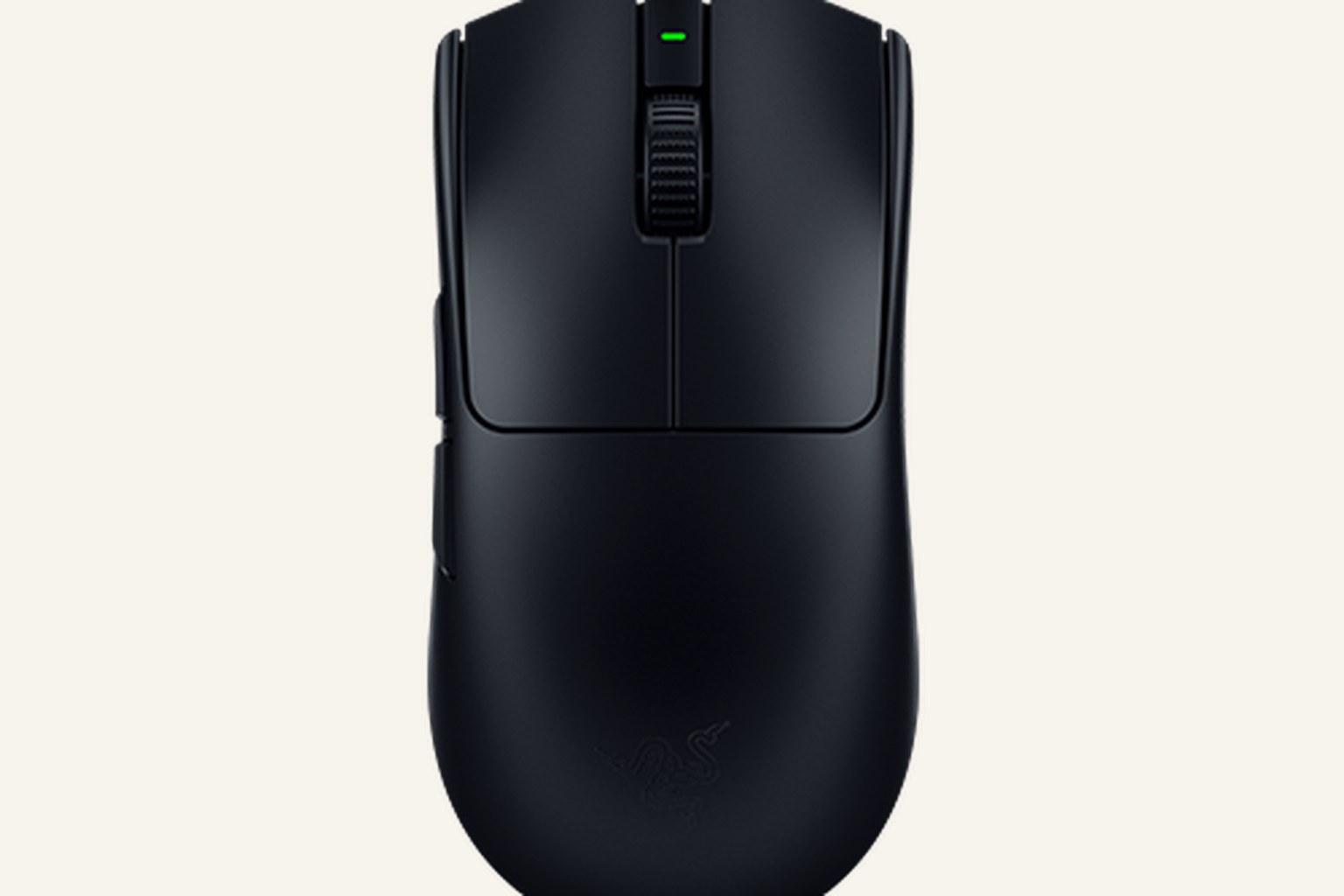
Razer Viper V3 Pro
Razer
Players who want a straightforward wireless mouse with well-liked main clicks and accessible side buttons.
The Viper V3 Pro makes its strongest case through the parts of a mouse you touch constantly: the shell, the main buttons and the two side controls. Reviews describe a revised body with flatter sides and a fuller hump, alongside a coating that feels grippy to the reviewers. Those changes matter because buying another Viper does not necessarily mean getting the same hand position as an earlier one. Treat the shape as a new fit decision rather than an automatic replacement for whatever Viper you already own.
Reasons to choose it
- Reviewers liked the revised coating and the feel of the main clicks.
- Separated side buttons were easy to reach in one reviewer’s gaming use.
- Synapse offers settings for the way the mouse behaves in and out of games.
Tradeoffs to know
- The larger shape can still feel too big for some hands.
- One reviewer found the supplied charging cable heavy enough to disturb balance.
- The simple layout offers less room for bindings than a specialist mouse.
Think twice if: You want a small shell, a thumb rest, or a large collection of game bindings.
Further reading
Ratings
Editorial score 8.8
Shape and grip fit9
Revised shape and grippy coating receive favorable reports, with a meaningful size caveat.
Buttons and control layout9
Main clicks and accessible side buttons are well liked within a simple layout.
Power and setup convenience8
Configurable software is useful; the heavy charging cable can disturb balance while connected.
Sources & further reading
youtube.com review
youtube.com review
youtube.com review
youtube.com review
youtube.com review
youtube.com review
youtube.com review
Keep reading
Something changed? Help us keep this useful.
Send a correction →