
The recommendation
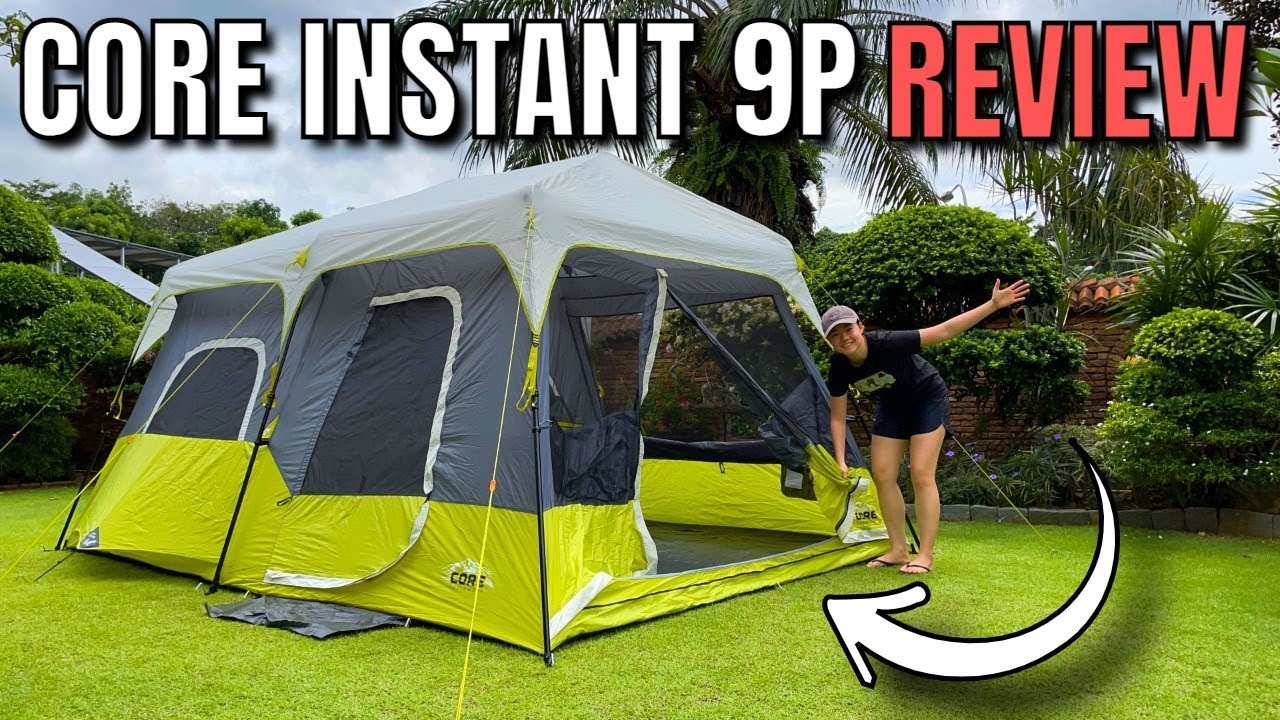
The Core is the starting point here for an attached telescoping frame and a T-door you can open wide. Choose it with the divider route in mind: one area reaches both outside doors through the other. Its long carry bag also needs a place in your loading and storage plan. Reviewer photo: CORE Instant 9P review.
Grades at a glance
| Product | Overall | Physical setup and handling | Doors, closures and adjustment | Packing and routine care access |
|---|---|---|---|---|
| Core 9 Person Instant Cabin Tent | 8.4 | 9.0 | 8.0 | 8.0 |
Does it fit your life?
The reason to choose the Core
The Core is a strong starting point when you want the main poles to stay with the body from one trip to the next. Unfolding, lifting and extending the connected frame replace laying out and threading a separate pole set. That is the practical appeal of its instant-cabin design.
The T-door is the other deciding feature: its two sides roll and clip back. Pair that opening with the way you intend to use the divider. Both outside doors are on one side of it, so the divided areas do not have independent exits. The long folded frame also needs a planned place in the car and at home.
An attached frame with a clear sequence
The frame begins folded around its hubs. After opening and lifting it, extend the wall poles until the green buttons engage. The fly hooks to the frame, and the base, guylines and vents have their own staking steps. Keeping the main poles attached removes a sorting job while leaving these finishing actions to do.
Taking down the body reverses those movements: retract the wall poles using their buttons, fold the joints inward and gather the poles toward the central hub. If you prefer learning a connected sequence to assembling loose pieces, this is the strongest reason to favor the Core.
Plan around the divider and side-door cover
With the divider installed, one area contains both the T-door and smaller side door. The other reaches them through the divider’s central zipper. Before choosing this layout, picture the route people will use and where bags will sit. The divider creates a separation inside the tent, but it also creates a passage you will use.
The T-door’s two sides can be secured out of the way. The smaller door has a different handling detail: Camping Guidance describes its zipper catching the cover at times. Keeping that fabric clear is worth trying as you compare the two openings; the doors offer different routines as well as different shapes.
A forgiving bag still leaves a bulky bundle
Camping Guidance found that everything went back into the carry bag without a tight squeeze. The pack-down still involved gathering the fabric and folding the connected poles toward the hub. Room in the bag helps with that final step, while the frame determines the shape of the packed item.
Think about the whole journey from tent to storage. You will move a long, bulky package when loading the vehicle and again when putting it away. If that shape is awkward for your space, the attached-frame convenience may be a poor trade for your routine.
Other tents to compare
Compare the Gazelle T4 if a hub frame appeals and you want a floor that can come out for cleaning. Its long packed bag and layered door controls deserve the same attention as the opening mechanism.
The Kelty Daydreamer 6P takes a separate-pole approach, using corner supports and color-coded fly clips. Return to the camping tent guide to compare assembly, closures and packing side by side.
Questions before buying
Does the frame stay attached? Yes. The main frame uses pre-attached poles and clips; unfolding and extending it are still part of setup.
Does each divided area have its own door? No. Both outside doors are on the same side of the divider, which has its own central zippered opening.
Is packing just a matter of collapsing the frame? You also need to gather the tent fabric, fold the poles toward the hub and put the assembly in the bag. Its length remains the storage compromise.
Core 9 Person Instant Cabin Tent
Core
Campers who want telescoping poles already attached to the body and a T-door that rolls back on both sides.
The Core keeps the main frame attached while you unfold the body and extend the wall poles. Its large T-door rolls open from both sides, but the room divider puts both outside doors in one area. Choose this combination for connected assembly and broad access, with a long bag to store afterward. Reviewer photo: CORE Instant 9P review.
Reasons to choose it
- The main poles and clips stay with the tent through setup and packing.
- Both sides of the T-door can be rolled and clipped back.
- Camping Guidance found room to repack the folded tent in its bag.
Tradeoffs to know
- Both outside doors open from the same side of the divider.
- The side-door cover can catch beside the zipper and need guiding.
- The connected frame remains a long, bulky item after folding.
Think twice if: Each divided area needs its own outside door, or a long folded frame is awkward to store.
Published specifications
- divider
- Removable, with a zippered central opening
- entry
- Large T-door and smaller side door
- frame
- Pre-attached telescoping frame
Further reading
Ratings
Editorial score 8.4
Physical setup and handling9
Attached poles and clips remove the main pole-sorting and threading jobs. You still extend the frame, attach the fly and finish the staking and guylines.
Doors, closures and adjustment8
The T-door rolls back on both sides, and a smaller door sits beside it. Both serve one side of the divider; the side-door cover can need guiding past the zipper.
Packing and routine care access8
The wall poles retract and fold toward the hub. Camping Guidance found the bag accommodating, although the folded frame leaves a bulky package to carry and store.
Sources & further reading
youtube.com review
youtube.com review
youtube.com product information
Keep reading
Something changed? Help us keep this useful.
Send a correction →