
The recommendation
Start with the Core for an attached telescoping frame and large T-door, or the Gazelle T4 for a hub frame and removable floor. The Big House 6 and Daydreamer 6P offer separate-pole routines with locating cues. Choose the screened Skydome if you want retained corner poles and a separate screened entry. Reviewer photo: CORE Instant 9P review.
The shortlist, at a glance
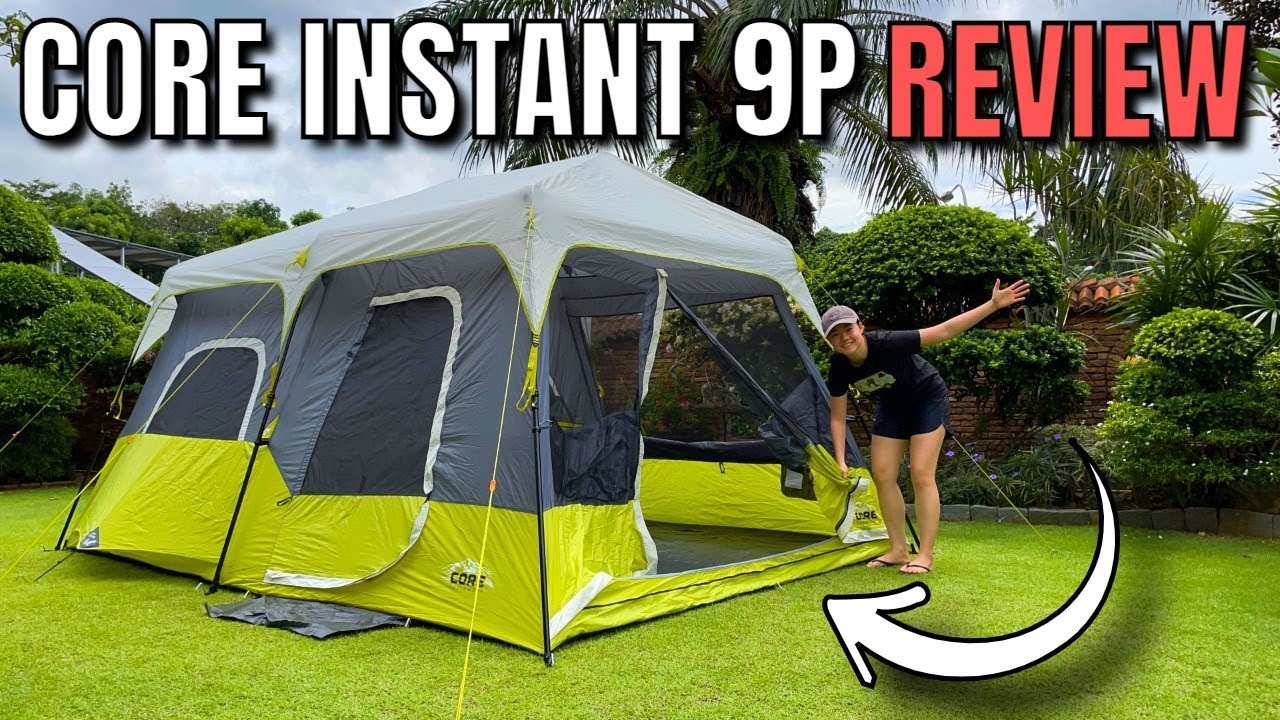
Campers who want telescoping poles already attached to the body and a T-door that rolls back on both sides.
Core 9 Person Instant Cabin Tent →

Campers who want to open a connected hub frame and take the floor out for cleanup.
Gazelle T4 Hub Tent →

Campers who prefer assembling separate poles with color cues and carrying the components in a shoulder-strap sack.
Big Agnes Big House 6 →
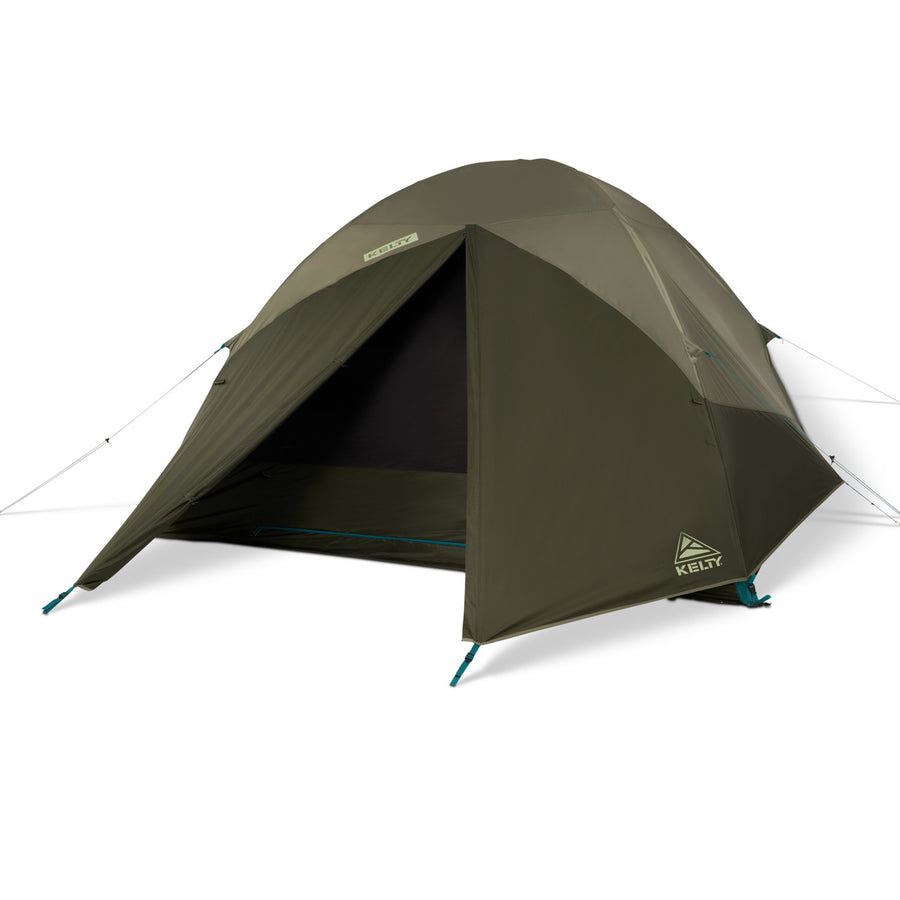
Campers who want separate poles with corner supports and front and rear panels that secure back with toggles.
Kelty Daydreamer 6P Camping Tent →
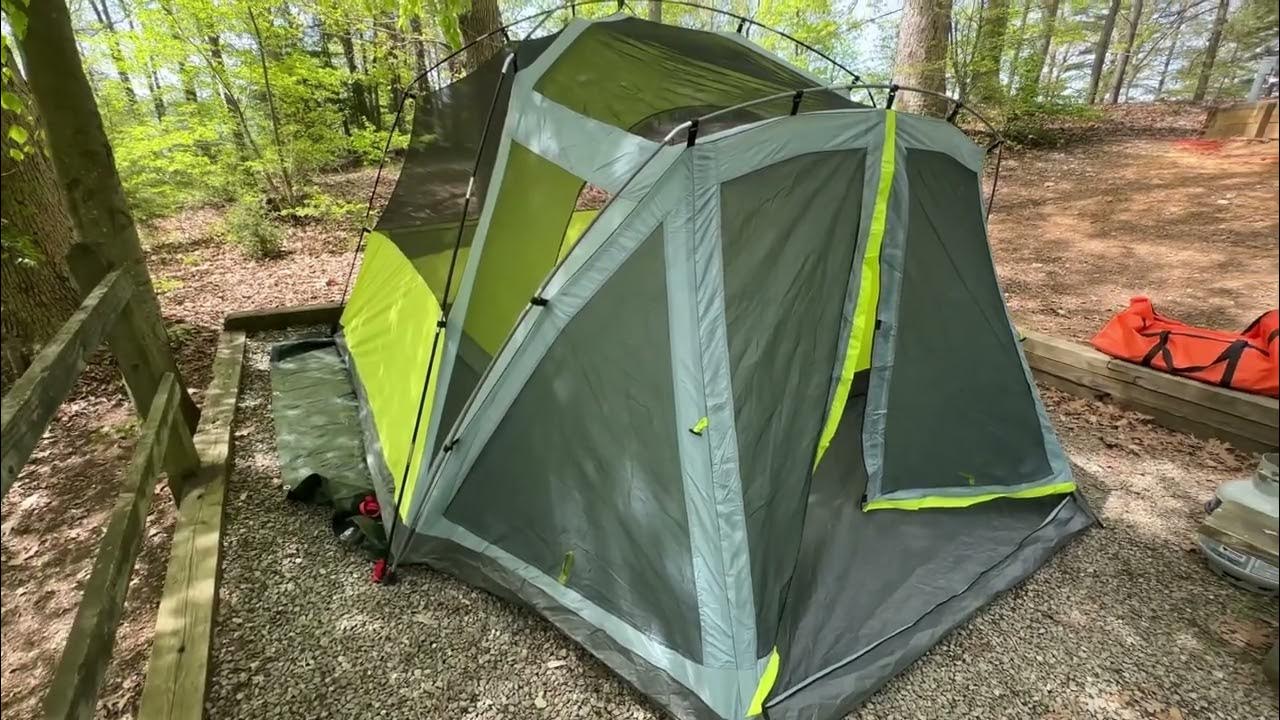
Campers who want pole ends kept with the tent and a separate screened entry with selectable panels.
Coleman Skydome Camping Tent with Screened Porch →
Grades at a glance
| Product | Overall | Physical setup and handling | Doors, closures and adjustment | Packing and routine care access |
|---|---|---|---|---|
| Core 9 Person Instant Cabin Tent | 8.4 | 9.0 | 8.0 | 8.0 |
| Gazelle T4 Hub Tent | 8.3 | 9.0 | 7.0 | 9.0 |
| Big Agnes Big House 6 | 7.7 | 8.0 | 7.0 | 8.0 |
| Kelty Daydreamer 6P Camping Tent | 8.0 | 8.0 | 8.0 | 8.0 |
| Coleman Skydome Camping Tent with Screened Porch | 7.7 | 8.0 | 8.0 | 7.0 |
Compare your shortlist
Does it fit your life?
Start with the job you want to change
If sorting and threading poles is the part of pitching you most want to change, begin with the Core or Gazelle T4. The Core extends on attached telescoping poles; the T4 opens through wall hubs. Both fold into long bags, so picture the packed tent in your vehicle and storage space before choosing.
If you prefer separate pieces, compare the Big House 6’s color-coded connections with the Daydreamer 6P’s Quick Corners and color-coded fly clips. The screened Skydome offers a different compromise: pole ends stay at the corners, but you still assemble the poles. Your preference for these actions is more useful than the frame label alone.
What stays attached—and what still needs doing
On the Core, unfold the body, lift the hubs and extend the wall poles until their buttons engage. On the T4, open the wall hubs of the connected frame. Both designs still have a separate fly and staking routine. Choose between their opening motions with the complete pitch in mind.
The Big House provides color cues for matching its separate parts and fly. Kelty’s demonstration shows assembled poles entering Quick Corners, followed by body clips and the fly’s straps and corner connections. The screened Skydome adds a front bow that seats in cups and clips on. These details tell you which parts you will be locating and fastening each trip.
Door count is only the beginning
The Core’s T-door rolls back on both sides, with a smaller door next to it. Its divider leaves both outside doors in one area; anyone in the other area passes through the divider opening to reach them. That route matters when deciding where to put belongings. The side-door cover can also need a guiding hand beside its zipper.
The T4 puts its doors at opposite corners, but each opening tapers. Its door windows have separate layers and similar-colored zipper pulls, so selecting and tying back the intended panel takes attention. The Big House has two doors with zippered windows; an earlier review describes guiding its guard fabric ahead of the zipper.
Kelty’s front vestibule and rear-window panels unzip and toggle back. The screened Skydome has its own door, mesh-window and flap controls around the screened entry. Compare the fabric you must move and secure as well as the opening itself.
Choose the end-of-trip routine
The Core’s connected frame takes a bulky bag home, even though Camping Guidance found enough room to repack it. The T4 also leaves a very long package. Its removable floor adds a useful option: take it out for cleaning, or release part of the edge so air can escape while compressing the tent.
The Big House gathers its tent, poles and fly in a shoulder-strap sack. Kelty shows the Daydreamer rolling into its Shark Mouth duffel. With the screened Skydome, retained poles make folding part of the decision; one user chose an oversized bag to make the roll less exacting. Pick a carrying and folding routine you will still welcome when packing up.
Use the scores to compare the work
These editorial scores compare physical setup, door and window adjustment, and packing and routine care. The Core leads this handling comparison at 8.4, followed by the T4 at 8.3 and Daydreamer at 8.0. The Big House and screened Skydome each score 7.7. Read the category explanations beside the totals to see which convenience or compromise shaped each judgment.
A small difference in the overall score need not decide your choice. If removing a floor is the feature you want, the T4 deserves a close look. If the T-door matters more, start with the Core and think through its divider route. The best match is the design whose repeated tasks suit you.
Build a shortlist around the details
Compare the Core and Gazelle T4 first if you want an attached frame. Their reviews put the Core’s divider arrangement alongside the T4’s layered doors and removable floor, so you can decide which handling tradeoff matters more.
For separate poles, read the Big House 6 and Daydreamer 6P reviews. Compare their matching cues, opening controls and carry bags. Add the screened Skydome if keeping pole ends with the body and having a separate screened entry are priorities.
Questions to settle before buying
How much of an attached-frame tent stays assembled? The Core’s main poles and clips stay with the body, while the T4 keeps its poles connected around hubs. Each still needs its fly and staking steps.
Which floor can I remove? The T4 floor releases at corner attachments and a hook-and-loop edge. Tabs help align it when refitting.
What helps orient separate parts? Big House color coding matches connections and the fly; Daydreamer Quick Corners locate pole ends, with color-coded clips for its fly.
What should I check before putting the bag away? Decide where the packed item will live and which folding steps you are happy to repeat. The Core and T4 leave long connected bundles; the screened Skydome keeps pole ends with the fabric during folding.
Core 9 Person Instant Cabin Tent
Core
Campers who want telescoping poles already attached to the body and a T-door that rolls back on both sides.
The Core keeps the main frame attached while you unfold the body and extend the wall poles. Its large T-door rolls open from both sides, but the room divider puts both outside doors in one area. Choose this combination for connected assembly and broad access, with a long bag to store afterward. Reviewer photo: CORE Instant 9P review.
The takeaway
The Core is the starting point here for an attached telescoping frame and a T-door you can open wide. Choose it with the divider route in mind: one area reaches both outside doors through the other. Its long carry bag also needs a place in your loading and storage plan. Reviewer photo: CORE Instant 9P review.
Reasons to choose it
- The main poles and clips stay with the tent through setup and packing.
- Both sides of the T-door can be rolled and clipped back.
- Camping Guidance found room to repack the folded tent in its bag.
Tradeoffs to know
- Both outside doors open from the same side of the divider.
- The side-door cover can catch beside the zipper and need guiding.
- The connected frame remains a long, bulky item after folding.
Think twice if: Each divided area needs its own outside door, or a long folded frame is awkward to store.
Published specifications
- divider
- Removable, with a zippered central opening
- entry
- Large T-door and smaller side door
- frame
- Pre-attached telescoping frame
Further reading
Ratings
Editorial score 8.4
Physical setup and handling9
Attached poles and clips remove the main pole-sorting and threading jobs. You still extend the frame, attach the fly and finish the staking and guylines.
Doors, closures and adjustment8
The T-door rolls back on both sides, and a smaller door sits beside it. Both serve one side of the divider; the side-door cover can need guiding past the zipper.
Packing and routine care access8
The wall poles retract and fold toward the hub. Camping Guidance found the bag accommodating, although the folded frame leaves a bulky package to carry and store.
Gazelle T4 Hub Tent
Gazelle
Campers who want to open a connected hub frame and take the floor out for cleanup.
The Gazelle T4 combines a connected hub frame with a floor you can detach for cleaning. That floor also gives trapped air a way out during packing. The everyday compromises are a very long bag, tapered doorways and separate door-window layers whose similar pulls take attention.
The takeaway
Choose the T4 when removing the floor would improve your cleanup routine and you like opening the frame through hubs. Check the layered door controls as carefully as the frame, then decide where the long bag will go between trips.
Reasons to choose it
- Wall hubs open the main frame without a separate pole assembly.
- The floor detaches around its corners and hook-and-loop edge.
- Alignment tabs help position the floor when it goes back in.
Tradeoffs to know
- The hub frame folds into a very long package.
- Door and window layers have similar-colored zipper pulls.
- Tapered doors and fabric tie-downs add handling details to learn.
Think twice if: You dislike selecting between layered door zippers or have nowhere convenient to keep a very long tent bag.
Published specifications
- entry
- Two tapered doors with separate window layers
- floor
- Removable, with hook-and-loop attachment and alignment tabs
- frame
- Connected wall and roof hubs
Further reading
Ratings
Editorial score 8.3
Physical setup and handling9
The wall hubs open an interconnected pole frame, leaving the fly and staking as separate jobs. Camping Guidance needed extra effort to open the final wall on the first setup.
Doors, closures and adjustment7
Opposite-corner doors give entry choices, but their tapered shape, layered panels and similar-colored zipper pulls make the opening sequence more involved.
Packing and routine care access9
A detachable floor provides direct cleaning access and lets air out during compression. Refitting it takes alignment, and the connected frame still packs into a long bag.
Big Agnes Big House 6
Big Agnes
Campers who prefer assembling separate poles with color cues and carrying the components in a shoulder-strap sack.
The Big House 6 pairs separate poles with color-coded webbing, buckles and fly connections. Two doors have zippered windows, and a shoulder-strap sack gathers the components for carrying. An earlier Big House review describes guiding the door guard ahead of the zipper—a detail to check when comparing the doors.
The takeaway
Shortlist the Big House 6 for its color-guided pole assembly and shoulder-strap sack. Try the door and window controls before deciding: the earlier report of guiding the zipper guard is a useful handling detail to examine.
Reasons to choose it
- Color-coded connections help orient the body and fly.
- Two doors include zippered window panels.
- A shoulder-strap sack brings the tent, poles and fly together.
Tradeoffs to know
- The poles need assembling separately from the body.
- An earlier Big House review describes guiding the door guard to keep it clear of the zipper.
Think twice if: Keeping the main frame attached throughout setup and packing is a priority.
Published specifications
- carrying
- Shared sack with shoulder straps
- entry
- Two doors and zippered windows
- frame
- Separate poles with color-coded connections
Further reading
Ratings
Editorial score 7.7
Physical setup and handling8
Color-coded webbing and buckles help match the connections, including the fly. The main poles still need separate assembly.
Doors, closures and adjustment7
An earlier Big House 6 review describes the door guard catching unless it is guided ahead of the zipper. Keeping that fabric clear adds a handling step when opening and closing the door.
Packing and routine care access8
The demonstrated shoulder-strap sack gathers the tent, poles and fly for carrying. Pockets and attachment points organize smaller belongings inside.
Kelty Daydreamer 6P Camping Tent
Kelty
Campers who want separate poles with corner supports and front and rear panels that secure back with toggles.
Kelty’s Daydreamer 6P uses Quick Corners to locate separate pole ends and color-coded clips to orient the fly. Its front vestibule and rear window can unzip and toggle back. The appeal is a choice of panels and clear places for the parts, followed by rolling the tent into its Shark Mouth duffel.
The takeaway
Choose the Daydreamer 6P if you prefer separate poles with corner supports and want toggle-back panels at the front and rear. Kelty’s assembly demonstration makes the sequence clear: poles, body clips, fly connections, then staking and guylines.
Reasons to choose it
- Quick Corners receive the pole ends while the body clips onto the frame.
- Color-coded fly connections provide matching cues.
- Front vestibule and rear-window panels unzip and toggle back.
Tradeoffs to know
- The main poles require assembly before the body clips on.
- Fly straps, corner clips, stakes and guylines are additional setup steps.
Think twice if: You prefer the main frame to remain attached to the body during setup and packing.
Published specifications
- frame
- Separate poles with Kelty Quick Corners
- openings
- Front vestibule and rear window with toggle-back panels
- packing
- Shark Mouth duffel
Further reading
Ratings
Editorial score 8
Physical setup and handling8
Kelty’s Quick Corners locate the assembled pole ends while the body clips on. Color-coded fly connections help with the next stage, which still involves separate straps and clips.
Doors, closures and adjustment8
The front vestibule and rear-window panels unzip and toggle back, giving you defined ways to open them and hold the fabric aside.
Packing and routine care access8
Kelty supplies a Shark Mouth duffel for the rolled tent. White interior pockets and a gear loft give small belongings their own storage places.
Coleman Skydome Camping Tent with Screened Porch
Coleman
Campers who want pole ends kept with the tent and a separate screened entry with selectable panels.
The screened Skydome retains pole ends at the corners while you assemble the frame. Its front bow seats in cups and attaches with clips, creating a separate screened entry arrangement. Those retained poles also come into the packing decision: the fabric needs folding around them before it returns to a bag.
The takeaway
Choose the screened Skydome if retained corner poles and a separate screened entry suit the way you set up camp. Give packing equal attention: folding around those poles is part of the design, and one screened-Skydome user preferred an oversized bag for a less exact roll.
Reasons to choose it
- Retained corner ends keep the main poles with the body.
- Cups and clips hold the front bow without a pole sleeve.
- Zippered door and mesh-window panels provide opening choices.
Tradeoffs to know
- Retained pole ends still leave pole assembly to do.
- The attached poles make careful folding part of the packing routine.
Think twice if: You want the complete frame to unfold as one assembly, or dislike folding fabric around retained poles.
Published specifications
- entry
- Screened area with selectable door and mesh panels
- frame
- Poles retained at the corners
- front bow
- Cup and clip attachments
Further reading
Ratings
Editorial score 7.7
Physical setup and handling8
Keeping pole ends at the corners reduces sorting. The poles still need assembly, and the front bow connects through cups and clips before the separate fly is fitted.
Doors, closures and adjustment8
The screened layout combines a zippered door with selectable mesh-window panels and closure flaps to secure as you adjust the openings.
Packing and routine care access7
The retained poles call for deliberate folding with the fabric. One screened-Skydome user chose an oversized bag to avoid making the roll exact.
Sources & further reading
youtube.com review
youtube.com review
youtube.com product page
youtube.com review
youtube.com product information
User reports at youtube.com
User reports at youtube.com
Keep reading
Something changed? Help us keep this useful.
Send a correction →