
The recommendation
Choose the screened Skydome if retained corner poles and a separate screened entry suit the way you set up camp. Give packing equal attention: folding around those poles is part of the design, and one screened-Skydome user preferred an oversized bag for a less exact roll.
Grades at a glance
| Product | Overall | Physical setup and handling | Doors, closures and adjustment | Packing and routine care access |
|---|---|---|---|---|
| Coleman Skydome Camping Tent with Screened Porch | 7.7 | 8.0 | 8.0 | 7.0 |
Does it fit your life?
Retained corners with a screened entry
Choose the screened Skydome if you want the main pole ends to stay with the body and like having a separate screened entry. Keeping those ends at the corners reduces sorting, while the front bow connects through cups and clips. You still assemble the pole sections as you pitch it.
That arrangement follows you into pack-up. Retained poles mean folding fabric around connected parts, so consider the take-down routine as well as the pitch. A buyer who likes careful folding may see this differently from someone who prefers gathering a loose bundle into a large bag.
What the retained poles actually do
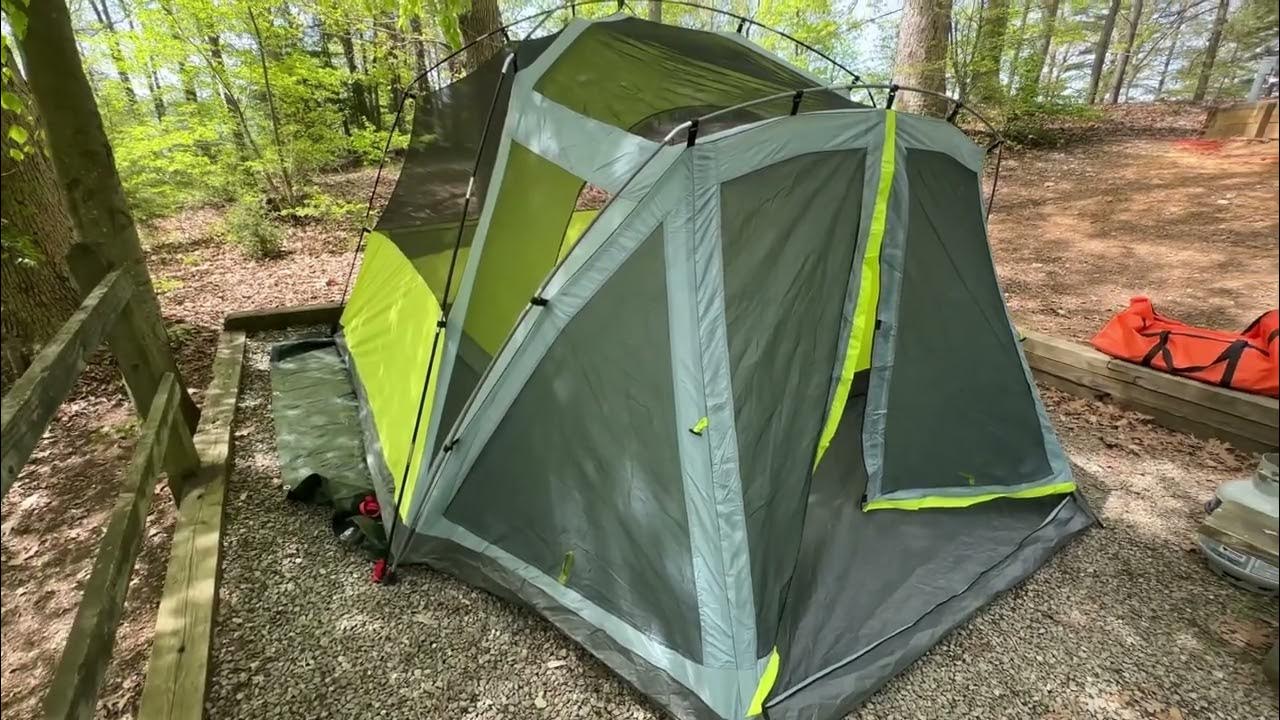
A screened-Skydome campsite walkthrough shows the pole ends attached at the corners and a bow running across the front. Its ends seat in cups, and clips hold it to the fabric. You can locate that front section without threading the bow through a sleeve.
Retained ends are a locating aid. The body still unfolds, the pole sections still need assembly, and the front bow and fly remain jobs of their own. Compare this sequence with how much of the frame you want to leave connected from trip to trip.
Think through the entry panels
The screened-Skydome walkthroughs show a zippered entry, selectable mesh-window panels and closure flaps. Work through which panel you would open first and which flaps need securing. Those actions are part of using the screened entry, alongside the layout itself.
The separate front area may appeal if you want a place to stage boots or other belongings before going farther inside. Picture the sequence of openings you will use and where those items will sit. That helps turn a preference for a screened entry into a practical choice.
Decide how you want to fold and carry it
Retained pole ends stay with the body during take-down, so the pole sections and fabric need folding together. Treat that as part of the purchase: the same connections that locate parts during setup also shape the bundle you put away.
One screened-Skydome user chose an oversized bag so the roll did not need to be exact. That is a useful option for someone who dislikes precise packing. It remains a preference from that report; decide whether you would rather practice the fold or plan for a more generous bag.
Other tents to compare
The Core 9 Person Instant Cabin goes further toward keeping the frame assembled, using telescoping wall poles. It has a large T-door and a smaller adjacent door, with a long packed bundle to consider.
The Kelty Daydreamer 6P uses separate poles with corner supports and a duffel. Compare those assembly and packing routines in the camping tent guide before choosing how much you want to leave connected.
Questions before buying
Do retained poles remove all pole assembly? No. The corner ends stay with the body, but the pole sections still need assembling.
How does the front bow attach? The screened-family walkthrough shows cups and clips rather than threading that bow through a sleeve.
Must I buy a larger bag? No. One screened-Skydome user preferred an oversized bag so the roll did not need to be as exact. Consider your own packing preference.
Coleman Skydome Camping Tent with Screened Porch
Coleman
Campers who want pole ends kept with the tent and a separate screened entry with selectable panels.
The screened Skydome retains pole ends at the corners while you assemble the frame. Its front bow seats in cups and attaches with clips, creating a separate screened entry arrangement. Those retained poles also come into the packing decision: the fabric needs folding around them before it returns to a bag.
Reasons to choose it
- Retained corner ends keep the main poles with the body.
- Cups and clips hold the front bow without a pole sleeve.
- Zippered door and mesh-window panels provide opening choices.
Tradeoffs to know
- Retained pole ends still leave pole assembly to do.
- The attached poles make careful folding part of the packing routine.
Think twice if: You want the complete frame to unfold as one assembly, or dislike folding fabric around retained poles.
Published specifications
- entry
- Screened area with selectable door and mesh panels
- frame
- Poles retained at the corners
- front bow
- Cup and clip attachments
Further reading
Ratings
Editorial score 7.7
Physical setup and handling8
Keeping pole ends at the corners reduces sorting. The poles still need assembly, and the front bow connects through cups and clips before the separate fly is fitted.
Doors, closures and adjustment8
The screened layout combines a zippered door with selectable mesh-window panels and closure flaps to secure as you adjust the openings.
Packing and routine care access7
The retained poles call for deliberate folding with the fabric. One screened-Skydome user chose an oversized bag to avoid making the roll exact.
Sources & further reading
youtube.com review
youtube.com product information
User reports at youtube.com
User reports at youtube.com
Keep reading
Something changed? Help us keep this useful.
Send a correction →