
The recommendation
Start with Ninja CE251 for removable-tank filling and direct buttons; prioritize KBGV Select for the shortest ordinary control sequence, or another model for its specific arrangement.
The shortlist, at a glance

Buyers who prioritize a very short ordinary control sequence.
Technivorm Moccamaster 53941 KBGV Select Coffee Maker →

Buyers who want deliberate selector choices and are comfortable checking basket configuration.
Breville BDC400BSS Precision Brewer Drip Coffee Maker →
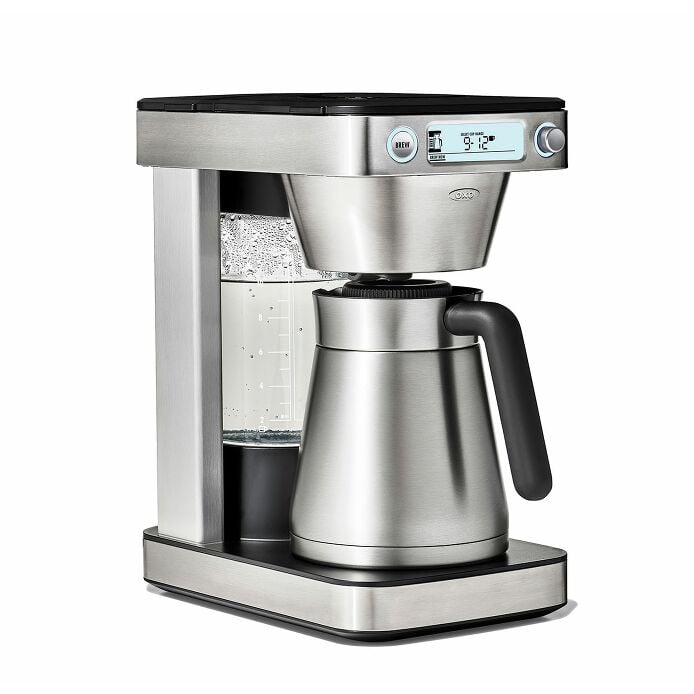
Households with a real need to change between carafe and smaller-serving setups.
OXO Brew 12-Cup Coffee Maker With Podless Single-Serve Function →

Buyers who want to take the water reservoir to the sink and prefer direct ordinary buttons.
Ninja CE251 12-Cup Programmable Coffee Brewer →
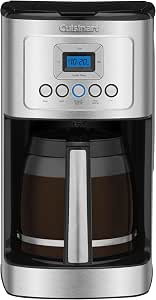
Buyers who prefer dedicated buttons and the shared DCC-3200 family filling arrangement.
Cuisinart DCC-3200NAS 14-Cup Programmable Coffee Maker →
Grades at a glance
| Product | Overall | Filling and carafe handling | Ordinary control selection | Basket and routine care access |
|---|---|---|---|---|
| Technivorm Moccamaster 53941 KBGV Select Coffee Maker | 8.5 | 8.0 | 9.5 | 8.0 |
| Breville BDC400BSS Precision Brewer Drip Coffee Maker | 7.4 | 7.0 | 8.0 | 7.0 |
| OXO Brew 12-Cup Coffee Maker With Podless Single-Serve Function | 8.0 | 8.0 | 8.0 | 8.0 |
| OXO Brew 9-Cup Coffee Maker | 8.7 | 9.0 | 8.0 | 9.0 |
| Ninja CE251 12-Cup Programmable Coffee Brewer | 9.2 | 9.5 | 9.0 | 9.0 |
| Cuisinart DCC-3200NAS 14-Cup Programmable Coffee Maker | 8.7 | 9.0 | 9.0 | 8.0 |
Compare your shortlist
Does it fit your life?
Start with the chore you want to improve
The Ninja CE251 is our first choice for ordinary handling in this six-brewer comparison. Its handled removable reservoir gives filling a clear tank-to-sink route, its ordinary choices have dedicated buttons, and its basket and reusable filter have handles. Choose the Technivorm KBGV Select when the shortest ordinary control sequence matters most. The OXO Brew 9-Cup and Cuisinart DCC-3200NAS are strong alternatives with different control styles, while the OXO Brew 12-Cup adds a separate smaller-serving arrangement and the Breville BDC400BSS asks more deliberate basket and setting choices.
The scores compare three repeated jobs: filling and carafe handling, ordinary control selection, and basket care access. They are handling scores, so start with the movement you want to change. Carrying a reservoir to the sink, choosing half or full with a switch, and swapping a basket for a smaller vessel are different conveniences. The best choice depends on which of those jobs belongs in your morning, and which one you would welcome doing differently.
For a shared kitchen, compare a full cycle of preparation and clearing. A person buying for the whole household might favor the OXO 12 because one user wants a mug and another wants a carafe. That only works as a buying reason if both accept the basket change and range selection. Similarly, someone choosing the KBGV for its switches should be comfortable returning its sliding basket. Include whoever empties the machine when judging these tradeoffs.
Jump to the comparison table, filling choices, control styles, care arrangements, or final shortlist.
Compare the ordinary tasks
| Brewer | Filling and carafe | Ordinary controls | Basket care access | Overall | Main reason to choose |
|---|---|---|---|---|---|
| Ninja CE251 | 9.5 | 9 | 9 | 9.2 | Handled removable reservoir and direct buttons |
| OXO Brew 9-Cup | 9 | 8 | 9 | 8.7 | Accessible filling and care with a dial |
| Cuisinart DCC-3200NAS | 9 | 9 | 8 | 8.7 | Direct buttons and side water-window workflow |
| Technivorm KBGV Select | 8 | 9.5 | 8 | 8.5 | Half/full selector and start switch |
| OXO Brew 12-Cup | 8 | 8 | 8 | 8 | Separate smaller-serving configuration |
| Breville BDC400BSS | 7 | 8 | 7 | 7.4 | Selector choices with basket-setting matching |
All scores are out of ten. The category pattern is more informative than the overall order alone. The OXO 9 and Cuisinart share an overall but emphasize different interactions: care access is stronger for the OXO, while ordinary control selection is stronger for the Cuisinart. The Technivorm's standout is its short control sequence. The Ninja's removable tank is the clearest filling distinction.
Use the table to identify two candidates, then read their individual reviews for the particular movements behind the grades. Someone who enjoys a dial may accept occasional press-and-hold learning. Someone who values a removable tank may prefer that physical change even when another panel looks tidier. The table is a practical index to those choices, rather than a substitute for deciding what you want to do at the counter.
Choose your filling route
The Ninja CE251's handled reservoir can be taken to the sink. In the exact-model demonstration, the presenter shows its removal and discusses carafe handling. This is the first model to examine if bringing a separate jug to the machine is the task you want to change. Read the CE251 review for the tank-return and button arrangement as a complete routine.
The OXO Brew 9-Cup provides a different favorable filling arrangement: a large reservoir opening and visible marks, with the demonstrator finding the carafe handle and pour comfortable. The hands-on account also makes lid-open clearance worth considering. Read the OXO 9 review if bringing water to the brewer suits you and you want to compare access around the opening rather than tank removal.
The DCC-3200 family demonstrations show a wide opening, side water window, and carafe-lid removal for filling. The manufacturer-presented rehost and hands-on family demonstration support that shared workflow. Our selected listing is the NAS suffix; those accounts do not establish suffix-specific packages or revisions. The Cuisinart review keeps the distinction explicit while explaining the ordinary handling.
The Breville's shared Precision Brewer arrangement uses a fixed rear tank with visible markings. The hands-on thermal-unit account and seller's glass-and-thermal presentation support the shared filling route. The selected BDC400BSS here is the glass-carafe identity. Read the Breville review for that scope; thermal vessel behavior is not the basis for the glass selection's handling assessment.
Before choosing a route, imagine the machine where it will stand. Can you reach the opening, see the marks or window, lift the tank if removable, and put the filling vessel away? Those are personal counter-planning questions. A feature is useful when the relevant movement works for your space. Consider the open and partly disassembled machine, not only the tidy closed outline in a product photograph.
Choose a control style
The Technivorm KBGV Select offers the shortest ordinary sequence in this comparison: half/full selection and a start switch. Seattle Coffee Gear shows that layout along with the basket's alignment in a seller demonstration. The KBGV review is the place to start if you want very few visible decisions and are comfortable giving the physical placement of the basket and carafe deliberate attention.
The Ninja CE251 and Cuisinart DCC-3200 family favor dedicated ordinary buttons. The Ninja walkthrough identifies classic/rich, small-batch, and brew selections; the Cuisinart family presentation identifies brew, bold, small-batch, and tone choices. The relevant question is whether you like a labeled place for each action. Mode names identify selections here; the buying comparison concerns how the user locates and chooses them.
The OXO 9's dial is direct for batch selection and ordinary start, while clock and delay actions use different press-and-hold steps. The reviewer retries a sequence in the demonstration. A single dial can look uncluttered while still carrying several actions. Choose it if you are comfortable learning that distinction, especially if the more occasional settings are ones you expect to remember between uses.
The OXO 12 adds a configuration check to its dial routine: the small-basket arrangement needs a matching range selection. The review shows brew-now, clean, clock, and later choices, followed by the range decision. The individual OXO 12 review explains why this is useful flexibility for a household with a real need for both arrangements, and additional work for one that rarely switches.
The Breville's shared controls likewise connect to a physical basket decision. Preset selection and start are understandable once learned, but filter type is a separate setting. The hands-on review and seller demonstration show the relationship. Shortlist it when you want those deliberate choices and accept checking that the basket and setting agree, particularly after someone else has used the machine.
Compare the return trip
Care access is about removing, reaching, and returning the parts you handle after preparation. The Ninja's tank can be reached at the sink, and its basket and filter lift by handles in the CE251 demonstration. The OXO 9 has a handled basket and twist-off head, with a mixing tube and small plunger/washer requiring attention in its care discussion. Both score strongly, with different pieces to organize.
The Technivorm basket slides out, and its spray arm is friction-fit removable in the seller account. Access is useful, while correct realignment belongs to the return sequence. The Cuisinart family has handled basket and filter parts and a separately accessible charcoal-filter holder, shown in the family demonstrations. Consider whether you prefer one arrangement's parts and fit over the other's instead of reducing care to a simple removable/not-removable label.
The OXO 12's smaller arrangement adds tray attention: the reviewer shows continued drips after the mug is removed and discusses separate carafe care in the hands-on account. The Breville's nested basket deserves a different check: the Sage reviewer warns that lifting only the inner cone leaves residue below it, around 9:25–10:11 in the supplied-unit review. That observation applies to the common nested basket, not thermal-carafe care for the glass selection.
Compare the pieces you would actually handle after your usual serving. With the Ninja, the tank can join the basket and filter at the sink. With the OXO 9, pay particular attention to the mixing tube and smaller plunger/washer. With the Breville, look beneath the inner cone. With the OXO 12, include the tray after the small setup. Those differences are more useful than a general promise of easy cleaning: they identify the particular component each buyer needs to consider.
When flexibility earns its place
The OXO 12 is the configuration choice to examine when one household wants both a carafe and a smaller-serving arrangement. Its separate basket, manual range choice, and drip-tray care are visible parts of that flexibility in the demonstration. Ask how often you will switch and where the unused vessel and basket will go. A clear answer gives the additional arrangement an actual role.
The Breville is the choice to examine when making selector and basket decisions is itself part of what you want from preparation. Its shared menu and care accounts show why familiarity matters. You may enjoy having deliberate choices; you may prefer to remove those decisions. Neither preference is inherently better. The purchase becomes clearer when you can name the settings or configurations you expect to use rather than valuing their presence in the abstract.
For a household that usually does the same thing, the simpler route may be more appealing. The KBGV's short ordinary panel sequence, the Ninja's tank-to-sink filling, and the OXO 9's carafe-centered arrangement each provide a distinct starting point. You can choose the kind of simplicity that addresses your habit: fewer selections, a different filling trip, or an accessible set of care parts.
Build your shortlist
Choose the Ninja CE251 first if your priority is a handled removable reservoir together with direct ordinary buttons and accessible filter parts. Compare the OXO 9 if a dial and the demonstrated carafe-and-care arrangement appeal more. Compare the Cuisinart DCC-3200NAS if dedicated buttons and the family water-window workflow fit, keeping exact suffix details separate. These are the strongest starting points for a broad ordinary-handling shortlist.
Choose the Technivorm KBGV Select when half/full and start are the controls you want to see, and deliberate basket alignment is acceptable. Choose the OXO 12 for a real need to change between its physical serving arrangements. Choose the Breville BDC400BSS when the shared Precision Brewer control choices and basket matching suit your habits, with its glass selection kept distinct from the thermal and regional demonstrations.
For two finalists, use one ordinary weekday as the comparison. If you fill immediately before starting and clear straight afterward, focus on those three movements. If someone else prepares the machine, focus on which basket and setting they leave behind. If you regularly change between a carafe and a mug, give the OXO 12 switching sequence more attention. This makes the choice concrete without requiring every household to value the same feature or follow the same preparation habits.
Source context for the buying advice
The linked material consists of historical demonstrations and reviews with different presentation contexts. Seattle Coffee Gear is a seller. Just A Dad's OXO 12 and Breville accounts include purchase statements and promotions; the Ninja account reports purchase. The Sage reviewer describes an initially supplied unit. The OXO 9 and the second Cuisinart account have disclosure not stated in the available account. The Cuisinart-presented rehost is general information with channel authenticity unverified.
The favorable carafe-handling comments are the presenters’ own observations. The recommendations and scores are our editorial assessment of the demonstrated tasks. For Breville, the shared tank, controls, and baskets support comparison across the shown family versions; thermal-carafe behavior does not establish glass-carafe handling. For Cuisinart, the demonstrations explain the family arrangement while the NAS-specific package remains a separate listing question. These distinctions are especially useful when a retailer uses a broad family name beside a particular model number.
Two close decisions explained
If you are choosing between the OXO 9 and Cuisinart, start with your preferred control logic. The OXO's multipurpose dial and the Cuisinart family's dedicated ordinary buttons ask for different kinds of familiarity. Then compare the care parts that go with each. Their matching overalls leave room for that personal decision rather than implying that the two routines are interchangeable.
If you are choosing between the Ninja and Technivorm, start with the chore you value most. The Ninja's defining convenience is the removable tank; the Technivorm's is its very short ordinary panel sequence. A buyer who dislikes carrying a filling jug may reasonably prioritize the former. A buyer who dislikes making several labeled selections may prioritize the latter. The shortlist is stronger when you can state that preference plainly.
Technivorm Moccamaster 53941 KBGV Select Coffee Maker
Technivorm
Buyers who prioritize a very short ordinary control sequence.
Half/full selection and a start switch keep ordinary choices short, with deliberate basket and carafe alignment.
The takeaway
Shortlist the KBGV Select for its short control sequence if deliberate basket and carafe placement fits your routine.
Reasons to choose it
- Visible half/full selector and start switch.
- Basket slides out for access.
- Friction-fit spray arm is removable.
Tradeoffs to know
- Basket must slide into its grooves.
- Carafe placement belongs in the start check.
- Removed components need correct realignment.
Think twice if: You strongly dislike sliding and realigning removable components.
Published specifications
- Model
- Technivorm Moccamaster 53941 KBGV Select Coffee Maker
- Review focus
- Filling, ordinary controls, and basket care access
Further reading
Ratings
Editorial score 8.5
Filling and carafe handling8
The seller demonstrates glass-carafe placement and a basket that slides into grooves; ordinary alignment needs attention.
Ordinary control selection9.5
Half/full selection and a start switch provide a short visible ordinary sequence.
Basket and routine care access8
Basket and friction-fit spray arm can be removed for access, with correct realignment afterward.
Breville BDC400BSS Precision Brewer Drip Coffee Maker
Breville
Buyers who want deliberate selector choices and are comfortable checking basket configuration.
A selector-led routine with shared fixed-tank access and basket choices that require a matching setting.
The takeaway
Choose the glass BDC400BSS selection when selector use and basket matching appeal, keeping thermal and regional vessel details separate.
Reasons to choose it
- Visible markings on the shared fixed tank.
- Preset selection and a separate start action.
- Removable basket, cone, and brew-head access.
Tradeoffs to know
- Shared rear tank cannot be carried to the sink.
- Basket choice needs a matching filter setting.
- Removing only the cone can leave residue underneath.
Think twice if: You want sink-side tank filling or the fewest possible preparation checks.
Published specifications
- Model
- Breville BDC400BSS Precision Brewer Drip Coffee Maker
- Review focus
- Filling, ordinary controls, and basket care access
Ratings
Editorial score 7.4
Filling and carafe handling7
The fixed rear tank has visible fill markings, but you must bring water to the machine because the tank cannot be carried to the sink.
Ordinary control selection8
Shared preset selection and start are understandable once learned; switching baskets requires matching the filter setting.
Basket and routine care access7
Shared removable basket, cone, and head give access, but the outer basket needs attention when the cone is removed.
OXO Brew 12-Cup Coffee Maker With Podless Single-Serve Function
OXO
Households with a real need to change between carafe and smaller-serving setups.
A separate smaller-serving arrangement adds useful configuration choices alongside basket, range, lid, and tray chores.
The takeaway
Choose the OXO 12 when both serving arrangements have a real role and their matching and clearing steps suit your household.
Reasons to choose it
- Large fill opening is demonstrated.
- Handled baskets and removable head provide access.
- Dial organizes ordinary actions and range selection.
Tradeoffs to know
- Threaded carafe lid needs alignment.
- Small-basket setting must be selected manually.
- Small-setup dripping adds tray attention.
Think twice if: You dislike matching a physical basket to a range setting or organizing spare components.
Published specifications
- Model
- OXO Brew 12-Cup Coffee Maker With Podless Single-Serve Function
- Review focus
- Filling, ordinary controls, and basket care access
Further reading
Ratings
Editorial score 8
Filling and carafe handling8
The large opening and favorable demonstrated carafe pour are balanced by threaded lid alignment and small-setup dripping.
Ordinary control selection8
The dial selects an action and a separate batch range; the small basket must be matched manually and does not meter tank water.
Basket and routine care access8
Handled baskets, removable head, and tray provide access, with small-basket drips and separate carafe care adding tasks.
OXO Brew 9-Cup Coffee Maker

OXO
Buyers who favor a carafe routine, accessible parts, and a dial.
A large fill opening, favorable reported carafe handling, and accessible care parts, with clock and delay dial actions to learn.
The takeaway
Shortlist the OXO 9 for filling and care access when its dial actions and small-part organization suit you.
Reasons to choose it
- Large opening and visible reservoir marks.
- Reviewer finds handle and pour comfortable.
- Handled basket and twist-off head are accessible.
Tradeoffs to know
- Open-lid access needs counter planning.
- Clock and delay require learned press/hold actions.
- Mixing tube and small plunger/washer need attention.
Think twice if: You want every setup action on its own labeled button or dislike tracking small care pieces.
Published specifications
- Model
- OXO Brew 9-Cup Coffee Maker
- Review focus
- Filling, ordinary controls, and basket care access
Further reading
Ratings
Editorial score 8.7
Filling and carafe handling9
Large opening and visible marks aid filling, with favorable personal carafe handling and lid-open placement to consider.
Ordinary control selection8
One dial handles ordinary range selection and start; clock and delay use different actions that the reviewer retries.
Basket and routine care access9
Handled basket and twist-off head provide access, with separate carafe/lid care and small parts to track.
Ninja CE251 12-Cup Programmable Coffee Brewer
Ninja
Buyers who want to take the water reservoir to the sink and prefer direct ordinary buttons.
A handled removable reservoir, dedicated ordinary buttons, and handled filter parts form a clear preparation and clearing routine.
The takeaway
Start with the CE251 for a removable-tank filling route, direct ordinary selections, and accessible handled care parts.
Reasons to choose it
- Handled removable reservoir enables sink filling.
- Dedicated ordinary mode, small-batch, and brew buttons.
- Basket and reusable filter lift by handles.
Tradeoffs to know
- Tank removal and return need suitable hand space.
- Small-batch selection does not replace deliberate filling.
- The descale cue still requires user action.
Think twice if: Your intended space makes tank removal awkward or you strongly prefer fewer visible controls.
Published specifications
- Model
- Ninja CE251 12-Cup Programmable Coffee Brewer
- Review focus
- Filling, ordinary controls, and basket care access
Further reading
Ratings
Editorial score 9.2
Filling and carafe handling9.5
The exact-model demonstration shows a handled removable tank and favorable glass-carafe handling, simplifying the filling route.
Ordinary control selection9
Dedicated ordinary mode, small-batch, and brew buttons are direct; the user still adds the intended water quantity.
Basket and routine care access9
The tank can be reached at the sink and basket/filter lift by handles; a descale reminder remains a cue for user care.
Cuisinart DCC-3200NAS 14-Cup Programmable Coffee Maker
Cuisinart
Buyers who prefer dedicated buttons and the shared DCC-3200 family filling arrangement.
Direct ordinary buttons and a wide-opening, side-window family workflow, with lid handling and distinct care parts.
The takeaway
Shortlist the DCC-3200NAS for direct buttons and the shared family filling workflow, checking exact suffix details separately when needed.
Reasons to choose it
- Shared family workflow shows a wide opening and side window.
- Dedicated ordinary buttons are directly labeled.
- Basket and reusable filter lift by handles.
Tradeoffs to know
- Carafe lid is removed during filling.
- Clock and programming are separate setup actions.
- Separate filter holder adds another care part.
Think twice if: A removable reservoir is your leading priority or suffix-specific package details are decisive and unchecked.
Published specifications
- Model
- Cuisinart DCC-3200NAS 14-Cup Programmable Coffee Maker
- Review focus
- Filling, ordinary controls, and basket care access
Further reading
Ratings
Editorial score 8.7
Filling and carafe handling9
DCC-3200-family demonstrations show a wide opening, side window, and lid removal; NAS-specific package and finish details remain separate.
Ordinary control selection9
Dedicated brew, bold, small-batch, and tone selections are direct, while clock and programming need setup.
Basket and routine care access8
Handled basket/filter and separate holder provide access; the clean light is a navigation cue rather than the care task.
Sources & further reading
User reports at youtube.com
User reports at youtube.com
youtube.com product page
User reports at youtube.com
youtube.com product page
User reports at youtube.com
User reports at youtube.com
youtube.com review
youtube.com product page
Keep reading
Something changed? Help us keep this useful.
Send a correction →