aosu Doorbell Camera Wireless Review (2026): Test the App Before You Keep It
The local-storage and 5MP pitch is tempting, but the real question is whether notifications, clip deletion, Wi-Fi behavior, and app loading hold up on your porch.
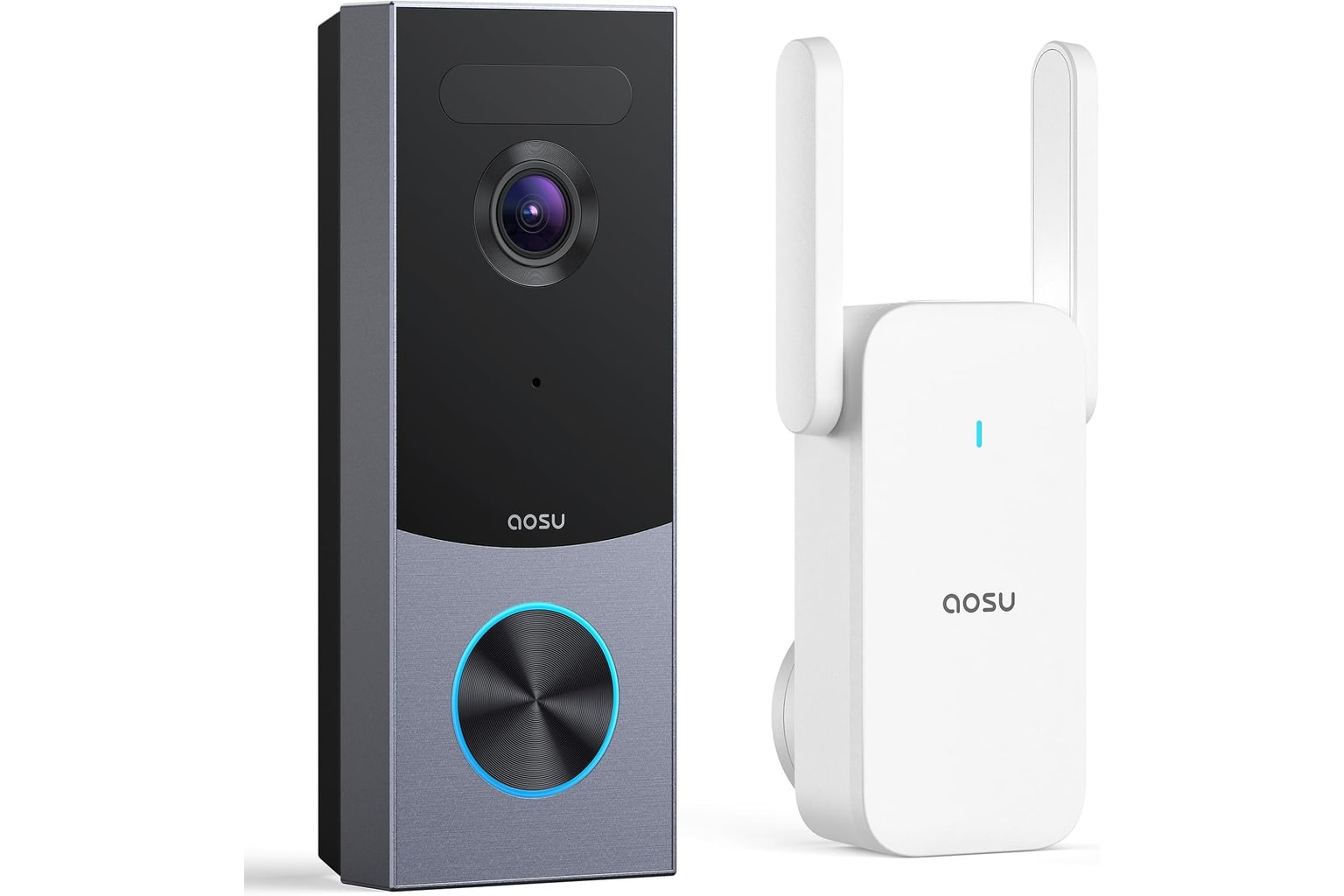
The aosu Doorbell Camera Wireless is a spec-heavy wireless doorbell with built-in local storage, rechargeable battery power, and Alexa/Google support. It can make sense for patient buyers, but app-store complaints about slow loading, delayed notifications, and clip deletion make it a product to test carefully before relying on it.
MSRP
—
Amazon
$149.99
at writing · 2026-05-18
Buyer fit
Watch before buying: the spec-heavy local-storage alternative with enough app evidence to keep it below the safer picks. Commerce note: in stock, shipped from Amazon, and sold by AOSU LIFE at the saved listing check.
MSRP
—
Amazon
$149.99
at writing · 2026-05-18
Score breakdown
How this product scored
Same rubric, but focused on one product so the reasons behind the score stay readable.
Alert speed and accuracy
aosu Doorbell Camera Wireless scored 5.8 for alert speed and accuracy because app-store evidence included late notifications, hard-to-open event alerts, and slow loading.
Video and package view
aosu Doorbell Camera Wireless scored 7.0 for video and package view because the 5MP pitch is attractive, but the doorbell lacks the dedicated package-view hardware that makes eufy E340 stronger for deliveries.
Install and power
aosu Doorbell Camera Wireless scored 7.4 for install and power because rechargeable battery power, dual-band Wi-Fi, and local storage are appealing if the exact kit and Wi-Fi signal check out.
App, clips, and plans
aosu Doorbell Camera Wireless scored 6.2 for app, clips, and plans because built-in local storage is attractive, but app loading, notification timing, and clip-deletion complaints weaken the ownership case.
Privacy and smart-home fit
aosu Doorbell Camera Wireless scored 5.6 for privacy and smart-home fit because Alexa/Google support helps, but there is no Apple Home lane and camera-app privacy settings still need a careful read.
Durability and support
aosu Doorbell Camera Wireless scored 6.0 for durability and support because the hardware pitch is promising, while thinner independent evidence and repeated app complaints keep confidence moderate.
Quick Verdict
The aosu Doorbell Camera Wireless is the doorbell to consider only if the spec sheet is tempting enough that you are willing to test the app hard before the return window closes. The appeal is obvious: a rechargeable wireless install, 5MP marketing, built-in 8GB local storage, 2.4/5 GHz Wi-Fi, Alexa/Google support, and a no-monthly-fee pitch that looks like a cheaper middle path between Ring’s plan-heavy world and Reolink’s wired PoE setup.
That is why it appears in our full video-doorbells comparison, but only as the Watch before buying lane. It ranked #6 with a 6.4 overall score because the everyday app evidence is not as reassuring as the hardware pitch. One positive YouTube source says, “I installed the U doorbell about a month ago and I love it,” praising the image quality. That is useful context. It is not enough to outweigh repeated app-store complaints about slow loading, late notifications, and clip-management trouble.
At the saved Amazon listing check, it was $149.99, in stock, shipped from Amazon, and sold by AOSU LIFE. Use the product links to confirm today’s price, seller, exact kit, return terms, and support KB4UB—but treat your first week as a real test, not a victory lap.
Score Breakdown
- Alert speed and accuracy: 5.8/10. This is the main risk. The doorbell promises motion/person-style alerting, but app-store excerpts included late notifications, hard-to-open event alerts, and general loading trouble.
- Video and package view: 7.0/10. The 5MP pitch is attractive, and a positive video source praised image quality. It still lacks the dedicated package-view hardware that makes eufy E340 stronger for porch deliveries.
- Install and power: 7.4/10. Rechargeable battery power, wireless placement, 2.4/5 GHz Wi-Fi, and usually-included chime language make setup look friendly, as long as your porch signal and kit contents check out.
- App, clips, and plans: 6.2/10. Built-in 8GB local storage is the reason to care, but the evidence included a local-recording deletion complaint after an update.
- Privacy and smart-home fit: 5.6/10. Alexa/Google support helps. Apple Home buyers should look elsewhere, and the Google Play listing’s data-safety language still deserves a read before you put a camera at the door.
- Durability and support: 6.0/10. The source mix is thinner than the stronger picks, so long-term confidence stays measured rather than glowing.
What Feels Great Right Away
The first reason aosu catches the eye is that it looks like a lot of doorbell for the money. You are not being asked to run Ethernet like Reolink PoE. You are not immediately being pushed toward Ring Protect for video history. You get a wireless-looking front-door camera with local-storage language, a high-resolution pitch, and compatibility with the two voice-assistant worlds most non-Apple buyers ask about.
That can feel refreshing if you are shopping after a bad experience with a bigger brand. A positive YouTube review supplies the clearest upside: “I installed the U doorbell about a month ago and I love it,” followed by “this doorbell has incredible image quality.” One video is not a full reliability verdict, but it does explain why people keep looking at aosu. When it works, the promise is genuinely appealing: a clear porch camera without a monthly bill sitting behind it.
The important pause is that video quality is only one part of a doorbell. The app has to open, the alert has to arrive while someone is still there, and local clips have to be easy to manage.
Setup, Power, and Kit Checks
The setup story is one of aosu’s better arguments. The listed package combines rechargeable battery power, built-in 8GB storage, 2.4/5 GHz Wi-Fi, Alexa/Google compatibility, and chime language that can depend on the exact kit. For a buyer who cannot run Ethernet and does not want another subscription, that combination is exactly the hook.
Before buying, slow down and verify the exact listing. The saved Amazon check was for a $149.99 listing that shipped from Amazon and was sold by AOSU LIFE, but doorbells are especially prone to bundles, older hardware, changed chime contents, and listing-image confusion. Confirm whether the indoor chime you expect is included, whether the mount fits your trim, and whether your router and front-door signal are strong enough for whichever Wi-Fi band you plan to use.
Battery doorbells also live or die by traffic. A quiet porch, sensible motion zones, and a strong signal can make wireless ownership feel easy. A busy sidewalk, weak Wi-Fi, or aggressive notifications can make the same device feel needy within a week.
Video Quality Is the Temptation, Package View Is the Gap
aosu’s 5MP claim is the cleanest reason to keep reading. If you are coming from an older Ring or a soft 1080p doorbell, sharper daytime footage sounds like an obvious upgrade. A YouTube reviewer supports that appeal, calling the image quality “incredible.” That is the good version of this product: it records a clear front-door view and does not ask for a monthly plan just to feel useful.
The gap is package view. aosu does not have the dedicated lower package camera that makes eufy E340 stronger for porch deliveries, and that matters more than it sounds. A single front-facing lens may show people well while still missing a box tucked under the camera or off to the side. aosu’s better-resolution pitch does not fully replace that lower angle.
So judge the porch, not the number. If your packages land in the main field of view, aosu may cover enough. If boxes sit below the lens, behind a column, or beside the mat, a dedicated package-view design is safer.
Local Storage Is the Best Reason to Consider It
Built-in 8GB local storage is the feature that keeps aosu in the conversation. A doorbell that stores clips locally can be a relief if you are tired of paying every month just to see what happened at your own front door. It also makes aosu look like a more casual alternative to Reolink: no Ethernet run, no NVR mindset, and no obvious cloud-first recording trap.
But local storage only helps if the app can manage the clips reliably. One Google Play reviewer wrote, “As of today I can no longer delete recordings from my local storage memory card,” then said selecting clips produced a “failed to delete” error after an update. The same review also reported notifications arriving “an hour or more later.” That is not a small nitpick if you bought the doorbell specifically to avoid cloud-plan headaches.
The fair takeaway is not “local storage is fake.” It is that local storage does not rescue a frustrating app. During the return window, record several events, delete several clips, change settings, and confirm that the product behaves the way you expect.
The App Is the Part to Test First
The app evidence is why this is a watch pick instead of a confident recommendation. A good doorbell can survive a mediocre spec. It cannot survive alerts that arrive too late or an app that refuses to open when a visitor is standing there.
Several Google Play excerpts are too specific to ignore. One reviewer started with the balanced line “So nice when it works,” then added that the app is “so unbelievably slow to load anything” and “freezes” when trying to load event notifications. Another wrote that the camera was close to the modem but “doesnt load majority of the time” and was “slow to load anything if something does load.” Those are not abstract complaints; they describe the exact moments a doorbell is supposed to be useful.
This does not mean every aosu buyer will have the same experience. Wi-Fi quality, phone settings, app version, and porch traffic all matter. But it does mean you should not install it, glance at one live view, and call the purchase settled. Test push alerts from inside the house, outside the house, on cellular data, and after the phone has been asleep.
Privacy and Smart-Home Fit
aosu is a better fit for Alexa/Google households than for Apple Home buyers. Its smart-home fit points toward Alexa/Google support, not HomeKit, so Apple-centered shoppers should compare Aqara G4 instead. If you want the cleanest local-recording setup and can run wire, Reolink PoE remains the more proven local-recording direction in this group.
The Google Play listing also gives a useful privacy checkpoint. It says the app is from AosuLife, has 1M+ downloads, and describes the app as a way to “watch over your home from your phone.” Its data-safety excerpt says “No data shared with third parties,” while also saying the app may collect “Personal info, App activity and 2 others,” with data encrypted in transit and deletion requests available.
That is not unusual for a camera app, but it is still worth reading before you buy. A video doorbell watches a sensitive spot: visitors, deliveries, neighbors, kids, and your own daily patterns. Local storage is helpful, but account settings, app permissions, and update behavior still matter.
How It Compares
The parent ranking matters because aosu is not just competing with other spec sheets. It is competing with different ways to avoid regret.
- eufy Security Video Doorbell E340: the better overall pick if you want package visibility, local storage, and fewer monthly-fee surprises. Choose eufy if packages are the reason you are shopping.
- Reolink Video Doorbell PoE: the better local-recording pick if you can run Ethernet and want a more camera-system-style setup. Choose Reolink for stability and 24/7 local recording paths, not easy renter placement.
- Ring Battery Doorbell: the better mainstream pick if you already live in Ring/Alexa and accept Ring Protect as part of the cost. Choose Ring for familiarity, not local storage.
- Aqara Video Doorbell G4: the better Apple Home lane. Choose Aqara if HomeKit Secure Video matters more than aosu’s 5MP/local-storage pitch.
- Blink Video Doorbell with Sync Module: the cheaper Amazon-family bundle, but with its own module and storage rules to verify.
aosu’s lane is narrower: buy it only if wireless local storage matters, Apple Home does not, and you are comfortable testing app reliability right away.
Who Should Buy the aosu Doorbell Camera Wireless
Buy aosu if you are a patient buyer who wants a wireless doorbell with local-storage features and does not want to jump straight into Ring Protect, Ethernet installation, or Apple Home tuning. It makes the most sense for a porch where packages land in the main camera view, Wi-Fi is strong at the door, and the return policy gives you enough time to test notifications, recordings, and clip deletion.
It is also worth considering if you are the kind of person who checks settings, updates firmware, and tests devices before trusting them. That sounds like extra work because it is. The reward is that aosu could give you a flexible, no-monthly-fee front-door setup for less hassle than a wired camera system.
The happiest buyer will not be the person who wants the safest recommendation. It will be the person who sees the bargain, knows the risks, and is willing to verify the boring parts before the return window closes.
Who Should Skip It
Skip aosu if late alerts would make the doorbell useless to you. The app-store quotes about slow loading, frozen event notifications, and delayed alerts are exactly the kind of complaints that should send cautious buyers toward eufy, Reolink, Ring, or Aqara depending on their home.
Skip it if package view is your top priority. The 5MP pitch is nice, but a sharper single view is not the same as a camera aimed at the doorstep. eufy E340 is the stronger package-focused choice in this set.
Skip it if Apple Home matters. Aqara G4 exists for that lane, even though it brings setup quirks of its own. Skip it if you want the most proven local-recording path and can run Ethernet; Reolink PoE is the cleaner fit. And skip it if you dislike troubleshooting camera apps. aosu may be fine on the right porch, but it asks for more buyer verification than the better-ranked picks.
The Return-Window Test Checklist
If you buy aosu, give it a deliberate first-week test instead of waiting until a missed delivery proves the problem.
- Ring the bell from outside and time how long the phone alert takes.
- Trigger motion events from normal visitor paths, not just by waving at the camera.
- Open an event from the push notification and from inside the app.
- Watch clips on Wi-Fi and on cellular data.
- Delete multiple local recordings and confirm they actually disappear.
- Test night footage and make sure faces or packages are usable in your lighting.
- Check whether the chime, voice assistant, and household phones behave consistently.
- Reboot the router or let the phone sleep overnight, then test again.
This sounds fussy, but it is the right kind of fuss. The product’s strengths are real enough to consider, and the app complaints are real enough to verify. A doorbell should earn trust before you rely on it for deliveries, visitors, or safety.
Bottom Line
Buy the aosu Doorbell Camera Wireless if: you want rechargeable wireless install, built-in local storage, 5MP-style sharpness, Alexa/Google support, and you are willing to stress-test the app immediately.
Skip it if: you need the safest app experience, fast alerts, Apple Home support, dedicated package view, or the most proven local-recording setup.
Bottom line: aosu is not a throwaway product, but it is a return-window product. The specs are interesting; the app evidence is the reason to be careful.
Tell us what this page missed
These pages get better when real buyer complaints make it back into the scoring model. If something important is underweighted, say it.
Rate this review
Give it a score from 1-10 and tell us what to improve.
0/4000 characters