
The recommendation
A considered choice for people who like the shape and case layout, with grip disagreements and repeated volume taps to weigh.
Grades at a glance
| Product | Overall | Fit and handling | Case and storage | Everyday controls |
|---|---|---|---|---|
| Sony WF-1000XM5 | 6.8 | 6.5 | 8.0 | 6.5 |
Does it fit your life?
The shape needs to work in your hands
Sony WF-1000XM5 has two handling reservations that deserve attention before purchase: the grip and the volume sequence. SoundGuys describes slippery glossy surfaces, while PCMag finds the earpieces easy to grip. That disagreement is useful. It tells you to try the actual shape rather than treating either reviewer's fingers as a substitute for yours.
SoundGuys' observations here came from a pre-production unit supplied by Sony. That disclosure applies to its grip and rear-case descriptions. The report is a reason to inspect those physical details, with an explicit limit on transferring that individual experience to every retail unit.
PCMag's reviewed volume arrangement requires four taps. The reviewer found the controls fairly responsive but considered that tap count cumbersome, and also reported accidental input during insertion or adjustment. If quick volume changes are one of your most frequent actions, that is a more meaningful reservation than the mere presence of a volume command.
Choose the XM5 when the housing feels easy to hold, the tips suit you and the repeated-tap arrangement feels acceptable. If you want a direct swipe or a distinct physical button, there are more straightforward starting points in this group.
Conflicting grip reports are a reason to try it
SoundGuys criticizes the glossy coating for slipperiness. PCMag describes glossy inner panels and smooth matte outer panels and reaches the opposite conclusion about grip. Neither statement should be erased to produce a cleaner verdict. Grip depends on the surface you hold, finger placement and the action you are trying to perform.
Try lifting a bud from the case, holding it without covering the control area and rotating it into position. Then reverse the sequence. Notice whether you hold it securely by instinct or keep changing your fingers around the shell. The task is particularly relevant if you already find small rounded objects fiddly.
PCMag describes four pairs of tips in extra-small, small, medium and large, with labels and color coding. Those markings make it easier to keep track of which size you have tried on each side. SoundGuys describes the supplied tips as polyurethane foam; its unit was supplied by Sony before production. The material and size choices are reasons to try this particular tip arrangement rather than assuming it feels like a silicone-tipped pair you already know.
Fit reports vary too. SoundGuys describes comfort on first insertion, while another account describes a fit that gradually slipped with a medium tip. Treat those as personal experiences. The reasonable takeaway is to pay attention to how the bud settles during ordinary movement, rather than equating a positive first impression with a settled fit for everyone.
Give grip and tip fit separate passes during that trial. First see whether you can lift and rotate the shell comfortably; then judge how it sits. A favorable result on one does not settle the other. That distinction is particularly useful here because the reviewers disagree about grip even while reporting positive initial fit experiences.
Four taps is a real selection cost
PCMag's reviewed layout puts playback on a single right-side tap, next track on two and previous track on three. Four taps on the right raise volume; four on the left lower it. The volume action therefore adds both a tap count and a side choice to remember. These are the assignments described at review time; check the actual pair's settings if you are counting on a specific layout.
A repeated-tap gesture asks you to remember both the count and the side. That may be acceptable if you rarely use it. If you change volume frequently, a direct swipe or a button may suit your habits better. The important comparison is the action sequence, rather than whether both products list the same function.
The review also describes accidental playback commands while inserting or adjusting the earbuds. That makes control placement part of the grip decision. If you naturally hold the outer panel while moving the bud, you may need a different grip to keep placement and commands separate.
During a fitting opportunity, make your usual adjustment and then deliberately perform the most common command. Consider whether the two feel distinct. Do not assume that a control you can demonstrate once will necessarily feel convenient every time you reach for it.
The control recommendation is cautious because the effort appears in two separate places: making an intended volume command and avoiding an unintended command during placement. Someone who rarely changes volume on the buds may give the first less weight. Someone who frequently reseats them should pay particular attention to the second.
A button and port at the back
SoundGuys describes a dedicated pairing button and a USB-C port on the rear of the case, along with a small front indicator in its broader physical description. These observations came from the Sony-supplied pre-production unit. The useful detail is where your fingers and cable need to go.
A separate button gives you a recognizable physical target. A rear cable connection means you need some clearance behind the case wherever you leave it. Those are layout considerations; they do not establish charging speed or any connection outcome.
Think through the case sequence as part of the grip trial. Open the lid, lift out a bud and put it back. A case that is comfortable to carry can still be awkward if you struggle to grasp the earpieces inside it. Conversely, if removal feels natural, the conflicting grip reports may be less important to you.
PCMag's Bose review describes that larger case as bulkier than the XM5 case. That is a useful relative storage comparison. It is not a reason to assume the Sony will fit every pocket. Use your actual carrying space as the final physical check.
Prefer a simpler gesture? Start elsewhere
AirPods Pro 2 USB-C offer stem swipes for volume and a positively described docking sequence. Bose also offers volume swipes, with its own accidental-touch reservation and larger case. Samsung Galaxy Buds3 Pro combines pinch playback gestures with volume swipes, while Nothing Ear (2024) centers on pinch controls.
Beats Fit Pro is the distinct option if you specifically want a physical button. Its fixed fins deserve their own fit check, so it is not an automatic answer to every touch-control complaint.
The XM5 is most convincing when you have tried the shell and find it easy to hold. The rear case layout is clear, and there are several tip sizes to explore. If the grip or four-tap sequence already sounds like a recurring frustration, choose a different action before committing to this shape.
Sony WF-1000XM5
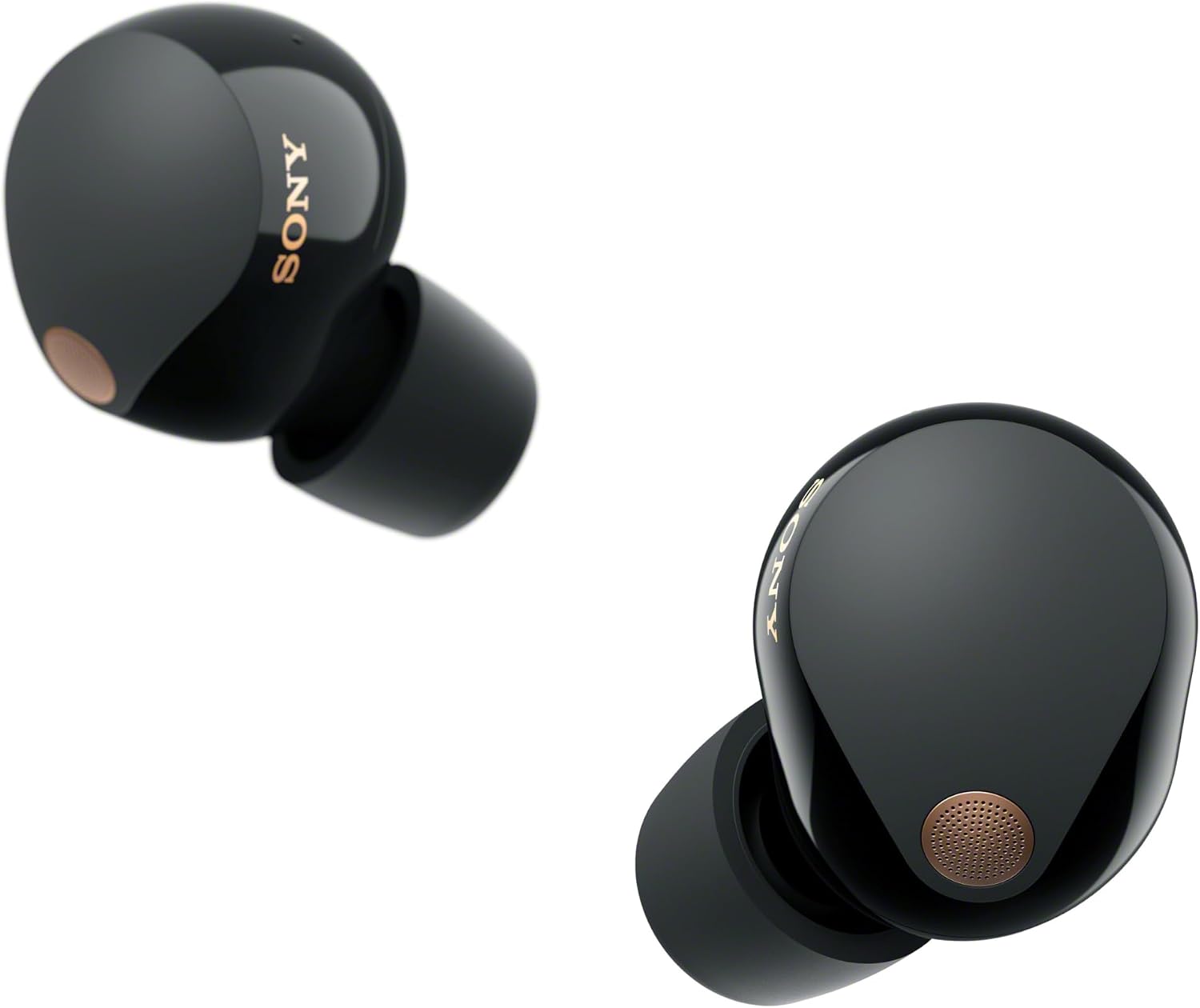
Sony
People who like the XM5 shape and can comfortably distinguish fit adjustments from touch commands.
Sony WF-1000XM5 has two handling reservations that deserve attention before purchase: the grip and the volume sequence. SoundGuys describes slippery glossy surfaces, while PCMag finds the earpieces easy to grip. That disagreement is useful. It tells you to try the actual shape rather than treating either reviewer's fingers as a substitute for yours.
Reasons to choose it
- Four labeled tip sizes described by PCMag
- Separate rear button and cable port
- Some reviewers find grip and fit comfortable
Tradeoffs to know
- Grip reports directly disagree
- Reviewed volume changes require four taps
- Insertion and adjustment can trigger commands
Think twice if: You want the simplest volume gesture or find small glossy earpieces difficult to hold.
Published specifications
- Model
- Sony WF-1000XM5
Further reading
Ratings
Editorial score 6.8
Fit and handling6.5
The supplied pre-production grip concern and contrary easy-grip report make a cautious fit judgment appropriate.
Case and storage8
A separate rear button and rear cable port give clear access points without implying charging performance.
Everyday controls6.5
Four-tap volume selection and incidental commands during placement create repeated physical selection effort.
Sources & further reading
soundguys.com review
pcmag.com review
Keep reading
Something changed? Help us keep this useful.
Send a correction →