FlexiSpot E7 Pro Review 2026: Strong Value, Serious Stability, and the Real Catch
A UX-first review of the FlexiSpot E7 Pro as the strongest performance-for-money threat in the standing-desk category.
The E7 Pro delivers the kind of stability, controls, and daily polish many buyers expect from pricier desks, but the shipping and support story is not as clean as the desk itself.
MSRP
$599.99
Amazon
—
Buyer fit
Strong value pick that punches above its price lane on desk quality but not always when something goes wrong.
MSRP
$599.99
Amazon
—
Overview
FlexiSpot E7 Pro is the desk for buyers who want to feel like they made the smart buy. The recurring story is simple: the frame feels stronger than many buyers expect, the controls are better than they need to be, and the desk keeps holding up once real gear lands on it.
That is what makes it such a strong value-performance pick. This is not a bargain desk dressed up with nice marketing. It is a genuinely capable desk whose strongest selling point is that the everyday experience feels closer to premium than the price lane suggests.
What It’s Like to Own
Once assembled, E7 Pro usually earns trust quickly. Reviews keep pointing to sturdy behavior, smooth motion, and a control setup that makes everyday sit-stand use feel easy instead of annoying. That matters because a standing desk only creates value if you actually use the feature.
The catch is that the desk and the buying journey are not equally polished. Deliveries can split across boxes, damaged parts do happen, and support results look mixed enough that buyers should go in with open eyes. Some people got easy resolutions. Others clearly had to work for them.
Feature Breakdown
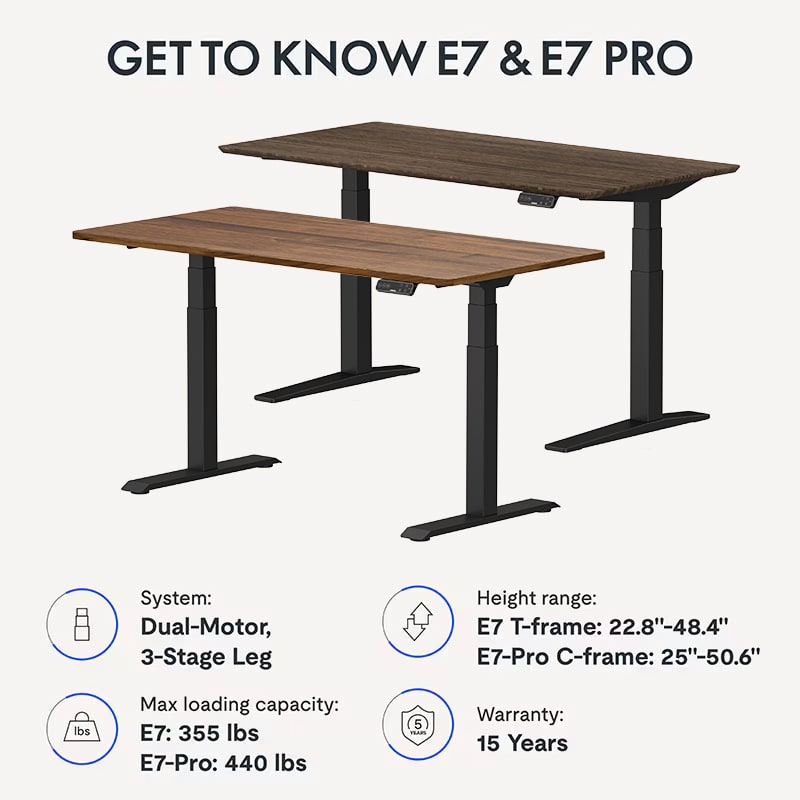
The frame stability is the headline, but the full package is what really sells the desk. The controller is polished, the height range is broadly useful, and the cable-management touches make the desk feel thought through in a way that cheaper desks often do not.
Those details matter because buyers live with them every day. A strong frame is great. A strong frame plus controls you actually enjoy using is better, and that is where the E7 Pro keeps separating itself from weaker value picks.
Who Should Buy It
Buy the E7 Pro if your priority list starts with stability, controls, and getting more desk than your budget usually buys. It is especially attractive for heavier setups, monitor-arm users, and buyers who want premium-adjacent daily behavior without paying for premium branding.
Skip it if your main fear is not a weak desk but a messy support loop. Uplift is easier to recommend as the safer premium pick, even if FlexiSpot makes the harder value argument to ignore.
Bottom Line
E7 Pro is one of the smartest buys in the category if you judge desks by how they behave after setup. The desk itself is very easy to defend.
You just have to accept that everything around the desk is a little less tidy than the best premium picks. If that tradeoff feels acceptable, it is an excellent buy.
Tell us what this page missed
These pages get better when real buyer complaints make it back into the scoring model. If something important is underweighted, say it.
Rate this review
Give it a score from 1-10 and tell us what to improve.
0/4000 characters