Fellow Opus Review (2026): The Pretty Compact Grinder With Messy Caveats
A design-forward all-rounder with a spouted magnetic cup and broad grind range, held back by static, inner-ring fiddling, retained grounds, and an offer sheet worth checking closely.
Fellow Opus is the compact caveat pick in our coffee-grinder ranking: attractive, space-friendly, and broad enough for multiple brew methods, but not the safest buy if static, retention, seller clarity, or long-term repair confidence matter most.
MSRP
—
Amazon
$199.95
at writing · 2026-05-06
Buyer fit
The Opus might be the grinder some people want to look at every day, but the buying checks and mess complaints made it harder to recommend than its product photos do.
MSRP
—
Amazon
$199.95
at writing · 2026-05-06
Score breakdown
How this product scored
Same rubric, but focused on one product so the reasons behind the score stay readable.
Grind fit
The Opus can make good espresso-style and brew coffee for the price, but the adjustment path and owner/review reports are more mixed than the polished design suggests.
Mess control
The product promises anti-static and low retention, yet this run found many static and clumping rows, so the score stays cautious.
Routine
The compact cup routine is attractive; the inner-ring adjustment makes fine tuning feel less friendly than the outside suggests.
Noise
Noise did not dominate as much as static/listing concerns, but it is not a quietness winner.
Cleaning
Burr replacement/support evidence exists, but long-term owner confidence is less mature than Baratza.
Reliability
Parts availability, reported failures, support path, and warranty confidence determine this reliability score.
Counter fit
Footprint, hopper or catch-cup handling, storage, and material feel determine this counter-fit score.
Buyer match
Listing clarity, brew-method scope, and buyer-fit honesty determine this buyer-match score.
Quick Verdict
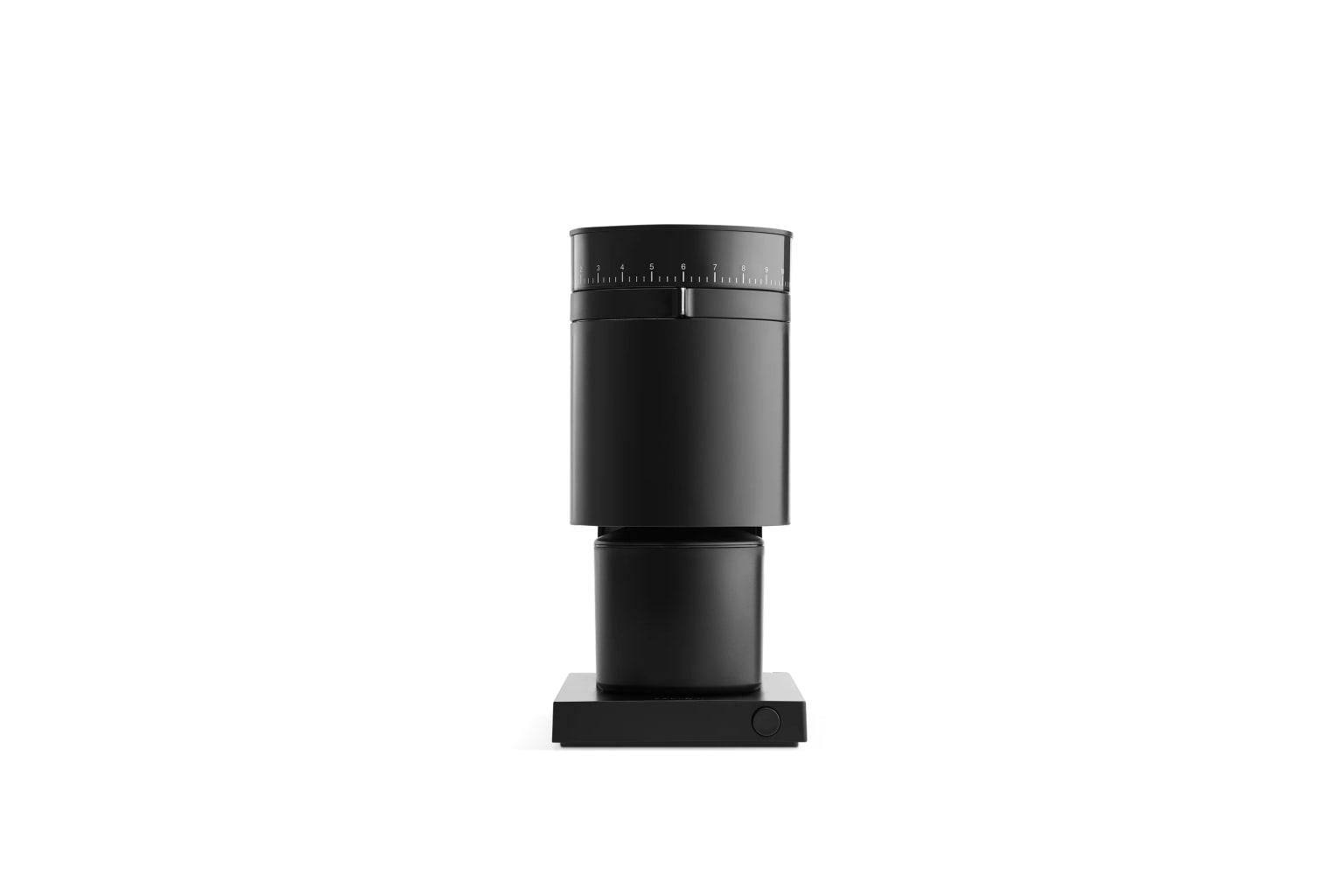
The exact kept product for this review is the Fellow Opus Conical Burr Coffee Grinder, Matte Black, so variant, color, and listing differences matter when you compare prices. Fellow Opus is Fellow’s attempt to make a coffee grinder feel less like garage equipment and more like something you would willingly leave beside a nice kettle. It is compact, rounded, matte black, and built around a 110 g load bin, 40 mm conical burrs, 41+ settings, a spouted magnetic catch cup, and an anti-static promise.
That design-first promise is why it ranked #6 in our Best Coffee Grinders in 2026 guide as the Best compact caveat pick. The Opus is not here because it is hopeless. It is here because the idea is attractive—one tidy grinder for brewed coffee and occasional espresso—but the static, retention, inner-ring adjustment, and buying-path caveats made it harder to recommend than its product photos do.
Coffeeness captured the tension in two tiny phrases: “Beautiful design” and “Rather messy.” That is the Opus review in miniature. If you mostly want a pretty, compact all-rounder and you are willing to learn its quirks, it still has a lane. If you want the safest first grinder, buy higher up the list.
Before buying, use the product link to recheck the exact matte-black B0BV96VPSR ASIN, seller, new-condition terms, delivery window, and return policy. The earlier clean deal was not the whole story, and checking current availability helps support KB4UB if this saves you from a messy purchase.
Score Breakdown
The Opus score pattern is more conditional than its smooth exterior suggests:
- Grind fit: 7.1/10. It can cover brewed coffee and some espresso-style use, but the mixed adjustment reports keep it behind the sharper espresso and brew-first picks.
- Mess control: 6.1/10. This is the biggest disappointment because the product promises anti-static, low-retention behavior. Static and clumping dominated the preserved owner/review material.
- Routine: 6.3/10. The compact cup routine is attractive; the inner adjustment ring makes fine tuning less obvious than the simple outer dial suggests.
- Noise: 6.7/10. Noise was not the top complaint, but it was not a quietness winner either.
- Cleaning: 6.8/10. Burr/support evidence exists, but Baratza’s parts story is still stronger and more proven.
- Reliability/support: cautious. One serious owner complaint involved a defective unit and retailer support. That should not be treated as universal, but it reinforces the “check returns” advice.
- Commerce clarity: 5.2/10. This hurt. The exact matte-black ASIN B0BV96VPSR had no featured offer at recheck, with new offer-sheet listings at $199.95 and seller/delivery details to inspect.
The Opus looks like the tidy pick. The scores say it is the conditional pick.
What Feels Great After Setup
The best thing about the Opus is that it does not feel like old coffee gear. It is compact, rounded, matte black, and intentionally friendlier than the boxy appliance grinders that make a small kitchen look like a break room. If you have limited counter space and you actually care what sits next to the kettle, that matters.
The cup routine is the small daily delight. Instead of a big grounds bin, you get a magnetically aligned, spouted catch cup and a direct drop-down grind path. On paper, that should mean fewer stale grounds, easier pouring, and less countertop dust. For some owners and reviewers, the design really lands. One owner used it as a dedicated single-dose espresso grinder and said, “I don’t mind the grind adjustment” and “I can dial in my beans.” That is the buyer who will forgive the Opus: someone who likes the compact routine and is comfortable learning its quirks.
The adjustment range is also more serious than the smooth exterior suggests. WIRED described the inner-ring use case neatly: if “one click toward coarse feels like it makes things too coarse” and one click fine feels too fine, the inner ring gives you a smaller move. That is clever, especially at this price.
The delight is real, but narrow: good-looking grinder, compact footprint, clever cup, and enough range to reward someone who enjoys tinkering a little.
Setup and Daily Use
Start by deciding whether the Opus is your main grinder or your pretty second grinder. If you mainly brew drip, AeroPress, pour-over, French press, or cold brew, the broad 41+ setting range is easy to appreciate. If espresso is the main job, plan on learning both the outer dial and the inner ring instead of expecting one simple number to solve everything.
That inner ring is the ownership fork. It gives you finer tuning when the outer dial lands between two usable espresso settings, but it also makes the grinder less obvious for guests, partners, and sleepy versions of yourself. Write down settings for beans and brew methods early. If you bounce from espresso to filter and back, expect to purge or brush more than the product photos suggest.
Static control is the other thing to test immediately. Fellow’s design claims sound reassuring, yet owner and review reports repeatedly mentioned static, clumping, and grounds that needed help leaving the cup or burr path. One owner described spraying beans with water and still “having to bang it” to clear retained grounds. That is the kind of small daily ritual you want to discover during the return window, not after it.
The buying path also needs a setup check. At writing, the exact matte-black ASIN did not have a simple featured offer. Confirm seller, condition, shipping, delivery date, and return terms before trusting an old price memory.
Annoyances and Caveats
The main annoyance is that the Opus sells a tidy idea and then asks you to tolerate some normal burr-grinder mess. One owner who liked the adjustment still said they knew and experienced “the issues with the Opus,” including “having to bang it to give up the retention, making a little bit of a mess.” That is not a fatal flaw for everyone. It is exactly the kind of tiny daily irritation that becomes a regret risk if you bought it mainly because it looked clean.
Static is why the mess score stays low. The owner and review material repeatedly returned to static, clumping, and grounds transfer. Some reviewers praised the anti-static design, and one review even said the “anti-static tech actually works,” so this is not a universal disaster. The safer read is more useful: beans, humidity, roast, and routine will decide how clean it feels in your kitchen. Test it while returns are easy.
The adjustment system can also split people. If you enjoy learning a grinder, the inner ring is a clever backup. If you want anyone in the house to move between drip and espresso without asking questions, it may feel fussy. That does not make the Opus bad; it makes it less beginner-proof than the exterior suggests.
The final caveat is the listing. No featured offer at recheck means you should not treat a clean product page or old sale price as enough. Confirm the exact seller and return path before buying, especially because the Opus already asks for more trust than the higher-ranked grinders.
How It Compares
In the full coffee-grinder ranking, Fellow Opus lands behind every other kept pick because its best qualities are narrower than its downsides.
- Baratza Encore ESP: The safer default for most buyers. It is messier-looking and louder, but it bridges brewed coffee and beginner espresso with a much stronger repair and parts story.
- 1Zpresso J-Ultra: Better if espresso precision, low retention, quiet use, and compact storage matter more than push-button convenience. The tradeoff is hand effort.
- Baratza Virtuoso+: Better for pour-over, drip, AeroPress, Chemex, and French press buyers who want a brew-first upgrade with Baratza support. The Opus is more design-forward and more all-rounder-shaped; the Virtuoso+ is easier to trust for filter coffee.
- OXO Brew Conical Burr: Less glamorous but simpler for ordinary drip households. If you do not care about occasional espresso, OXO is easier to recommend.
- Breville Smart Grinder Pro: More convenient for hopper dosing and portafilter routines. The Opus is smaller and prettier; Breville is more appliance-like.
Choose Opus because you actively want the compact Fellow design and can live with the quirks, not because it is the safest grinder on the page.
Who Should Buy It — and Who Should Skip It
Buy the Fellow Opus if:
- you want a compact electric grinder that looks good enough to leave out
- your coffee routine moves between brewed coffee, AeroPress, cold brew, and occasional espresso
- you are comfortable learning the inner-ring adjustment instead of relying on one obvious dial
- you will test static, retention, and cup transfer during the return window
- the exact matte-black ASIN B0BV96VPSR has a new seller, shipping terms, delivery window, and return policy you trust
Skip it if:
- you want the safest first grinder for most homes; buy Baratza Encore ESP instead
- you want manual espresso precision and low retention; buy 1Zpresso J-Ultra instead
- you mostly make filter coffee and want repair confidence; consider Baratza Virtuoso+
- you hate static, retained grounds, or brushing/tapping routines
- the Amazon page still has no featured offer or the seller situation looks unclear
Bottom line: Fellow Opus is not a bad grinder. It is a conditional grinder with a very specific charm: compact, attractive, and capable enough, but only if the mess, adjustment, and listing checks do not make you wish you had bought the boring safer pick.
Tell us what this page missed
These pages get better when real buyer complaints make it back into the scoring model. If something important is underweighted, say it.
Rate this review
Give it a score from 1-10 and tell us what to improve.
0/4000 characters