
The recommendation
Consider the DB63-BK if you can plan its placement as carefully as the amplifier and cables. Its straightforward rear connection layout is useful, but it does not remove the need for space around the cabinets.
Grades at a glance
| Product | Overall | Physical placement and handling | Ordinary control selection | Cable and port chores |
|---|---|---|---|---|
| ELAC Debut 3.0 DB63-BK | 6.8 | 6.5 | 6.5 | 8.0 |
Does it fit your life?
Buy for the space you can provide
The ELAC Debut 3.0 DB63-BK deserves consideration when you are deliberately building around a separate amplifier and have room to experiment with cabinet position. The most useful buying detail in the placement account is the attention given to nearby walls. Before ordering, look at the furniture that will surround the pair and decide whether you can change the position without rebuilding the room.
A speaker that can occupy only one tightly confined spot leaves little practical room for a placement routine. That matters even before any other preference enters the decision. You will need to bring cables to the cabinet, inspect rear connections, and potentially move it while deciding where it belongs. If a shelf or desk makes all of those actions difficult, solve that constraint first.
The other half of the arrangement is the amplifier. The reviewer describes using separate amplifiers, which supports treating the amplifier as an additional control stage in the physical plan. It does not make any particular amplifier a universal match. Think of the buying task as arranging cabinets, a control box, and cable paths together, rather than ordering speakers and finding somewhere for the other pieces afterward.
Placement, controls, and cable grades
These grades compare everyday physical convenience. Use the individual categories to decide which chore matters most in your setup.
| Category | Grade /10 | Everyday implication |
|---|---|---|
| Physical placement and handling | 6.5 | Wall clearance and room for repositioning need attention. |
| Ordinary control selection | 6.5 | The separate amplifier adds another control stage to arrange. |
| Cable and port chores | 8.0 | A single rear binding-post set keeps the described terminal layout straightforward. |
Overall convenience: 6.8/10. Compare all six pairs before choosing a different physical arrangement.
Treat wall clearance as a real furniture constraint
The review account relays a recommendation for about a foot or two of space from side walls and describes positioning work. That gives a practical reason to inspect the room before buying. It is a reported placement starting point, rather than a promise that one distance settles the arrangement for every room.
Mark possible positions and look at what would need to move to create that space. Is a cabinet door nearby? Does one side of the desk end at a wall? Is the proposed speaker position also where you keep equipment that changes frequently? These are ordinary furnishing questions, but answering them can make the difference between a planned installation and a pair that is inconvenient from the first day.
Avoid judging fit only from a front view. A cabinet may appear to fit neatly on a surface while leaving no way to reach its connections or move it. Check the exact dimensions for the DB63-BK you intend to order and include a practical access allowance in your own plan. The buyer advantage is the freedom to adjust the arrangement, not a claim that a particular gap guarantees a result.
The amplifier becomes part of daily use
With a separate amplifier in the reviewed arrangement, ordinary control selection belongs to a broader setup than the two speakers. That can suit a buyer who wants to choose where the control box sits. It also adds a decision: the amplifier needs a place from which its controls and connections can be used.
Draw the positions of the source, amplifier, and both cabinets on one sketch. Walk through the route from one ordinary activity to the next. If you switch sources at the amplifier, will it remain accessible? If a connection must change, can you identify and reach the correct end of the cable? The point is to plan the actions you already expect to perform.
Someone with an existing amplifier location may have already solved much of this problem. Someone starting from an empty desk needs to allow for the extra object and its routes from the beginning. Neither situation is automatically better, but they lead to different shopping lists. Do not treat a separate amplifier as invisible simply because it is not pictured prominently in a speaker listing.
A single binding-post set simplifies the rear view
The DB63 review describes a single set of rear binding posts. For a buyer planning the physical connection task, that is a straightforward layout to inspect and understand. There is one described terminal set to account for rather than a more involved rear jumper arrangement.
Keep rear access in the plan even with that simpler layout. You still need to reach the terminals and bring the cables from the amplifier to the speaker positions. Measure along the intended furniture route, especially if the amplifier sits nearer one cabinet than the other. Leave yourself a way to inspect the connections after the furniture is in its final position.
A simple terminal arrangement does not answer every equipment question. Verify the exact model, package contents, and relevant instructions when deciding which connections and accessories your setup needs. The benefit established here is a physical one: fewer described rear configuration parts to think about. It should not be stretched into a general assurance about equipment compatibility.
The link-support disclosure
The reviewer says that using links in the description supports the channel and its work. The passage does not specify a commission, payment mechanism, or amount. Keep that distinction in mind when reading the account; there is commercial-support context, but the passage does not establish a particular payment arrangement.
The placement, amplifier, and binding-post observations can be useful without adopting the video's wider recommendation. Use them to ask better questions about your room and setup. If a listing presents a different ELAC model or combines several versions, compare the full DB63-BK name and the actual rear layout before treating the account as applicable to the item being sold.
For this purchase, the practical check remains more useful than a broad slogan. Can you provide the intended cabinet positions, the required control-box space, and cable access without taking over furniture you need for other work? If the answer depends on a future rearrangement, make that rearrangement concrete before ordering.
Keeping an existing amplifier in place
If you already have an amplifier on accessible furniture, begin the DB63 plan there. Draw a route from that fixed position to each proposed cabinet. Then mark the side walls. This order helps reveal a common practical conflict: the positions that make the cables easy to route may leave little freedom to move the speakers away from surrounding furniture. Resolve both parts of the drawing together.
If you are also choosing where the amplifier will go, consider more than the visual symmetry of the speaker pair. The control box can occupy its own useful position. A box centered between the cabinets is one possible arrangement, but the physical account does not require that position. An offset location changes the two cable routes and may put the controls closer to the person using them. Check the actual routes before deciding which arrangement is simpler.
The reviewer's use of several amplifiers establishes the presence of a separate control stage in that account. It does not select an amplifier for your system. Keep your furniture decision separate from questions that require the exact equipment instructions. The useful conclusion here is that the DB63 purchase leaves you with three objects to place deliberately: two cabinets and the amplifier.
A fixed shelf versus an open surface
A fixed shelf can set the cabinet position before you have considered the review's placement advice. If its sides or nearby walls leave no room to change the position, identify that constraint at the start. The report's foot-or-two side-wall guidance is a reason to look at the available room; it is not a measurement of your furniture or a guaranteed result at a particular distance.
An open surface gives you more options to consider, but only if the surrounding objects can stay out of the way. Mark the initial positions and a second plausible position for each cabinet. Then trace the cable routes to both. This makes the ability to reposition concrete: you can see whether the alternative requires removing a storage unit, moving the amplifier, or rerouting a lead around the furniture.
The single rear binding-post set keeps one part of the task straightforward, but access still matters at either position. Before choosing the DB63 over the Klipsch's more involved jumper-wire arrangement, ask which chore is actually difficult in your room. If reaching the back is easy and finding cabinet space is hard, focus on placement first. If the positions are settled and you prefer fewer rear configuration parts to organize, the DB63 account supplies a clear point of comparison.
Choose the arrangement with fewer compromises for your room
The Polk ES15 is worth comparing if wall or freestanding placement is central to your plan. Its review account describes that choice, while the ELAC account draws attention to wall clearance and positioning. These are different planning cues; decide which is more relevant to the furniture you actually have.
The Klipsch RP-600M II calls for a closer look at rear terminal access because its account describes jumper wires. The KEF Q3 Meta brings removable port bungs into the handling routine. If you want the control stage within a speaker rather than in a separate box, look at the Audioengine A5+ Wireless and Edifier R1280DBs pages, paying attention to each one's particular control and placement caveats.
Choose the DB63-BK when its physical arrangement is something you can accommodate deliberately. A single rear terminal set is a useful convenience, but it cannot compensate for a cabinet position you cannot reach or change. Buying after the room plan is settled is the clearest route to avoiding those preventable chores.
ELAC Debut 3.0 DB63-BK
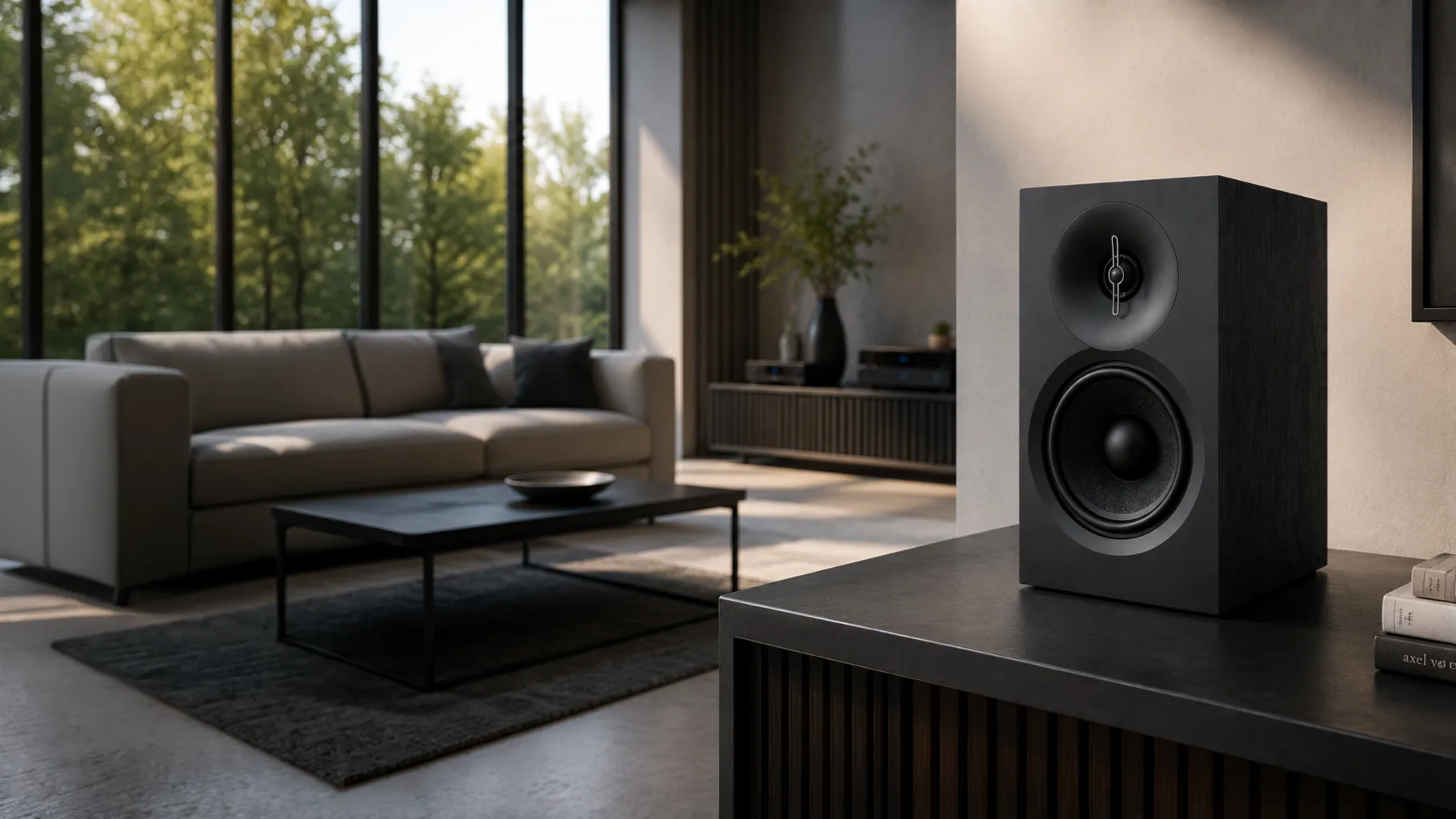
ELAC
A setup with a planned amplifier position and room to move the speakers during placement.
A separate-amplifier choice with a single rear binding-post set. The placement account makes room around the cabinets and the ability to reposition them central buying considerations.
Reasons to choose it
- The review describes a single rear binding-post set.
- A separate amplifier keeps the control stage independent of cabinet position.
Tradeoffs to know
- Wall clearance and repositioning need attention.
- The amplifier adds another box to place.
- Rear connections need working access.
Think twice if: The only available position is tightly constrained by surrounding walls and furniture.
Further reading
Ratings
Editorial score 6.8
Physical placement and handling6.5
Wall clearance and room for repositioning need attention.
Ordinary control selection6.5
The separate amplifier adds another control stage to arrange.
Cable and port chores8
A single rear binding-post set keeps the described terminal layout straightforward.
Sources & further reading
youtube.com review
Keep reading
Something changed? Help us keep this useful.
Send a correction →