EcoFlow DELTA 3 Plus Review (2026): Fast, Expandable, and a Little Fan-Fussy
EcoFlow has the best expansion and recharge story in this group, but fan noise, heat behavior, solar costs, and variant confusion decide whether it belongs inside your house.
EcoFlow DELTA 3 Plus is the best expandable pick in our portable power station ranking: fast to recharge, port-rich, UPS-capable, and built for add-ons. It ranks behind Anker and DJI because repeated fan and heat notes make it less relaxing for quiet indoor backup.
MSRP
$899
Amazon
$648.99
at writing · 2026-05-06
Buyer fit
EcoFlow has the best expansion and recharge story on paper, with broad ports and strong app controls and expansion hooks. It ranks behind Anker and DJI because captured review notes had repeated fan, heat, and tiny-label complaints that matter in apartments, bedrooms, and office-backup use.
MSRP
$899
Amazon
$648.99
at writing · 2026-05-06
Score breakdown
How this product scored
Same rubric, but focused on one product so the reasons behind the score stay readable.
Usable runtime
The 1024Wh LFP platform and tested efficiency signals are solid, but heat/fan behavior can affect confidence under heavy use.
Load handling
1800W continuous with X-Boost language gives useful appliance headroom, as long as buyers do not confuse load-lift marketing with normal inverter capacity.
Recharge speed
Fast AC charging, high solar ceiling, and broad input options are core EcoFlow strengths.
Noise & thermals
This is the ranking penalty: the signal set included erratic fan and high internal-temperature complaints even though official low-dB claims look good.
Controls
EcoFlow app and ecosystem controls are strong, but tiny physical labels and normal app/connection concerns keep it from feeling effortless.
Portability
At 27.6 lb it is manageable for the class and not unusually bulky, though still a two-handed object for many buyers.
Service
Five-year warranty and LFP cycle-life claims are good; thermal complaints and variant confusion keep trust measured.
Backup fit
Expansion compatibility, UPS claim, and EcoFlow accessory support are the strongest reasons to choose it.
Quick Verdict
EcoFlow built the DELTA 3 Plus for the buyer who looks at a normal 1kWh power station and immediately asks the obvious follow-up: what if I want more later? It has the right answer on paper: 1024Wh LFP capacity, 1800W AC output, 3600W surge, 140W USB-C, a 1000W solar ceiling, app control, UPS-style behavior, and expansion-battery support.
That is why it sits at #3 in our Best Portable Power Stations in 2026 guide as the Best expandable pick, with a 7.6/10 overall score. The product is not ranked third because it lacks ambition. It is ranked third because Anker is the cleaner all-around box for most people, DJI is the quieter high-output indoor pick, and the EcoFlow notes had enough fan and heat chatter to make bedroom, apartment, and office-backup buyers pause.
The upside is very real. One review called it “arguably one of my favorite new smaller capacity little portable power stations,” and StorageReview measured UPS transfer at “just over 8ms,” beating EcoFlow’s own 10ms claim. The catch is also real: Trusted Reviews found that “the fans tend to run even at low loads,” and another test saw the unit hit “126°” after a heavy-load run, calling that “way too hot.”
So the short version: buy the DELTA 3 Plus if fast recharge, expansion, solar headroom, and port coverage matter more than having the quietest indoor power station. Before checkout, use the product links to check today’s price, seller, exact ASIN, condition, and bundle contents. At writing, the captured Amazon-new listing was ASIN B0DCC2BVFW at $648.99 from EcoFlow Inc., new/In Stock, for the base DELTA 3 Plus—not Classic, Max, Ultra, a panel bundle, or an extra-battery kit. KB4UB may earn from the links if this saves you from buying the wrong battery brick.
Score Breakdown
- Usable runtime: 7.5/10. The 1024Wh LFP battery is normal for this class, and tested efficiency can be solid. Trusted Reviews reported a 1000W heater ran for almost exactly one hour and used 888Wh, for an “87% efficiency score.” Heat under heavy load is the confidence tax.
- Load handling: 8.1/10. 1800W continuous AC output and 3600W surge give it useful appliance headroom. Treat X-Boost separately: one reviewer said it supports up to 2200W through EcoFlow’s X-Boost, but “I suggest my viewers leave disabled as it doesn’t work with many appliances.” Sensible.
- Recharge speed: 8.9/10. This is the big win: fast wall charging, up to 1000W solar with the right setup, alternator-car charging support, and several charging paths.
- Noise and thermals: 6.4/10. This is the penalty. The best sources did not agree that it is always awful, but repeated fan and heat notes matter if the station will sit near your bed, desk, or couch.
- Controls: 7.8/10. EcoFlow’s app and display are useful, but app dependence, tiny labels, and variant/bundle confusion keep it from feeling completely effortless.
- Portability: 7.7/10. At 27.6 lb, it is manageable for a 1kWh-class station, though still a two-hand carry for plenty of people.
- Service and warranty: 7.4/10. The 5-year warranty and LFP cycle-life story are strong on paper. The thermal chatter keeps the trust level measured rather than glowing.
- Backup fit: 8.8/10. Expansion compatibility, UPS behavior, broad ports, and solar/car charging options are the reason to choose EcoFlow over simpler rivals.
The score is saying exactly this: EcoFlow has the best growth path in the group, but the fan curve needs a return-window audition.
What Feels Great After Setup
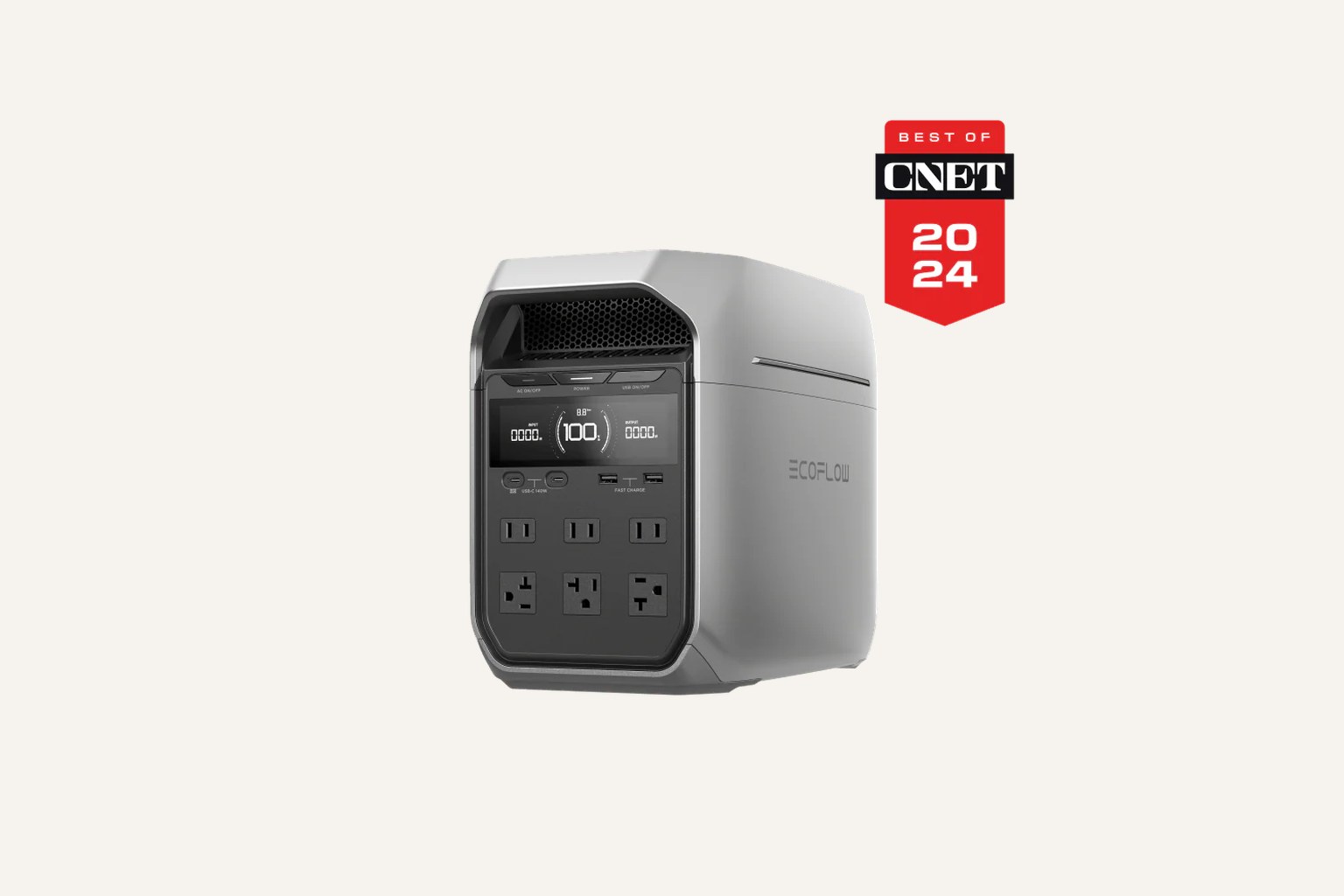
The first thing that feels great is how much capability EcoFlow packs into a box that does not feel absurdly huge. You get six AC outlets, USB-C up to 140W, USB-A, a car socket, DC5521 outputs, app monitoring, fast wall charging, and enough inverter power for many outage, camping, RV, and garage-tool jobs.
The 12V socket deserves more love than it sounds like it should. Solar Lab’s review makes the practical point well: the DELTA 3 Plus includes a 12V car socket, and “for a unit that a lot of people are going to bring on camping trips, having the option to run 12V accessories and appliances is a really useful feature.” That is not glamorous. It is just the kind of port you miss the instant you need it.
Recharge speed is the other daily-use delight. EcoFlow claims a 56-minute full AC recharge, and one transcript noted that “for the first time” the brand’s fast-charge claim looked like it held up in testing. The practical result is simple: if the weather looks ugly or you are packing for a weekend, you are not babysitting this thing all afternoon.
Expansion is the long-term hook. Anker’s top-ranked C1000 Gen 2 is cleaner for many buyers, but it does not have EcoFlow’s same multi-battery growth path. If you start with a 1kWh station and later want more home-backup runway, EcoFlow gives you a path. That is the magic here when it works: the first purchase does not have to be the final shape of the setup.
What Gets Annoying
Fan behavior is the annoyance to test first. EcoFlow publishes low noise claims, and some reviewers genuinely liked how quiet the unit could be. But the captured reviews also include too many wait-why-is-the-fan-doing-that moments to ignore.
Trusted Reviews put it plainly: “I did find that the fans tend to run even at low loads, which can be a bit distracting at times.” That is not a disaster if the unit lives in a garage, van, or utility corner. It matters a lot more if you bought it for a bedroom CPAP, apartment outage setup, nursery air purifier, or desk-side router backup.
The heavier concern is heat under sustained high load. In one transcript, after a 1573W load test, the reviewer said the unit “still was at 126° when the test was over,” then added, “that’s way too hot.” The same source suspected fan control could be fixable with an update, which keeps this from being an automatic red flag for every buyer. Still, relying on a future firmware fix is not the thought you want echoing in your head during a blackout.
Solar and accessory cost can also get annoying fast. EcoFlow’s 1000W solar ceiling is excellent, but getting near it depends on the right panels and wiring. The same reviewer complained that EcoFlow’s own panels are expensive, saying “$700 on a 400 W panel is insane.” Even if street prices change, the lesson holds: price the station, panels, cables, expansion batteries, and car/alternator gear as one setup before declaring victory.
Finally, watch the product family. DELTA 3 Plus, DELTA 3 Classic, Max, Ultra, solar bundles, and extra-battery bundles can sit close together in search results. The wrong click can quietly change the whole deal. Very glamorous. Very battery-shopping.
Setup, Runtime, and UPS Reality
Set it up like you may actually need it later. Charge it from the wall, connect the EcoFlow app, adjust charge limits if you care about long-term battery health, then run the actual load you bought it for: fridge, router, CPAP, modem, laptop, lights, tools, camping fridge, whatever “backup” means in your house.
Do not treat the 1024Wh number as a promise that every appliance runs forever. High-watt loads chew through 1kWh quickly, and inverter overhead is real. The encouraging runtime note is that multiple tests landed in the normal-to-good efficiency range; the less cute note is that heavy loads are exactly where fan and heat behavior become more important.
UPS behavior is one of the stronger reasons to like the DELTA 3 Plus. StorageReview tested the transfer time and wrote, “we measured a transfer time of just over 8ms,” adding that EcoFlow’s listed 10ms transfer time was “easily met.” That is reassuring for routers, workstations, and short outage blips.
Still, this is a portable power station with UPS-style behavior, not a blank check for every sensitive device. If you need zero-drama protection for a desktop workstation, NAS, medical device, or anything mission-critical, test it under your exact setup while you still have an easy return path. The DELTA 3 Plus can be very capable; it should not be trusted on vibes alone.
How It Compares
EcoFlow is the pick when the future setup matters as much as the first week.
- Anker SOLIX C1000 Gen 2: Better default for most buyers. It is lighter, has a stronger 2000W continuous rating, and had fewer scary heat/fan signals. EcoFlow wins if expansion, solar ceiling, app controls, and a longer backup plan matter more.
- DJI Power 1000 V2: Better quiet high-output indoor pick. DJI is the one I would look at first for a bedroom, studio, or small office. EcoFlow gives you more built-in port variety and a clearer expansion path.
- Jackery Explorer 1000 v2: Better simple lightweight 1kWh pick. Jackery is easier to understand and carry, but EcoFlow gives you more room to build out the setup.
- BLUETTI AC180: Better heavier utility box if you want more stored energy and sturdy output more than polish. EcoFlow feels more modern and expandable; BLUETTI feels more appliance-like.
- Goal Zero Yeti 700: Better smaller rugged pick. It is not trying to be a 1kWh-class rival, so compare it only if you actually want smaller.
For the full score grid and all product links, go back to Best Portable Power Stations in 2026.
Who Should Buy It
Best for: buyers who want fast recharge, lots of ports, 140W USB-C, app control, UPS-style backup, strong solar potential, and a real path from a 1kWh station into a larger EcoFlow backup setup.
Skip if: you need the quietest indoor unit, hate app/device-family complexity, want the simplest one-box answer, or are likely to get tripped up by DELTA 3 Plus versus nearby EcoFlow variants and bundles.
Bottom line: the EcoFlow DELTA 3 Plus is the best expandable pick in this portable-power-station group, not the safest universal pick. Buy it because you will use the expansion, recharge, solar, and port advantages. If you only want a quiet box to keep a router and CPAP alive beside your bed, DJI or Anker is probably the calmer buy.
Before buying, verify the exact listing: base DELTA 3 Plus, ASIN B0DCC2BVFW, current seller, new condition, return terms, price, and whether panels or extra batteries are included or sold separately. At writing, we captured it new/In Stock from EcoFlow Inc. at $648.99, but portable power station pricing moves around like it owes someone money.
Tell us what this page missed
These pages get better when real buyer complaints make it back into the scoring model. If something important is underweighted, say it.
Rate this review
Give it a score from 1-10 and tell us what to improve.
0/4000 characters