
The recommendation
A conditional choice for people who like swipe controls and the physical fit, with adjustment gestures and case bulk worth trying first.
Grades at a glance
| Product | Overall | Fit and handling | Case and storage | Everyday controls |
|---|---|---|---|---|
| Bose QuietComfort Ultra Earbuds (2nd Gen) | 6.9 | 6.5 | 6.5 | 8.0 |
Does it fit your life?
The adjustment matters as much as the gesture
Bose QuietComfort Ultra Earbuds (2nd Gen) deserve a fitting opportunity before a confident recommendation. The useful question is whether you can adjust them without touching the controls. PCMag describes repeatedly triggering actions while repositioning the buds and having to learn a particular pinch to avoid the touch surface. That is a concrete everyday drawback if your usual fit requires frequent correction.
There is also a direct volume swipe, which is appealing if you dislike counting taps. The same physical area that makes a swipe available can be awkward when you are simply trying to grip the earbud. These are two sides of the handling decision: easy access for an intended action and room to hold the bud without making one.
Some personal experience is positive about comfort. That matters, but comfort and control separation are different questions. You may like how the bud sits and still dislike the way you need to hold it. Choose these only after considering both, along with the noticeably larger case.
Can you find a grip that leaves the controls alone?
PCMag's reviewer found it difficult to adjust the fit without unintentionally pausing or skipping. The reviewer eventually learned a more particular way to pinch the buds. This is a report about one person's handling, not proof that every buyer will have the same experience. It is nevertheless more actionable than a broad claim that earbuds are comfortable or awkward.
During a fitting opportunity, place each bud, let go and then perform the adjustment you naturally make when something feels slightly off. Notice where your fingers land. If your first instinct is to grasp the control surface, ask whether another grip feels natural or requires deliberate care.
A fit that stays settled for you could make this problem less prominent. A fit that requires frequent nudges could make it a recurring annoyance. That is why it is unhelpful to separate the control score entirely from the physical fit. You use both at the same time.
This review concerns the second-generation QuietComfort Ultra Earbuds. The personal account that praises their comfort explicitly names that generation. It supports trying the shape, while PCMag's adjustment experience supplies a different question to answer during the same trial: can you hold and reposition it comfortably as well as wear it?
Direct swipes, with a broad touch area
PCMag describes taps on the outer stem and up-and-down swipes for volume. Its reviewed layout uses one tap for playback, two for the next track and three for the previous track. Those are descriptions of the review's controls, rather than a promise about every present-day configuration.
The swipe is the strongest physical argument here. If you want to change volume without a repeated tap count, it provides a distinct gesture. The benefit depends on being able to make that gesture intentionally and leave the touch area alone when moving the earbud.
Think about which action you repeat more often. Frequent volume changes make the swipe more valuable. Frequent fit corrections make an easy place to grip more valuable. If your buds usually stay settled once inserted, the adjustment concern may be occasional; if you habitually nudge them throughout the day, it deserves more attention than the convenience of one gesture.
A useful trial separates three actions: place the bud, reposition it and make a command. You want each to feel deliberate. The reviewer's need to learn a specific grip lowers our handling recommendation, even though the direct swipe remains attractive. A feature can be well chosen in principle and still ask more of your fingers than you prefer.
Pocketable is not the same as unobtrusive
PCMag gives the case dimensions as 2.60 by 2.35 by 1.06 inches, expressed as height, width and depth. The review describes it as pocketable but noticeably bulkier than the AirPods Pro 2 and Sony WF-1000XM5 cases. A second-generation video account also describes a bulky case.
Thickness deserves as much attention as footprint. The reported 1.06-inch depth is the dimension to consider when a case sits between your leg and a fitted pocket. A bag compartment gives you more freedom, but you still need enough room to get your hand around the case and retrieve it. The useful comparison is with the space you actually use, not an abstract idea of pocketability.
If you have the chance, put the closed case in the pocket you actually use, then sit down and take it out again. Consider access as well as fit. A case can technically fit while being awkward to retrieve. If you usually leave earbuds in a bag, this concern may matter less.
Do not let the case dominate a fitting decision in either direction. An acceptable carrying arrangement does not resolve accidental touch input, and a comfortable earbud does not make a bulky case disappear. The recommendation becomes stronger only when both parts suit the same routine.
Compare the action you repeat most
AirPods Pro 2 USB-C are the useful comparison for easy docking and direct stem swipes. Nothing Ear (2024) offers a pinch action on a stem and a visibly different case arrangement. Beats Fit Pro offers a physical button if a touch panel is the main source of frustration, though its fixed fins introduce their own fit decision.
Sony WF-1000XM5 is worth comparing for case size, but its reviewed volume controls require repeated taps and its grip reports conflict. Changing products can exchange one handling compromise for another; it helps to name the exact one you want to avoid.
Choose Bose here when the buds sit naturally, your fingers can avoid the touch surface during adjustments and the larger case has an obvious place in your day. If any of those require an ongoing workaround, another physical design is the better starting point.
Bose QuietComfort Ultra Earbuds (2nd Gen)
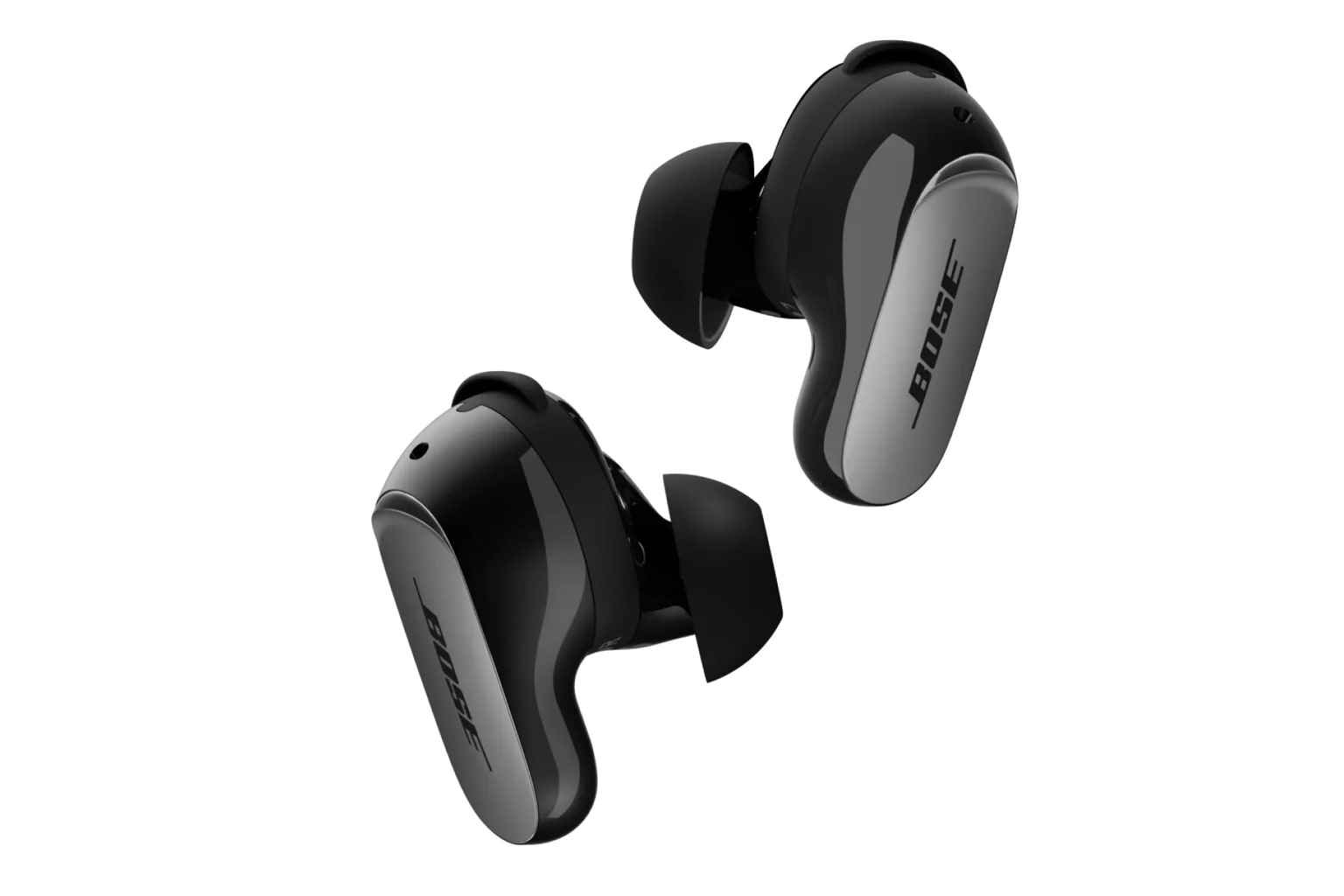
Bose
People who prefer a direct volume swipe and are comfortable carrying a larger case.
Bose QuietComfort Ultra Earbuds (2nd Gen) deserve a fitting opportunity before a confident recommendation. The useful question is whether you can adjust them without touching the controls. PCMag describes repeatedly triggering actions while repositioning the buds and having to learn a particular pinch to avoid the touch surface. That is a concrete everyday drawback if your usual fit requires frequent correction.
Reasons to choose it
- Swipe gesture gives direct volume selection
- Comfortable fit is reported by some users
- Case dimensions make pocket planning concrete
Tradeoffs to know
- Adjusting the fit can trigger touch commands
- Larger case is noticeable in a pocket
- Comfort remains personal
Think twice if: You repeatedly adjust earbuds or need a case that disappears into a small pocket.
Published specifications
- Model
- Bose QuietComfort Ultra Earbuds (2nd Gen)
Further reading
Ratings
Editorial score 6.9
Fit and handling6.5
The need to avoid touch input during adjustment adds handling effort despite positive personal comfort.
Case and storage6.5
The documented larger case and corroborating bulk report constrain pocket storage convenience.
Everyday controls8
Direct volume swipes are useful, tempered by the overlap between grip and touch surface.
Sources & further reading
pcmag.com review
Keep reading
Something changed? Help us keep this useful.
Send a correction →