
The recommendation
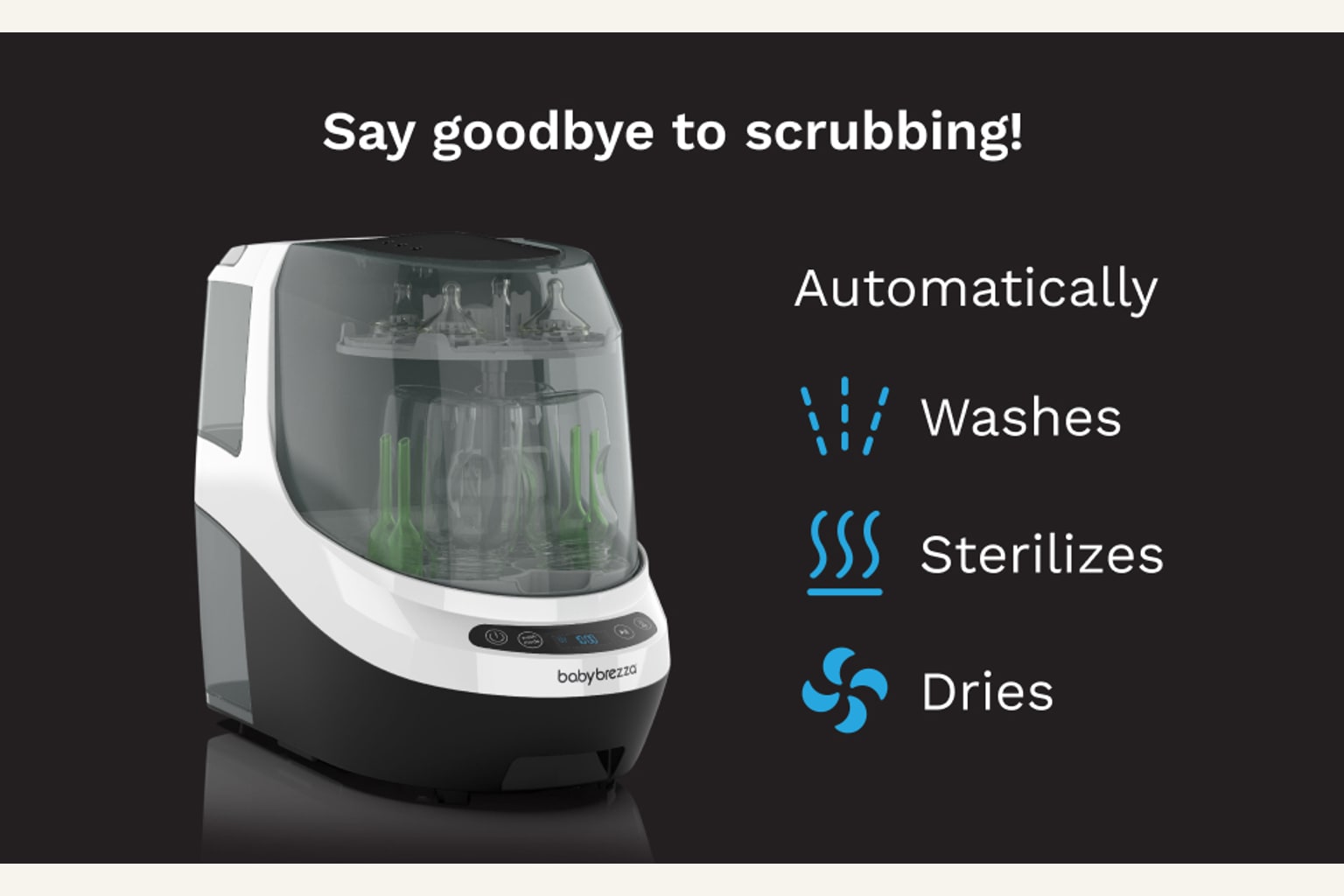
Choose it if you want a washer-style layout with visible progress and would rather empty a removable tank than arrange a drain hose. Consider another layout if you dislike precise positioning over jets or want an appliance with very little ongoing maintenance.
Grades at a glance
| Product | Overall | Loading and rack flexibility | Cycle selection and feedback | Routine cleanup access |
|---|---|---|---|---|
| Baby Brezza Bottle Washer Pro | 8.1 | 8.0 | 9.0 | 7.0 |
Does it fit your life?
Our verdict
The Baby Brezza Bottle Washer Pro makes the most sense for a buyer who likes a self-contained appliance and a visible sequence of stages. Its strongest feature in the demonstration is the way cycle selection and changing display icons make the process legible. The less glamorous part is equally important: bottles and parts need deliberate placement, and the machine itself brings an emptying and maintenance routine. Choose it because that combination suits your kitchen, rather than because a washer label promises to remove every chore.
The useful distinction is between starting a program and managing the whole appliance. The reviewer selects a cycle and presses start without a complicated sequence. Before that, however, the load has to be arranged over the jets; afterward, the wastewater tank needs attention. Those are separate tasks. A buyer who enjoys a clear control panel can still find the surrounding handling more involved than expected. Our recommendation rests on the visible workflow, with no assumption that all bottles or pump parts will fit the same way.
Loading and rack flexibility
In the reviewed demonstration, bottles occupy the lower rack and smaller parts go above. Several bottle styles and materials appear in the review, but the important constraint is their position relative to the water jets. Parts need to be centered, rather than simply placed wherever an empty patch of rack happens to be. That makes the layout more structured than an open basket.
The distinction matters most with a mixed collection. A household using one familiar bottle shape may find it easier to repeat a known arrangement than a household regularly changing bottle bodies and accessory shapes. That is a reason to inspect the loading diagram for your own collection before buying. It is not evidence that an unfamiliar part will fail to fit; it means the demonstrated range does not establish a universal arrangement.
The countertop commitment also belongs in the loading decision. The review describes a substantial appliance. Beyond finding somewhere to set the closed machine, think about access while you handle the racks and tanks. A location that looks neat in a product photograph may be awkward if everyday loading requires moving other items first. We have no measured clearance requirement to substitute for the current product instructions.
Cycle selection and feedback
Cycle selection followed by start is straightforward in the demonstration. Changing icons mark the transition between stages, and the reviewer can also see activity through the enclosure. This is a useful combination for someone who wants an answer to “what is it doing now?” without having to remember which part of a sequence should be underway.
That feedback is why controls are the strongest part of its score. Clear progress can make the machine easier to share: a second adult can look at the panel rather than needing the person who started it to explain everything. This is a practical inference about the interface, not a claim that every first-time user will find it intuitive. There is still a menu of choices to learn.
Keep the display advantage separate from cycle performance. An icon tells you which stage has been selected or reached; it does not independently establish what happened to every item inside. Likewise, a program name does not show that the machine is faster than a different appliance. If the main purchase question is whether the control sequence feels understandable, the review provides a useful view of that sequence.
Routine cleanup access
The lower wastewater tank lifts out so its contents can be emptied. That is the practical appeal of this layout: the review shows collected wastewater in a removable container rather than a hose that needs a destination beside the machine. The tank is a recurring handling step, though, and it needs to remain accessible where the appliance will live.
The review also describes a more involved descaling routine, including a soak, a rinse program, and attention to the heating plate. Those details matter as a picture of the maintenance burden. They are not reproduced here as a cleaning recipe, because the correct products and procedure should come from the instructions supplied with the exact unit. The buying point is that upkeep goes beyond lifting out a rack.
This is why a clear start button does not make the overall appliance maintenance-free. If you prefer dealing with a removable container to arranging a hose, the wastewater tank may be a good trade. If you tend to put off multi-stage appliance care, the maintenance routine deserves more attention than the display. The accessible tank earns credit, while the wider sequence holds the cleanup score below the strongest alternatives.
Which alternatives make sense?
The closest workflow comparison is the Momcozy KleanPal Pro. Its demonstration shows a drain hose leading to a sink or bucket, whereas the Baby Brezza review shows the removable wastewater tank. Both demand deliberate bottle placement over spray components and both offer progress feedback. The choice is therefore partly about where wastewater goes in your kitchen. Prefer the Baby Brezza layout if tank handling is easier to accommodate; consider Momcozy if a hose destination is already practical and removable maintenance parts appeal to you.
Papablic offers a different kind of tradeoff. Its reviewer demonstrates a reversible collar and a mixed load of bottles and pumping parts, while also finding the side-mounted icon explanation less convenient than front-facing labels would be. That puts emphasis on flexible rack space rather than the Baby Brezza washer's jet-centered arrangement and changing stage icons. Compare those features as handling choices. Choose between the demonstrated layouts according to the pieces you own and the way you prefer to arrange them.
Two kitchen arrangements to think through
Imagine first that the easiest counter location is away from a convenient drain destination. The Baby Brezza demonstration's collected wastewater tank is relevant to that situation: it gives you a container to remove rather than a hose to route. The important follow-up is whether the tank can be reached in that location. If reaching it would require shifting the appliance or moving a row of other items, the apparent placement advantage could become a handling annoyance. This is a space-planning question, not a measured clearance claim.
Now imagine that the chosen location is close to a sink and a hose would be easy to accommodate. The tank is still a workable approach, but its advantage may matter less to you. In that situation, the decision should return to the parts you will handle: the lower and upper rack arrangement, the alignment over jets, and the maintenance access. Choosing on those visible details is more useful than assuming a self-contained layout must be more convenient in every kitchen.
There is a similar distinction between a familiar repeated load and an assortment that changes frequently. With a repeated collection, you can investigate one appropriate arrangement before buying. With a changing collection, you need to know whether the current loading guidance covers the additional shapes and their accompanying small pieces. The review's several bottle examples help explain the layout, but do not establish that any future component can be added without changing it.
Finally, decide whether you are comfortable with appliance care that includes more than a quick emptying step. The review's maintenance account is important precisely because it is less prominent than the visible program display. A buyer may reasonably prefer clear feedback and a tank while accepting the extra care sequence. Another may decide that the upkeep is the feature most likely to become frustrating. Both judgments can be sensible; the score cannot make that preference for you.
The best reason to choose this model is therefore a combination: you like the displayed stages, the structured loading makes sense for your collection, and the removable tank works in the selected location. If only the first condition is true, spend more time checking the physical arrangement before treating the interface as enough reason to order.
Decide which inconvenience you would accept
The Bottle Washer Pro is especially worth a look when a drain hose would be inconvenient in the space you have. Its removable wastewater tank changes the placement question: you need a practical way to reach and carry the container, rather than a hose destination beside the appliance. That can suit a counter position away from the sink, provided the current installation guidance permits the location and you can handle the tank without shifting everything around it.
Think through a full load at that location. The lower rack holds the bottle bodies while smaller pieces occupy the upper area, and placement relates to the jets. Lay out the components you own before comparing them with the loading diagram. A collection of bodies that appears easy to arrange may come with enough smaller parts to change the decision. The useful question is where each piece belongs, not just how many bodies appear in the photograph.
The display is a good reason to keep the model on your shortlist. Changing stage icons make the sequence easier to follow in the review, and selection followed by start is direct. If you dislike wondering which stage an appliance has reached, that feedback addresses a specific frustration. It is still worth checking the choices on the current panel so the setting you plan to use feels clear to everyone sharing the machine.
The remaining tradeoff is appliance care. Tank emptying is easy to understand from the demonstration, but it is only one part of the maintenance described. The heating plate receives separate attention in a longer sequence. Before buying, read that part of the current manual just as closely as the program descriptions; it is work you would be accepting along with the convenient display.
This is a persuasive combination when you want visible progress, a repeatable rack arrangement, and collected wastewater. If your kitchen already has an easy hose route, the tank may be a preference rather than a major advantage. Let the handling you would repeat decide how much the self-contained layout is worth to you.
What to check before ordering
Make sure the offer is for the Bottle Washer Pro and inspect the current rack layout, tank positions, and control panel. The historical retailer demonstration gives a useful view of this product family, but it does not prove that every generation or accessory bundle is identical. The features that matter to this review are the placement over jets, changing progress icons, and removable wastewater tank; confirm those on the exact unit offered.
For bottle fit, compare your complete collection with the current loading guidance. Include bodies, detachable components, and the smaller pieces you normally handle together. The reviewer tries several styles and materials, which helps illustrate the arrangement, but those examples are not a compatibility list for every bottle or pump. If one awkward component is the reason you want an appliance, settle its permitted position before ordering.
Next, measure the space using the current product dimensions and placement requirements. Consider the unit both closed and in use: reaching the racks and removing the wastewater container are part of owning it. A countertop position can look generous until a nearby object blocks the movement you need. The review describes a substantial appliance, so this deserves more attention than the closed product photograph.
Read the maintenance instructions before you commit. The demonstration describes descaling as several steps involving the heating plate, a soak, and a rinse program. Use the current manual for the actual method and approved materials. The point for a buyer is to understand how much attention the appliance asks for beyond emptying its tank, and to decide whether that routine feels manageable in the space available.
Check the seller, included components, and return conditions against the specific offer. An old video price does not establish current value, and accessories shown in a demonstration may not define the bundle on sale. Choose the Bottle Washer Pro when the tank arrangement and display solve practical problems for you and the loading and care instructions support the way you intend to use it.
What the score tells you
The overall shown here combines three handling judgments: loading and rack flexibility, cycle selection and feedback, and routine cleanup access. Read those alongside the reasons in the review. The total is useful for comparing this narrow set of conveniences, but the category that matches your main frustration may be more important to you than the overall order.
These are editorial judgments based on attributed demonstrations and reports. We have not personally tested these appliances. A useful view of a rack arrangement can support a handling assessment without establishing the outcome of a cycle or the experience of a large group of owners. The sources linked below let you inspect the demonstrations behind the specific observations.
A successful example load is evidence about that arrangement. It is not a universal fit list, and a visible progress indicator is evidence about feedback rather than what happened to every item inside. The same distinction applies to cleanup: removable parts show access, while long-term maintenance frequency and durability require different evidence.
The Bottle Washer Pro earns its place for stage feedback and a removable wastewater tank. Those strengths are most useful when the tank suits your chosen location and the structured loading works for your collection. Give the heating-plate care sequence equal attention before deciding: it is part of the purchase even though it is less visible than the display.
Baby Brezza Bottle Washer Pro
Baby
You want a washer-style layout with visible progress and would rather empty a removable tank than arrange a drain hose.
A clear display, with loading and upkeep to plan around
The takeaway
You want a washer-style layout with visible progress and would rather empty a removable tank than arrange a drain hose.
Reasons to choose it
- A clear display, with loading and upkeep to plan around
Tradeoffs to know
- You dislike precise positioning over jets or want an appliance with very little ongoing maintenance.
Think twice if: You dislike precise positioning over jets or want an appliance with very little ongoing maintenance.
Further reading
Ratings
Editorial score 8.1
Loading and rack flexibility8
The review shows several bottle styles on lower and upper racks. Deliberate positioning over the jets and room to handle a substantial appliance remain important.
Cycle selection and feedback9
Cycle selection followed by start is direct in the demonstration, and changing stage icons provide visible progress.
Routine cleanup access7
The wastewater tank lifts out for emptying, while the described heating-plate care involves a longer sequence of soaking, rinsing, and scrubbing.
Sources & further reading
youtube.com product page
youtube.com review
youtube.com review
Keep reading
Something changed? Help us keep this useful.
Send a correction →