Anker SOLIX C1000 Gen 2 Review (2026): The Best Overall Pick, With One Big Tradeoff
The C1000 Gen 2 is the safest compact, high-output power-station pick for most people — provided you do not need expansion batteries and you verify the listing is the Gen 2, not a nearby C1000/C1000X variant.
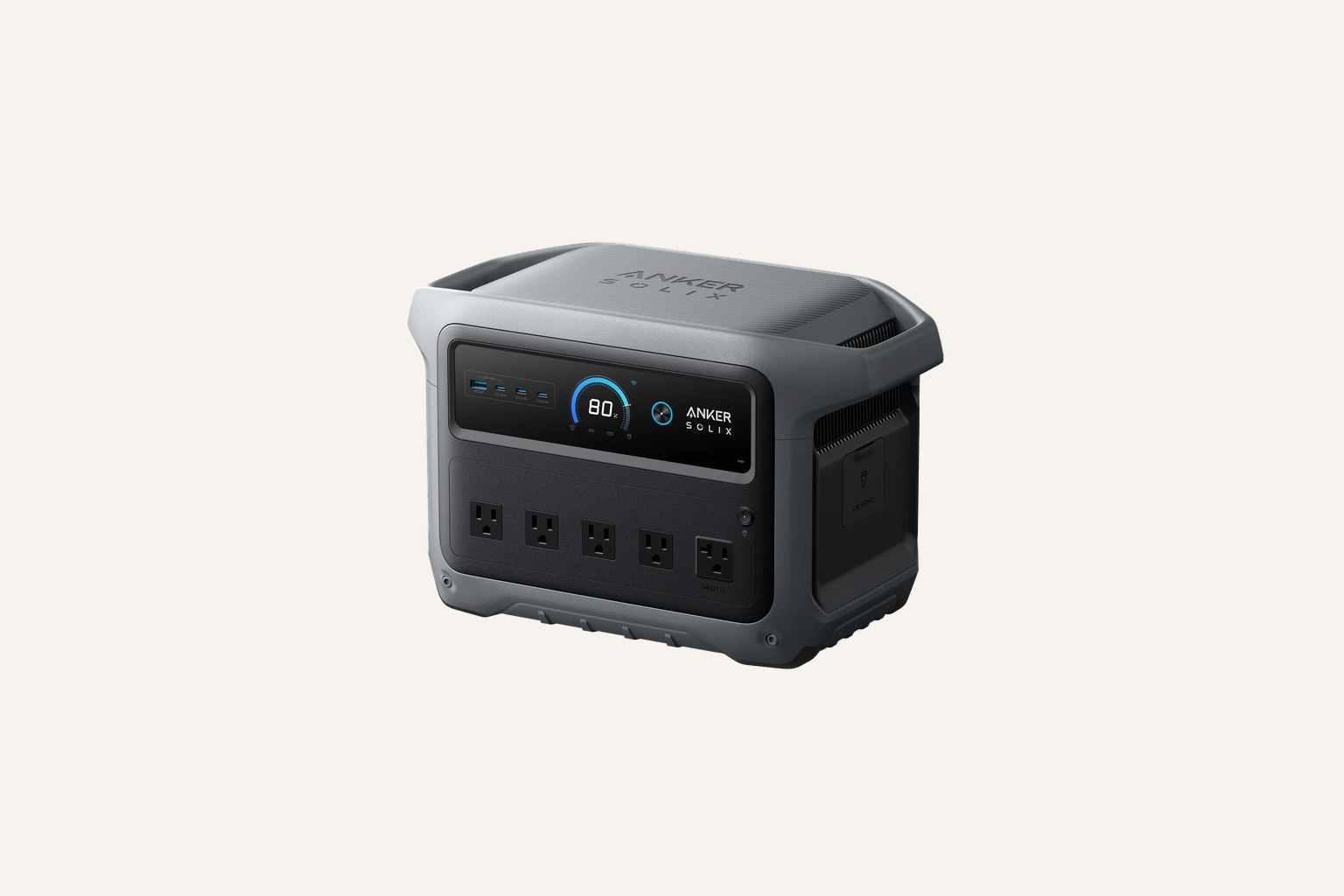
Anker SOLIX C1000 Gen 2 combines 1024Wh LFP capacity, 2000W AC output, quick charging, manageable 24.9 lb weight, useful app/display controls, and a cleaner seller snapshot than most rivals. The catch is simple: no expansion batteries, fastest charging depends on the app, and listing confusion can bite.
MSRP
$799
Amazon
$499.99
at writing · 2026-05-06
Buyer fit
The broadest all-around pick because it combines 1kWh LFP capacity, a 2000W inverter, quick recharge, compact weight, a mainstream support story, and fewer scary thermal signals than EcoFlow. The tradeoff is no meaningful expansion path and some Gen 2/C1000X listing confusion to avoid.
MSRP
$799
Amazon
$499.99
at writing · 2026-05-06
Score breakdown
How this product scored
Same rubric, but focused on one product so the reasons behind the score stay readable.
Usable runtime
1024Wh is normal for the class and the signal set did not surface a major runtime collapse pattern, though the Gen 2 has slightly less capacity than the original C1000.
Load handling
The 2000W continuous / 3000W peak rating is excellent for a compact 1kWh station and repeatedly positioned it as refrigerator, coffee, and essential-appliance capable.
Recharge speed
The 49-minute full-charge claim is the headline, with the important caveat that UltraFast charging is app-enabled and normal AC charging is less aggressive.
Noise & thermals
Signals were friendlier than EcoFlow and BLUETTI for light indoor use, including quiet-operation claims under low loads, but high-speed charging still deserves return-window testing.
Controls
The app covers monitoring and charge modes without making the unit feel app-only, though the feature set is fairly basic and the removed lightbar is a small daily-use loss.
Portability
At about 24.9 lb, it is one of the easier 1kWh boxes here to move and store while still keeping high AC output.
Service
AnkerDirect seller evidence and a 60-month warranty claim help confidence; Gen 2-specific long-term evidence is still early.
Backup fit
UPS and app controls are useful, but Anker explicitly gives up expansion on this Gen 2 model to keep size and weight down.
Quick Verdict
Anker SOLIX C1000 Gen 2 is the portable power station I would put in front of most people first, not because it wins every spec contest, but because it avoids the worst kind of backup-power regret: buying a heavy box that looks impressive and then finding out it is loud, awkward, underpowered, or weirdly dependent on extra parts.
In the main Best Portable Power Stations in 2026 ranking, it finished #1 as the Best overall pick with an 8.1/10 score. The reason is simple: 1024Wh LFP capacity, 2000W continuous AC output, 3000W peak output, fast wall charging, 600W solar input, 140W USB-C, a 24.9 lb body, app control, a 10 ms UPS claim, and a cleaner seller/support snapshot than several rivals.
The important part is what those numbers feel like after checkout. One reviewer captured the right skepticism: “there's a lot more that goes into a power station than just fast charging.” Exactly. The C1000 Gen 2 is not just a Guinness-record charging flex in a handle. It is the most balanced 1kWh-class answer here if you want fridge/router/CPAP/camping backup without building a larger battery system.
Use the product links to check today’s exact price, seller, condition, ASIN, bundle contents, and availability. Our captured snapshot was new/In Stock at $499.99 from AnkerDirect for ASIN B0FN7MSY4L, but Amazon listings move around like a raccoon in a pantry.
Score Breakdown
- Usable runtime: 7.8/10. 1024Wh is normal for this class, not magic. It is enough for essentials, but high-watt appliances will still drain it fast.
- Load handling: 8.8/10. The 2000W continuous / 3000W peak rating is the big win. That gives it more appliance headroom than Jackery and more default simplicity than DJI’s accessory-heavy setup.
- Recharge speed: 8.7/10. The 49-minute full-charge claim is genuinely useful before storms or trips, with the catch that the fastest mode lives in the app and wants the standard Anker AC cable.
- Noise & thermals: 8.1/10. The low-load noise notes are friendlier than EcoFlow and BLUETTI, though you should still test fast-charging noise while returns are easy.
- Controls: 7.8/10. The display/app setup is solid and easy to read, but the app matters more than some buyers expect.
- Portability: 8.4/10. At about 24.9 lb, this is still a real object, but it is light and compact for the output.
- Service: 8.0/10. AnkerDirect seller evidence and the 60-month warranty claim help confidence, while Gen 2-specific long-term evidence is still young.
- Backup fit: 6.8/10. UPS behavior and app controls help, but Anker gives up expansion on this model.
That mix is why it wins the parent guide: strong where most people feel the product every day, weaker only if you want a power setup you can grow with extra batteries.
What Feels Great After Setup
The C1000 Gen 2’s best trick is that it feels powerful without becoming a garage appliance. A 2000W inverter in a roughly 25 lb box gives you real appliance confidence for common outage loads: fridge, router, lights, laptop, CPAP, coffee gear, or campsite basics. You still need to do the math on your loads, but you are starting from a friendlier place than many 1kWh stations.
Mashable puts the appeal plainly: it is “powerful enough to keep your refrigerator cooling during a power outage and operate the espresso machine in the morning.” That is the kind of practical overlap people actually want. Not a fantasy bunker. Just keeping the boring important stuff alive, plus maybe coffee, because society has standards.
The low-load quiet story also matters. One hands-on transcript compared it with stations whose “fans just when they're turned on” are “extremely annoying,” then said of the Anker: “This does not do that.” That does not guarantee silence under fast charging or heavy loads, but it does support why Anker beats EcoFlow and BLUETTI for a lot of apartment, bedroom, nursery, office, and CPAP-adjacent use.
Portability is the other pleasant surprise. The listed specs put it at 24.9 lb and about 15 inches wide, so it is easier to stash in a closet, move to a fridge, carry to a car, or take camping than the heavier utility boxes. You will not mistake it for a lunchbox, but you also will not need a dramatic soundtrack to move it.
Setup and Charging Reality
Fast charging is the headline, and it is a good one. Anker claims a full charge in 49 minutes with up to 1600W AC input, and one reviewer said “you can charge this from zero to full in under an hour pretty reliably.” If you live somewhere storms roll in fast, that matters. A station you can top off during the warning window is more useful than one that needs half the afternoon.
The caveat is that the fastest charging routine is not just a dumb wall-cord behavior. The packet notes Anker’s UltraFast mode is app-enabled, and one reviewer said “you can do all kinds of stuff from the app that you can't do directly from the unit.” That is good if you like control over charge rate and monitoring. It is mildly annoying if you expected every important setting to live on the front panel.
The display and app are more useful than fancy. Lifehacker says the front display is “clear and shows input, output, and battery status at a glance,” while the app lets you monitor usage, toggle outputs, and adjust charging modes. That is exactly what I want here: not a spaceship dashboard, just enough information to know whether the fridge is behaving and whether the battery estimate is believable.
The small emergency-use miss is the removed light bar. It is not a dealbreaker on a product this strong, but it is one of those dull details you notice during a blackout when your phone flashlight is already doing twelve jobs. Pack a separate light and move on.
What Gets Annoying
The biggest real limitation is expansion. Anker’s own FAQ says the C1000 Gen 2 “does not include an expansion feature,” and another reviewer was even blunter: “you do not get any expansion batteries with it. It is what it is and you don't get more.” That is not a flaw for the right buyer. It is Anker choosing lighter size and stronger one-box output over a bigger backup path.
So if you want to add batteries later, look harder at EcoFlow DELTA 3 Plus or another expandable system. EcoFlow ranks below Anker in the parent guide because fan/heat complaints were more concerning, but it is still the better route if your plan is solar-first, expansion-first, tinker-now-grow-later.
The second annoyance is product confusion. The C1000 Gen 2, original C1000, C1000X, and bundle listings can blur together online. Do not casually borrow original C1000 specs like 1056Wh, 1800W, or expansion support when shopping this Gen 2 unit. Confirm the exact ASIN, seller, condition, and that the listing is the base station rather than a solar bundle.
The third annoyance is charge-mode testing. Anker’s noise/thermal score is strong, but fast AC charging and high loads are exactly where portable stations can reveal personality. When it arrives, run your actual load, try the app, listen during fast charge, and do it while the return window is open. Backup gear should earn trust before the lights go out.
How It Compares
Anker wins because it is the least weird default. DJI Power 1000 V2 is quieter and has a bigger 2600W AC output claim, but solar, car charging, and DC use lean into DJI SDC accessories, and the captured buy box was not DJI/Amazon direct. If you love quiet indoor AC use and will price the adapters, DJI is a serious runner-up.
EcoFlow DELTA 3 Plus is the better expandable-system pick. It has the stronger solar/expansion story on paper, but the review notes had more fan, heat, and tiny-label concerns. If the station might live near your bed, desk, nursery, or office gear, that matters.
Jackery Explorer 1000 v2 is simpler and lighter-feeling as a recognizable 1kWh option, but it gives up output headroom and expansion. BLUETTI AC180 has more stored energy and sturdy 1800W utility appeal, but it is heavier and more exposed to fan/app/support caveats. Goal Zero Yeti 700 is not a direct 1kWh rival; it is the smaller rugged pick for modest loads.
For the full score grid, alternatives, and category caveats, go back to Best Portable Power Stations in 2026.
Who Should Buy It
Best for: buyers who want one compact, high-output 1kWh-class station for outages, camping, fridge/router backup, CPAP-adjacent low-load use, coffee gear, and quick top-ups before storms or trips.
Skip if: you want expansion batteries, a built-in area light, the biggest solar ceiling, the quietest possible high-output indoor station, or a system you can grow into over several batteries.
Before checkout: use the product links to recheck the exact Anker SOLIX C1000 Gen 2 listing, ASIN B0FN7MSY4L, current price, seller, condition, return path, and that you are viewing the base station rather than C1000X or a solar bundle. Our snapshot saw a new/In Stock AnkerDirect listing at $499.99, but that is a timestamp, not a prophecy.
Bottom line: Anker SOLIX C1000 Gen 2 is the best overall portable power station here because it makes the common purchase feel safer: enough output, manageable weight, fast charging, useful controls, and fewer confidence-killing caveats than the flashier alternatives. If you do not need expansion, this is the one I would check first.
Tell us what this page missed
These pages get better when real buyer complaints make it back into the scoring model. If something important is underweighted, say it.
Rate this review
Give it a score from 1-10 and tell us what to improve.
0/4000 characters