Anker Nebula Capsule 3 Review (2026): Tiny, Useful, and Easy to Overestimate
A deeper look at the can-style Capsule 3, including its 200 ANSI-lumen limit, Google TV/Netflix convenience, battery and power-bank caveats, and how it compares with brighter portable projectors.
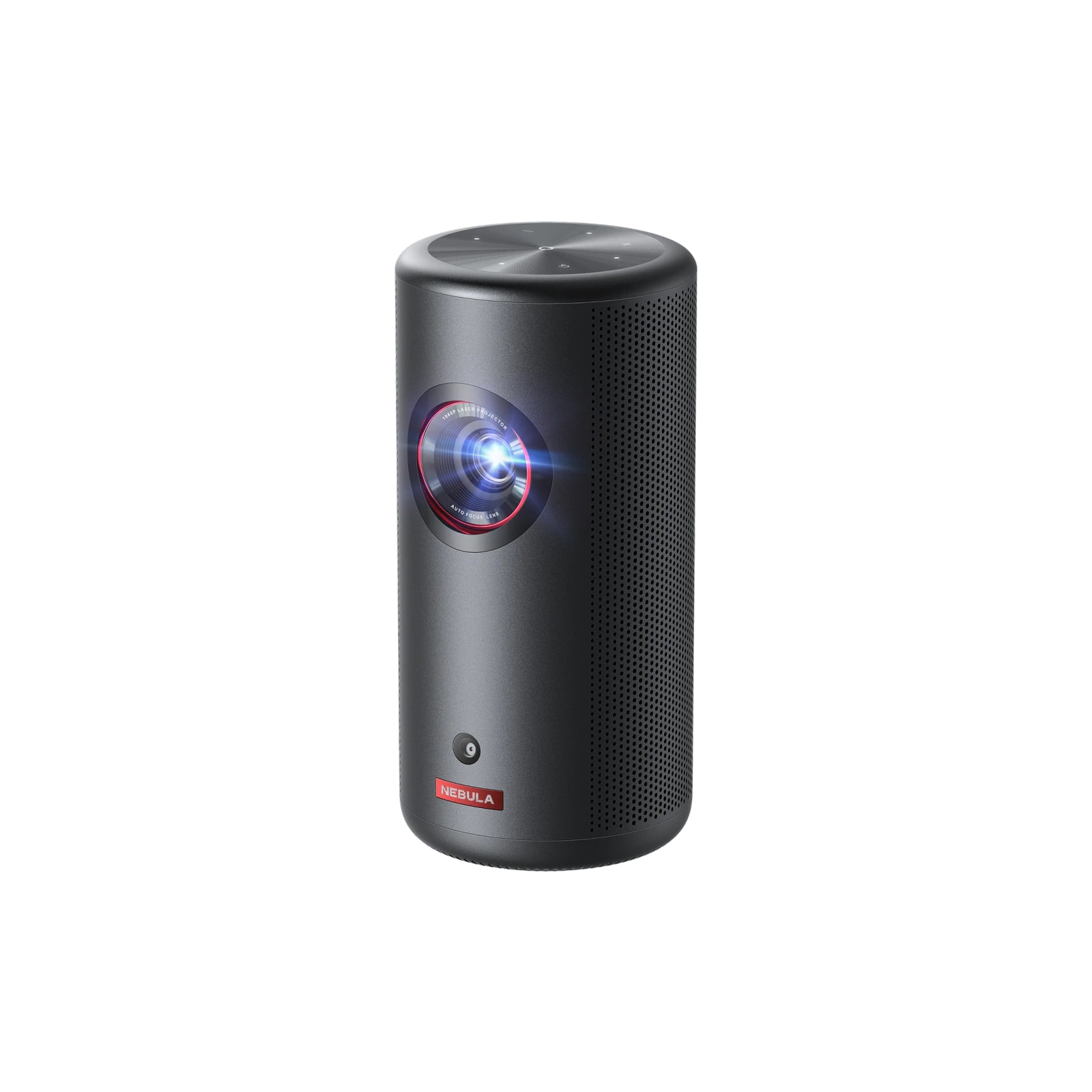
The Anker Nebula Capsule 3 is the small-can 1080p pick for dark bedrooms, travel, dorms, kids’ rooms, and quick shelf-to-wall movie nights. It is easier to trust than bargain mini projectors because Google TV and licensed Netflix reduce app guesswork, but its brightness, audio, power-bank assumptions, and Capsule 3 versus Capsule 3 Laser naming still deserve a careful check before checkout.
MSRP
$529.99
Amazon
$399.99
at writing · 2026-05-15
Buyer fit
The soda-can-size 1080p pick: tiny, self-contained, Google TV/Netflix capable, battery-powered, and much easier to place than bargain minis, but dimmer than larger portables.
MSRP
$529.99
Amazon
$399.99
at writing · 2026-05-15
Score breakdown
How this product scored
Same rubric, but focused on one product so the reasons behind the score stay readable.
Image quality and real brightness
Anker Nebula Capsule 3 scores 6/10 for image quality and usable brightness after weighing its resolution, light output, and the room conditions where it actually makes sense.
Setup, focus, and placement
Anker Nebula Capsule 3 scores 8/10 for setup, focus, and placement because its aiming tools, stand/cradle design, and autofocus behavior are central to how easy it feels after moving it.
Portability, power, and runtime
Anker Nebula Capsule 3 scores 8/10 for portability, power, and runtime after balancing carry size against battery, plug-in, USB-C, or power-bank realities.
Streaming and app behavior
Anker Nebula Capsule 3 scores 8/10 for streaming and app behavior based on built-in apps, casting, Netflix/DRM certainty, remote behavior, and how much extra gear buyers may need.
Fan noise, audio, and heat
Anker Nebula Capsule 3 scores 6/10 for fan noise, audio, and heat after weighing speaker usefulness, external-audio needs, and small-projector limits.
Inputs and compatibility
Anker Nebula Capsule 3 scores 6/10 for inputs and compatibility after checking HDMI/USB-C behavior, casting, laptop/console fit, and accessory needs.
Reliability and support
Anker Nebula Capsule 3 scores 7/10 for reliability and support based on listing identity, seller/condition checks, warranty posture, and how much long-term owner detail is available.
Use-case fit
Anker Nebula Capsule 3 scores 7/10 for use-case fit because it is easy to recommend for some rooms and buyer habits, but a mismatch for others.
Source confidence
Anker Nebula Capsule 3 scores 8/10 for source confidence based on how well current listings, specs, formal reviews, transcripts, and owner/reviewer notes line up.
Before You Buy
The Anker Nebula Capsule 3 is the kind of projector that can make you picture easy movie nights before you have even checked the room lighting. It is tiny, battery-powered, and smart enough to stream without the usual mini-projector workarounds. The reason to keep reading is the gap between that charming idea and what owners only learn after living with it: 200 ANSI lumens asks for real darkness, the speaker is still small-projector audio, and the Capsule 3 name can get tangled with the brighter Capsule 3 Laser.
Use this review as a regret check before checkout. If you want the full category map, start with our best portable projectors ranking; this page is the deeper Anker Nebula Capsule 3 read. Product links can help you recheck the exact B0CHW11C8H listing, current price, seller, condition, and availability, and they also help support KB4UB.
Quick Verdict
The Capsule 3 is the best can-style mini projector in this set, not one of the brightness leaders. That distinction matters. The current snapshot is the non-laser Capsule 3 GTV at ASIN B0CHW11C8H, with native 1080p, Google TV with officially licensed Netflix, a built-in battery, automatic focus/keystone/screen-fit features, and a 120-inch display claim. Its place in the ranking comes from convenience and trust, not raw light output.
What Hi-Fi framed the question well, asking whether “such a pint-sized product” can cram in streaming, battery use, and projector performance. The answer is yes, with boundaries. In a dark bedroom, dorm, guest room, tent, or small patio after sunset, the Capsule 3 can feel like a neat little movie-night object instead of sketchy AV gear. In ambient light or on a large outdoor screen, the 200 ANSI-lumen class catches up fast. If you mostly want the smallest self-contained 1080p projector that is still easy to explain, it makes sense. If you want the most forgiving portable projector, Mars 3 Air and Halo+ are safer starts.
Score Breakdown
- Image quality and real brightness: 6/10. Native 1080p is a real advantage over cheap mini projectors, but 200 ANSI lumens keeps this in controlled-darkness territory. The score rewards clarity for the size without pretending it can fight room light.
- Setup, focus, and placement: 8/10. Autofocus, auto keystone, screen fit, obstacle avoidance language, and the tiny body make quick placement one of the main reasons to buy it.
- Portability, power, and runtime: 8/10. The soda-can shape and built-in battery are the point. Treat the 2.5-hour movie claim as an eco-mode expectation, not a promise for every long film at your preferred brightness.
- Streaming and app behavior: 8/10. Google TV with licensed Netflix is a major plus in a category where app workarounds are common. What Hi-Fi called Google TV “a marked step up” from Android TV.
- Fan noise, audio, and heat: 6/10. The 8W mono speaker is good for the size, but still not Mars 3 Air audio. Outdoor groups may want external sound.
- Inputs and compatibility: 6/10. HDMI, USB-A, USB-C, casting, and tripod support help, but offline playback and power-bank setups need planning.
- Reliability and support: 7/10. The Amazon-new snapshot looked clean through AnkerDirect, but long-term owner/forum evidence was thinner than formal-review and transcript evidence.
- Use-case fit: 7/10. Excellent fit for small, dark, low-hassle viewing; poor fit if the buyer secretly needs a brighter room-to-yard projector.
What Feels Great After Setup
The appeal is how much the Capsule 3 hides in a very small cylinder. You can put it on a shelf, nightstand, tripod, suitcase, or patio table and get a real 1080p image without dragging out a streaming stick for basic Netflix use. That is the ownership hook: it feels more like a little all-in-one entertainment gadget than a tiny projector you have to rescue with accessories before every movie.
The streaming side is especially important. One YouTube setup transcript compared it with projectors that run a “weird base Android,” adding, “That is not great.” The Capsule 3’s Google TV and certified Netflix support are the antidote to that kind of annoyance. What Hi-Fi also noted that the remote includes a mic for Google Assistant and that Disney+, Netflix, Prime Video, and Apple TV were visible in its test context. For a travel or kids’ room projector, fewer app surprises can matter more than a small brightness bump.
The size is the other daily-use win. It is easy to tuck away, easy to carry, and less intimidating than boxier portables. The auto setup tools are not perfect, but they reduce the little focus-and-keystone fiddling that makes quick movie nights feel fussy. The 8W mono speaker is modest, yet What Hi-Fi’s note that it fires in an “almost 360 degree radius” explains why it can work better in a small room than the shape suggests.
What Gets Annoying
Brightness is the first and biggest annoyance. The Capsule 3 is not dim because it is bad; it is dim because it is tiny. The current non-laser model sits at 200 ANSI lumens, which is half the Mars 3 Air’s 400 ANSI-lumen class and well below larger backyard-style options. That is fine for a dark bedroom wall. It is not fine if you expect the projector to overcome lamps, daylight, or a big outdoor screen before full darkness.
The second annoyance is naming. Capsule 3 and Capsule 3 Laser material can get mixed together, and the Laser variant is brighter and often priced differently. PCMag described the Laser model as “barely larger than a soda can” and praised its image quality, but that is variant context, not permission to silently borrow Laser brightness for the non-laser B0CHW11C8H Capsule 3. Before buying, check the exact listing title, ASIN, and lumen claim.
The third annoyance is power planning. One Capsule 3 setup transcript said, “You want a power bank that's at least 45 watts. Otherwise, it will not work.” That is useful if you plan off-grid movie nights, because a random small phone bank may not save you. The same transcript also called out a practical offline-content catch: streaming apps on the projector may require internet, so downloaded shows can mean connecting a phone or laptop by cable.
How It Compares
Compared with Mars 3 Air, the Capsule 3 is easier to store and travel with, but less forgiving. Mars 3 Air has the better all-around movie-night mix because it brings more brightness, stronger speaker evidence, a handle, and the same broad Google TV/Netflix advantage. Capsule 3 wins only when the smaller can-style body is the point.
XGIMI Halo+ is another stronger 1080p battery alternative if you can verify the current listing and price. XGIMI MoGo 4 Laser is more flexible for ceiling projection and awkward angles because its physical stand changes how you aim it. Nebula X1 is dramatically brighter, but it is expensive, heavier, and AC-powered, so it solves a different backyard problem. LG CineBeam Q is the prettier compact 4K shelf projector, not a true battery mini. Samsung Freestyle 2nd Gen has a familiar TV-like interface but similar brightness caution. Aurzen ZIP is the pocket specialist; it is smaller and more novel, but it is not a better 1080p movie-night projector.
That leaves Capsule 3 in a narrow but useful lane: buy it when you want the least sketchy tiny 1080p projector, not when you want the strongest projector that happens to be portable.
Who Should Buy It
Buy the Anker Nebula Capsule 3 if you want a small, self-contained projector for dark bedrooms, dorms, travel, kids’ rooms, guest rooms, occasional camping, or a patio after sunset. It is especially appealing if native 1080p, built-in Netflix, Google TV, automatic setup, and easy shelf storage matter more than filling a big screen with lots of light.
Skip it if you need ambient-light performance, a larger backyard crowd, native 4K, big built-in sound, verified gaming performance, or a projector that feels relaxed at 100-plus inches in imperfect conditions. Also skip it if the listing you are looking at is actually Capsule 3 Laser and you have not compared the price, brightness, battery, and seller separately.
Bottom line: Capsule 3 is the convenience mini, not the performance winner. Recheck the current B0CHW11C8H listing before checkout, then compare it against the full portable projector ranking if the brightness or power-bank caveats sound like your real use case.
Tell us what this page missed
These pages get better when real buyer complaints make it back into the scoring model. If something important is underweighted, say it.
Rate this review
Give it a score from 1-10 and tell us what to improve.
0/4000 characters