
The recommendation
Choose the J-Ultra if you welcome a hands-on routine and can keep track of dial rotations. Choose an electric alternative if hand effort is the chore you want to remove.
Grades at a glance
| Product | Overall | Filling and handling | Control selection | Bin and burr access |
|---|---|---|---|---|
| 1Zpresso J-Ultra Manual Coffee Grinder, Iron Gray | 7.8 | 8.5 | 7.0 | 8.0 |
Does it fit your life?
Who the J-Ultra suits
The J-Ultra makes most sense when the act of using a hand grinder is part of the routine you want. Its appeal starts with how you hold it and remove the grounds cup, rather than a menu or a display. The important qualification is that a comfortable grip does not remove the work of turning the handle. If your goal is to stop doing that work, the electric alternatives in this guide are the more relevant comparison.
In the Coffee Chronicler’s comparison with the J-Max, the J-Ultra’s slimmer body was more comfortable to hold. That is a useful relative observation, especially if a wider cylinder feels awkward in your hand. It is not a promise that every hand size will find it comfortable. Think about your grip and how willing you are to hold a grinder throughout the task before treating the smaller body as a reason to buy.
Grip and the manual routine
The same presentation describes the J-Ultra as taking some force to operate. That belongs beside the favorable grip comment: the body can be easier to hold while the manual action remains a chore. For someone who enjoys a deliberate routine, those two points can coexist comfortably. For someone who wants to get through several separate preparations without hand work, the distinction matters much more.
A useful purchase question is whether you want your hands occupied by this part of preparation. A counter-based electric grinder offers a different kind of interaction: select a control and handle the receiver afterward. The J-Ultra asks you to stay physically involved. Neither arrangement is automatically more pleasant; the better fit depends on which actions you are willing to repeat.
For a shared kitchen, make this a decision for everyone who will use it. One person may welcome holding the grinder and turning the crank while another would prefer a button. The slimmer-body observation helps explain why this model could be more comfortable than the J-Max, but the reviewer still describes force being required. If a second user is reluctant to do the hand work at all, a nicer grip is unlikely to answer that objection. An electric model deserves a place on that household's shortlist even if the main user likes the J-Ultra.
Remember the rotation as well as the number
The external adjustment includes an indicator intended to help you track rotations. In the cited review, that indicator helped, but the broad range still made settings more complicated to remember than the reviewer would have liked. The practical issue is returning to a position after moving elsewhere on the dial. A number alone may leave out part of the information you need.
If you switch between positions regularly, keep a note that includes the rotation and the marked setting. That is a routine suggestion, not a universal starting point for any particular coffee. Decide whether keeping that note sounds reasonable before buying. If you prefer a visible numbered hopper position with fewer things to remember, compare the Encore ESP. If a digital time readout is the part of a routine you want to see, compare the Virtuoso+.
The adjustment system should therefore influence the purchase even if you like the physical design. Being able to reach many positions and finding a previous position easy to remember are different conveniences. Here, the indicator offers help, but it does not eliminate the need to pay attention.
There are two separate questions when looking at the dial: can you identify the position you are at, and can you reconstruct it later? The side indicator helps with the first. A note containing the rotation and marked position helps with the second. For example, someone returning after another person has changed the adjustment needs enough information to find the original position, not merely a familiar-looking number. You do not need to memorize the whole range to decide whether this suits you; you do need to be comfortable checking more than one reference.
The reviewer's own situation also matters. They say that tracking settings is harder because they have several grinders, and that someone with only one or two may find it less troublesome. That makes the criticism a useful prompt rather than a universal verdict. A person who uses this same dial regularly may be more willing to learn it than someone who expects to switch between different interfaces.
The magnetic cup is the main convenience
The Coffee Chronicler describes the magnetic catch cup favorably in daily use. It gives the J-Ultra a straightforward interaction at the end of the task: remove the cup and move on to transferring the grounds. For a buyer comparing everyday chores, that cup deserves attention in its own right. It is the part you handle each time, rather than an occasional maintenance feature.
The demonstration also includes giving the grinder a few knocks to bring grounds down into the cup. Allow for that extra gesture in your idea of the routine. The convenient cup does not mean the transfer is entirely passive. It also does not establish a particular amount of coffee left inside, or a guaranteed result from knocking.
Our access score for the J-Ultra covers this cup and transfer interaction. We have not established how easy its burrs are to remove or clean. If convenient burr access is your deciding factor, the Encore ESP and OXO have more directly described access procedures in this comparison.
Keep the catch-cup benefit separate from the effort of grinding when you assess the price and design. The cup is a reason to prefer this particular manual interaction once you have decided to do the hand work. It cannot tell you whether manual operation is the right choice in the first place. Likewise, the knocking shown in the demonstration is part of the transfer sequence to allow for, not a reason to assume the entire interior is cleared or ready for storage.
J-Ultra or an electric grinder?
Compare the J-Ultra with the Encore ESP first if your uncertainty is about hand work. The Encore’s direct pulse button and numbered hopper make a useful contrast with holding a cylinder and remembering rotations. That is a choice between routines, not a verdict about what either grinder produces.
Compare it with OXO if removing a hopper and reaching the upper burr are the chores you care about most. OXO’s locking hopper and removable upper burr are the specific conveniences described in its presentation. The J-Ultra’s strongest care-related case here is its magnetic cup; the two models should not be treated as equally documented for disassembly.
The Opus is a less obvious escape from setting complexity. Its external and internal adjustments also introduce a learning task. If you are leaving the J-Ultra shortlist because you dislike keeping track of multiple adjustment references, read the Opus section closely before assuming that electric operation solves that concern.
Before you choose
Picture one complete interaction: hold the grinder, turn the handle, remember the adjustment position, remove the cup and transfer the grounds. The J-Ultra’s favorable grip comparison and pleasant cup interaction belong to that sequence. So do the hand force, rotation tracking and occasional knocking described by the reviewer. Buy when the entire sequence appeals to you.
This review concerns handling, settings and cup access. It does not rank the coffee produced, measure operating speed or establish long-term durability. The cited presentation is historical, and its model-level observations do not verify every color, accessory bundle or later revision. Check that the listing is for the J-Ultra in the configuration you intend to buy.
1Zpresso J-Ultra Manual Coffee Grinder, Iron Gray
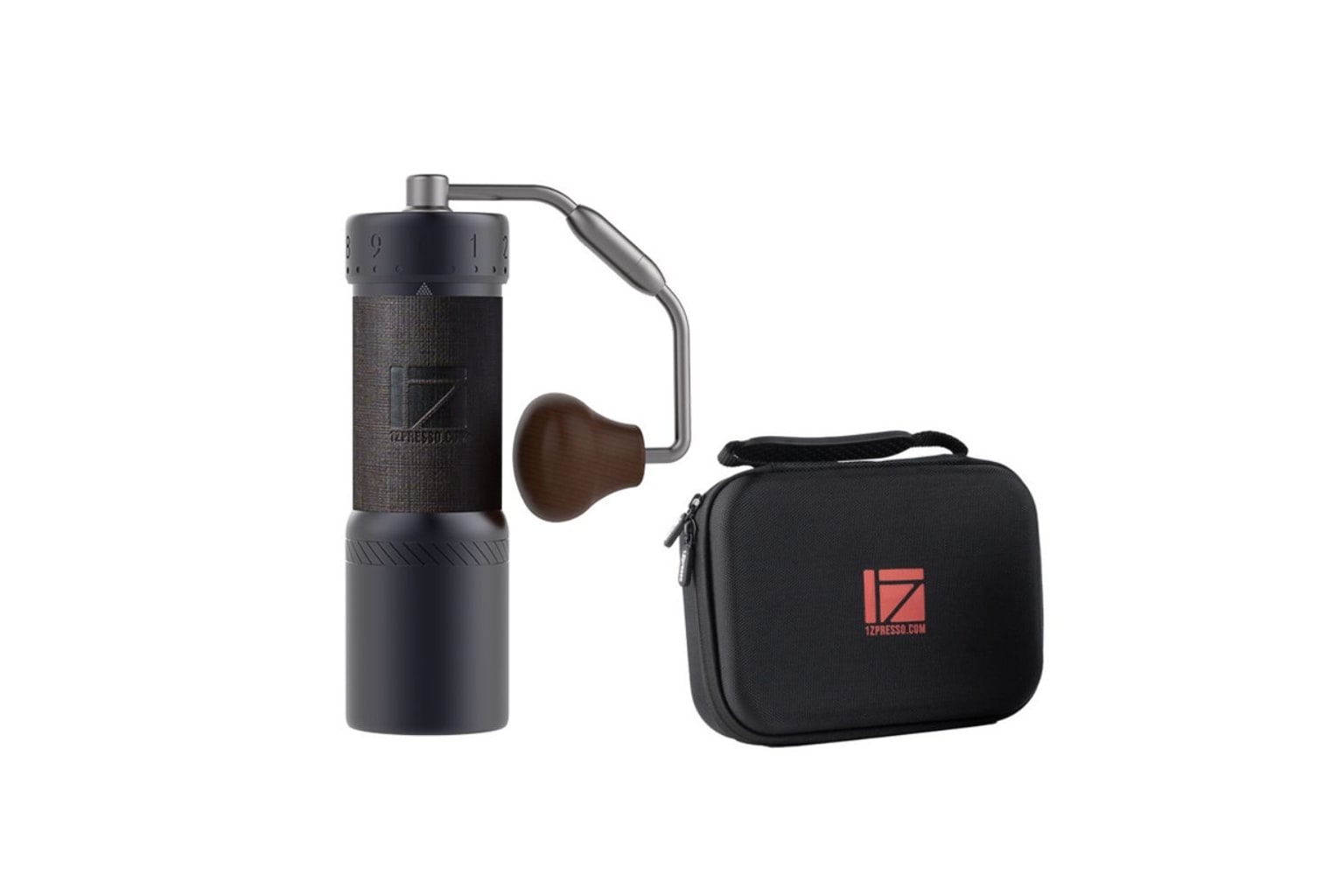
1Zpresso
A hands-on routine with recorded settings
A buyer’s look at the J-Ultra’s hand grip, adjustment tracking and magnetic grounds cup, with the practical limits of a manual routine.
Reasons to choose it
- Slimmer grip than the J-Max in the cited comparison
- External adjustment with a rotation indicator
- Convenient magnetic catch cup
Tradeoffs to know
- Turning the handle still requires force
- A setting can involve more than one dial rotation
Think twice if: You want to avoid hand effort or tracking dial rotations
Further reading
Ratings
Editorial score 7.8
Filling and handling8.5
Slimmer body improves grip relative to J-Max; hand force remains a tradeoff.
Control selection7
Rotation indicator helps but broad dial tracking adds complexity.
Bin and burr access8
The magnetic catch cup is pleasant to use; knocking grounds down adds a small chore before transfer.
Sources & further reading
youtube.com review
youtube.com review
youtube.com review
youtube.com review
youtube.com review
Keep reading
Something changed? Help us keep this useful.
Send a correction →