Wooting 80HE Review (2026): UX Verdict, Score, and Buyer Fit
A single-product UX review of the Wooting 80HE, rewritten from KB4UB's ranked mechanical keyboard shortlist for buyers who want the competitive gaming specialist.
Wooting earns its place with elite gaming performance and unusually sane tooling, but its narrower everyday value makes it less universal than the top all-round picks.
MSRP
$199.99
Amazon
—
Buyer fit
Best competitive gaming specialist for buyers who will actually use deep actuation control, ultra-fast response, and browser-friendly tuning tools.
MSRP
$199.99
Amazon
—
Score breakdown
How this product scored
Same rubric, but focused on one product so the reasons behind the score stay readable.
Typing and sound quality
It is competent rather than class-leading here, with enough physical caveats to keep it behind the strongest typing-first boards.
Build and component quality
The build is broadly solid, but chassis-flex and mount-feel complaints keep the premium story from feeling fully settled.
Software and customization experience
This is one of Wooting's biggest wins. The browser-friendly, lightweight tuning path consistently feels more usable than traditional gaming software.
Wireless and daily convenience
Its everyday convenience story is much less impressive than its gaming story, which limits broader buyer appeal.
Support reliability
Support confidence looks moderate rather than exceptional, which is enough to avoid a worse score but not enough to materially strengthen the recommendation.
Quick Verdict
Wooting has earned a reputation for building keyboards that feel engineered for people who take input behavior seriously, and the 80HE is the clearest specialist product in this review. It is not trying to win by being the most charming typing board or the best bargain for casual buyers. It wins by giving performance-focused users unusually deep control over how the keyboard behaves, then delivering that control through a lighter, more modern tooling experience than many gaming brands manage. That combination matters. A lot of gaming keyboards brag about customization while making the software miserable. Wooting's appeal is that the tuning actually feels usable. The 80HE therefore makes the most sense as a purpose-driven purchase. If you are buying for competitive play first, its personality is easy to understand. If not, it can feel more like a brilliant answer to a question you never asked.
In the parent best-of review, Wooting 80HE finished #3 out of 6 with an overall score of 7/10. That keeps it aligned with the competitive gaming specialist lane and the original shortlist framing: Best competitive gaming specialist for buyers who will actually use deep actuation control, ultra-fast response, and browser-friendly tuning tools.
For the right buyer, this is the clearest gaming recommendation in the field. The performance, tuning depth, and software sanity are real differentiators, not empty claims. The reason it ranks behind Keychron and NuPhy overall is not that it fails. It is that it is narrower. If gaming performance is the mission, buy it confidently. If you want the best keyboard for normal life plus occasional games, there are safer fits.
Score Breakdown
- Typing and sound quality: 7/10. It is competent rather than class-leading here, with enough physical caveats to keep it behind the strongest typing-first boards.
- Build and component quality: 7/10. The build is broadly solid, but chassis-flex and mount-feel complaints keep the premium story from feeling fully settled.
- Software and customization experience: 9/10. This is one of Wooting's biggest wins. The browser-friendly, lightweight tuning path consistently feels more usable than traditional gaming software.
- Wireless and daily convenience: 5/10. Its everyday convenience story is much less impressive than its gaming story, which limits broader buyer appeal.
- Value: 6/10. Value depends heavily on whether a buyer will actually use the specialist feature set. For casual users, the price is harder to defend.
- Support reliability: 6/10. Support confidence looks moderate rather than exceptional, which is enough to avoid a worse score but not enough to materially strengthen the recommendation.
What Stands Out
The positive story is strong and focused. Repeated praise centers on elite latency, deep customization, rapid and granular control, and a browser-friendly tool path that feels notably cleaner than bloated gaming suites. Buyers who care about rapid trigger, input speed, or fine-tuning key behavior consistently see the 80HE as a board that genuinely delivers on its promises. It also gets credit for feeling like a real specialist rather than a brand slapping buzzwords onto a generic chassis. Even outside the headline features, the board benefits from a sense of intentionality. Owners and reviewers repeatedly frame it as one of the clearest answers for serious gaming performance, and that clarity is a meaningful UX advantage because it reduces buyer confusion.
Where It Falls Short
The downside is that its strengths narrow the audience quickly. Price is a recurring complaint, especially from people who do not need its most advanced gaming features. Layout quirks show up in owner discussion, and some coverage also raises concerns around chassis flex or a stiffer-than-expected mount feel. That means the 80HE can look amazing in the lane it was built for, while feeling less convincing as an everyday keyboard for mixed use. It is also easier than some rivals to call overkill. That does not make it bad. It just means the value case gets much thinner once the buyer is no longer performance-obsessed.
Buyer Fit
Best for: Competitive gamers, tuning nerds, and buyers who care deeply about actuation control, low latency, and software that feels lighter than the usual gaming-brand mess.
Less ideal for: General buyers who mostly type, want a warmer stock feel, or do not expect to use the advanced gaming features often enough to justify the cost and specialization.
Biggest caution: Its biggest issue is mismatch risk. The 80HE is easy to admire, but much harder to justify for casual use. Price-value complaints are common, and physical concerns around layout, chassis flex, or stiff mount feel complicate the premium story. There is also the broader reality that some of its standout features only matter to buyers with a very specific performance mindset. If that is not you, the board can start to feel like expensive technical overkill rather than a satisfying everyday choice.
Images and Asset Notes
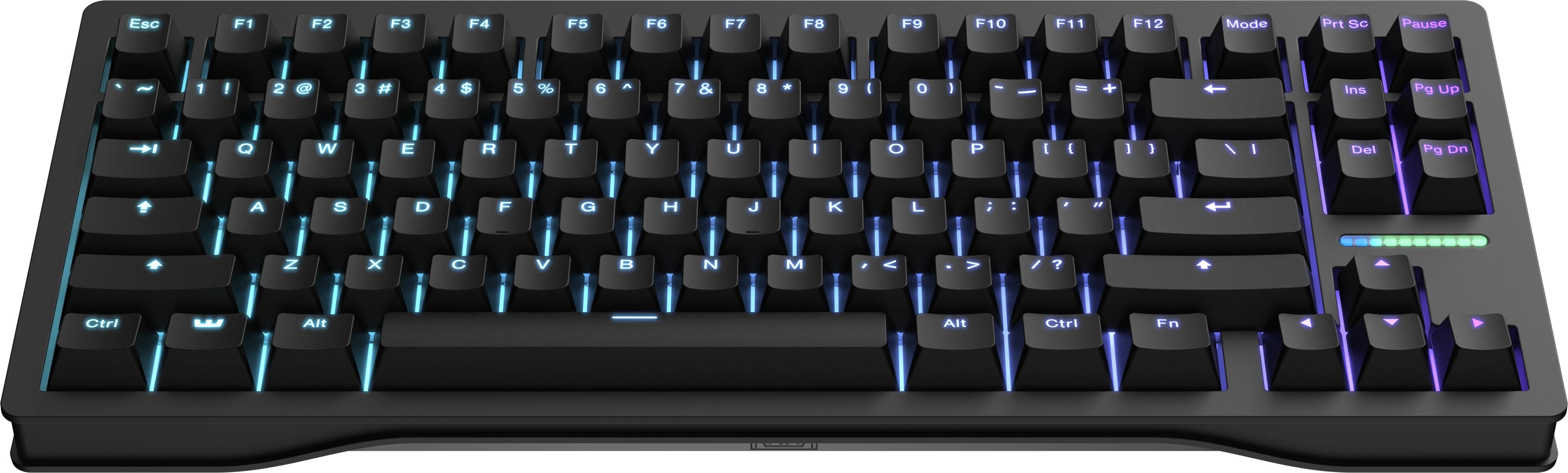
Hero image: product-images/mechanical-keyboards/wooting-80he/hero.jpg (Front view of the Wooting 80HE mechanical keyboard.)
Gallery image: product-images/mechanical-keyboards/wooting-80he/gallery.jpg (Angled showcase image of the Wooting 80HE mechanical keyboard.)
Thumbnail image: product-images/mechanical-keyboards/wooting-80he/thumb.jpg (Wooting 80HE keyboard in PCR ABS Black case style, shown from the front.)
Tell us what this page missed
These pages get better when real buyer complaints make it back into the scoring model. If something important is underweighted, say it.
Rate this review
Give it a score from 1-10 and tell us what to improve.
0/4000 characters