
The recommendation
Shortlist the F25 GT for a manageable ordinary routine and accessible care; expect to empty and rinse the tank and check relevant parts.
Grades at a glance
| Product | Overall | Steering, carry and placement | Controls and mode selection | Tank, roller and post-use care |
|---|---|---|---|---|
| Roborock F25 GT | 9.0 | 9.0 | 9.0 | 9.0 |
Does it fit your life?
Who should put the GT on the shortlist
The Roborock F25 GT is our strongest general shortlist choice for a manageable daily routine. Its 9/10 overall usability grade brings together balanced movement described in a purchased review, direct ECO/MAX selection in official GT manuals and accessible dirty-tank care. Those strengths matter before and after the floor pass as well as during it. Choose the GT if you want the routine to feel approachable and you accept that emptying, rinsing and checking parts remain part of owning it.
Choose it for the parts of ownership you repeat: taking it out, moving around furniture, choosing an ordinary mode and dealing with the dirty tank afterward. If you need a separate dry-first routine, read the BISSELL OmniForce 3882 review alongside this one. If you value illustrated next-action prompts, compare the Tineco S9 Artist Steam. Different inconveniences can justify different choices even when the GT leads this usability shortlist.
Keep the GT name attached to the details that persuade you. The purchased account supports its reported movement and compartment access; the official manuals explain its ordinary control functions. Neither gives a reason to add another F25 model's features to your shopping expectations. If a seller's description emphasizes a capability that matters to you, check it against the exact GT documentation before ordering. The recommendation here stands on the ordinary movement, selection and care described below.
The grades and what they mean
| Everyday task | Grade out of 10 | Reason |
|---|---|---|
| Steering, carry and placement | 9 | A purchased GT reviewer describes balance, smooth wheel movement and access beneath furniture |
| Controls and mode selection | 9 | Official GT manuals describe separate operating functions and direct ECO/MAX selection |
| Tank, roller and post-use care | 9 | The reported compartment and shown tank routine are accessible, while manual care remains |
| Overall usability | 9 | A consistently manageable ordinary routine within these limits |
A 9 for care does not mean that a dock does every maintenance task. It means the described access makes those tasks approachable. Likewise, the control grade is for the documented sequence. It does not score the visibility of printed words, the position of buttons under a thumb or the effort needed by a particular hand. Those would require a different kind of observation.
Read these grades as a way to organize a purchase decision rather than a universal ranking of floor cleanliness. If you must lift a washer frequently, the handling account below is less informative than it is for someone storing it beside the floor they wash. Your route through the house remains part of the buying decision.
Balance matters more than a dramatic recline photograph
In a GT review by a self-described purchaser, the reviewer describes a balanced hand feel and smoothly rotating wheels. He also reports moving it beneath his sofa, dining chairs and coffee table. He discloses affiliate commissions; earlier free samples discussed in the video were smaller-brand machines, not the GT he says he bought. This is one contextual account of movement, not a measured comparison of steering force.
The practical attraction is the transition between ordinary passes and working around furniture. If a machine feels predictable when changing direction, it may be easier to fetch for a small job. That is an editorial reason to value the described balance. We cannot turn the report into a promise that it will pass beneath every cabinet, cross every threshold easily or be comfortable for everyone to lift.
Before buying, look at your lowest obstacle and the turn needed to reach it. A long straight gap under a sofa is a different problem from a narrow turn beside a chair. Check the current product's dimensions against your furniture. A photograph of a reclined cleaner cannot answer that room-specific question, and our recommendation does not depend on assuming powered wheels or another GT-family feature that has not been established here.
What the official GT manuals actually establish
The official FCC GT manual and CE English GT manual describe separate Switch Mode, Power and Self-Clean functions. In their shared ordinary workflow, pressing Switch Mode changes between ECO and MAX. Power starts or pauses operation. That separation is useful because changing an operating mode and starting a care cycle are distinct decisions.
These are the manuals' names for functions. They do not prove that those complete words are printed on the physical handle, that a label is legible from a standing position or that one button sits above or below another. We have not performed a hands-on control inspection. The 9 control grade concerns the direct documented workflow, with the limitations of that evidence kept visible.
The FCC manual is the US document; the CE English manual serves a different regional context. Their shared GT operating sequence supports the ECO/MAX explanation, but the two documents are not interchangeable instructions for a particular unit. Use the manual supplied for your market and model. The common function descriptions also do not certify the hardware revision sold under the selected Amazon listing or establish a default mode. Keep those purchasing details separate from the useful, documented ordinary workflow.
Self-clean has conditions, so plan for the whole finish
Self-Clean is a distinct function whose behavior depends on the charging and cleaning or drying state. The manuals retain charging and sufficient-battery conditions. Putting the washer on its base therefore should not be read as a promise that every care action is available immediately. This is a normal planning point: the end of a floor pass and the readiness of the care routine are separate moments.
For a buyer, the useful question is whether the base can live somewhere you can return to without making the rest of the job awkward. Consider where you will put the dirty tank while emptying and rinsing it, and whether you can reach the parts that need attention. That is a layout exercise, not a new instruction about charging thresholds or an alternative cycle sequence.
When comparing the GT with another washer, include the transition from floor use to care in your expectations. A separate Self-Clean function tells you which action to choose; the charging and cycle conditions determine whether that action is available. If your preferred habit is to finish everything in one visit to the base, read the supplied GT instructions before buying. The shared manual sequence does not establish an exact waiting time or justify adding functions from another regional or F25 model description.
Accessible care is the GT's most persuasive distinction
The purchased GT reviewer describes the mop compartment as uncomplicated and contrasts it with layouts he found fiddly. That is the most persuasive reason to look closely at its care access. When maintenance is the task you tend to postpone, being able to reach the relevant parts can matter more than another mode. The report still does not establish that every roller, filter or compartment will be free of residue after every mess. Expect accessible work, with inspection and manual care still required.
A second household demonstration shows the dirty tank being opened, dumped and rinsed. The title identifies F25 GT, but the spoken account says Roborock wet-dry vac more generally. We therefore use it only for the shown tank-access routine. Funding is not stated in that published account. Its heating and automatic-drive remarks do not establish GT features and do not support our recommendation.
That leaves an honest, useful picture of the finish: there is a tank to empty and rinse, and additional roller or filter care may be required. If those tasks are the reason your current washer stays in a cupboard, examine access closely before buying. A simple compartment can be valuable without a promise about sanitation, complete drying or how long it will stay clean between uses.
Decide whether your home favors this kind of convenience
The GT is most compelling when you want a direct routine on a floor near its storage location. Imagine taking it from the base, working around a table and then carrying only the dirty tank to the place where you will finish cleanup. If that route is short and practical, the reported balance and accessible care address real recurring friction. This scenario is a buying aid rather than a claim about a measured time saving.
A home with several levels raises a different question. The cited handling account describes floor movement, not repeated stair carrying. Do not let a smooth-rolling description answer a lifting question. Consider who will move the machine and whether its storage can stay beside the floor that gets the most use. If carrying is unavoidable, try to assess that directly before committing.
Shared use adds another consideration. The documented separation between mode selection, power and care gives someone learning the cleaner a limited set of ordinary decisions. But the documentation does not tell us whether a particular person can read or distinguish the controls comfortably. If that matters, inspect the actual handle and instructions rather than treating the control grade as a personal accessibility certification.
Compare the GT with the OmniForce and the corded Eureka
The BISSELL OmniForce 3882 earns its place through a different routine. Its purchased reviewer, who discloses affiliate commissions, emphasizes doing dry pickup before wetting the roller. He walks through suction selection and water-on control, then shows manual disposal and cleaning. Pick the BISSELL for that deliberate dry-then-wet plan; turning water off after mopping does not recreate a clean, dry starting condition.
The Eureka NEW200 offers a matching corded demonstration of swivel, direct selection and rear cord storage. That brand-associated video does not speak the NEW200 model name, so its application is limited to the shown corded layout. The cable is a practical choice to plan around, while its tank and filter still need attention. Its 8.4 overall usability grade does not imply identical handling conditions to the GT.
Choose among these by identifying the inconvenience that matters first. If it is the post-use compartment, the GT deserves close attention. If it is keeping a quick dry pickup separate, the BISSELL deserves an equally serious look. If managing a cord feels natural in your room, the Eureka can remain on the shortlist. None of these comparisons establishes a cleaning-performance winner.
Compare it with the Tineco, Dreame and Shark
The Tineco S9 Artist Steam has a more specific control appeal: a published hands-on reviewer describes a drying countdown and animated tank-empty prompt. The same affiliate-disclosed report describes substantial carry weight and a historical shorter stand-alone drying routine that could need repetition. It is a sensible alternative if informative prompts matter enough to accept those reported burdens.
The Dreame H15 Pro Heat separates power, mode and self-clean controls and displays the selected mode in its Heat-specific report. That review promotes a product-price link, with funding otherwise unstated. Bulk, limited head-following and manual care checks temper its appeal. The side-removable roller is useful access, but the report also describes residue after a particular self-clean test. We do not extend those observations to a non-Heat model.
The Shark AW261 setup shows easy placement but includes one historical clean-tank-empty indication while the tank was not empty. Its reviewer says the unit was purchased and discloses affiliate commissions. That single event is not a defect rate. It does illustrate why a short list of controls and an entirely interruption-free first routine are different things.
Check the interface against your own expectations
If you can inspect the actual machine before committing, use the documented functions as questions to answer: can you distinguish the control for starting operation from mode selection and from care? Can the person who will use it reach and understand them comfortably? This is a personal usability check, not a claim that we inspected printed handle words or measured their visibility. The manuals explain intended actions; your own inspection answers whether the physical presentation suits you.
ECO and MAX give the documented ordinary mode selection a clear scope. Consider whether that is the kind of choice you want: a small set of named operating options, separate from starting or pausing and from care. Someone who prefers a more extensive menu should check the exact GT documentation before committing. Someone who values a direct sequence can reasonably see the limited ordinary choices as an attraction. Either way, judge the functions described here rather than assuming a broader feature list from the family name.
What to verify before following the product link
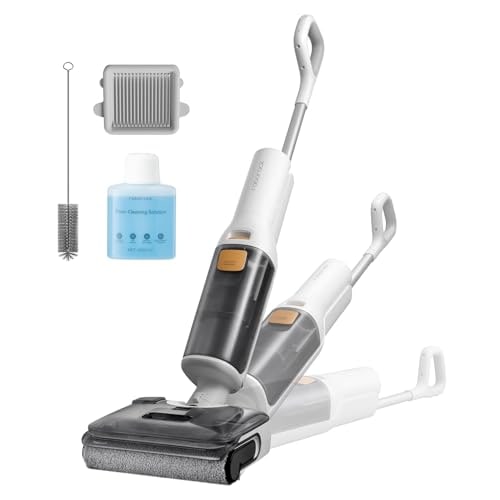
Keep F25 GT on the order, listing and instructions you compare. Similar family names can be easy to skim past, particularly when a seller uses a large composite image. The selected product link identifies the GT; it does not prove that a photograph authenticates the exact revision, accessories or firmware you will receive. Check those details in the current listing and supplied documentation if they affect your decision.
Set a realistic place for tank emptying and drying parts before you purchase. This need not be an elaborate setup. It is simply the part of the ownership route that a clean product photo leaves out. If you cannot comfortably handle a dirty tank at the end of a small job, even accessible components may not solve the underlying inconvenience.
Choose the GT for its combination of reported balance, documented selection and accessible care. Its higher usability grade is most persuasive when those are the parts of floor-washer ownership you want to improve. If repeated carrying or a separate dry-first job is central to your plans, investigate those needs directly and compare the alternatives. This review was updated October 16, 2026 from published reports and official documentation; it includes no fresh price or stock check and no testing performed by us.
Roborock F25 GT
Roborock
Buyers prioritizing manageable floor movement and accessible post-use care.
Balanced movement in a purchased GT account, direct ECO/MAX selection in official manuals and accessible tank care make a strong ordinary routine.
Reasons to choose it
- Balanced hand feel and smooth wheel movement described in a purchased GT review.
- Official GT manuals separate power, mode selection and self-clean functions.
- Accessible compartment and shown tank opening, emptying and rinsing.
Tradeoffs to know
- Manuals establish intended workflow, not a hands-on handle or current retail-revision inspection.
- Tank emptying and rinsing remain; additional roller or filter care may be required.
- Furniture clearance and carrying comfort depend on your room and user.
Think twice if: You expect the dock to eliminate manual tank, roller or filter care.
Further reading
Ratings
Editorial score 9
Steering, carry and placement9
A reviewer who says he bought the GT and discloses affiliate commissions describes balanced hand feel, smooth wheel movement and reaching beneath his furniture. Your clearance and carrying comfort still need checking.
Controls and mode selection9
Official GT manuals describe separate Power, Switch Mode and Self-Clean functions and direct ECO/MAX selection. Self-clean has charging and readiness conditions. This is documented workflow, not proof of printed handle words, button positions or a current retail revision.
Tank, roller and post-use care9
The purchased GT review describes an uncomplicated compartment. A second household demonstration, whose GT identity is in the title rather than clearly spoken, supports only the shown tank opening, emptying and rinsing. Further roller or filter care may still be needed.
Sources & further reading
youtube.com review
youtube.com review
youtube.com review
cdn.awsusor0.fds.api.mi-img.com product information
cdn.awsusor0.fds.api.mi-img.com product information
youtube.com review
youtube.com review
youtube.com review
youtube.com review
youtube.com review
Keep reading
Something changed? Help us keep this useful.
Send a correction →