
The recommendation
Shortlist the TB201 for its pitcher and control choices if you accept separate blade-and-lid handling. If a cup, processor or a particular cleaning outcome is the reason you want it, the related-kit demonstrations do not settle that question. A clear interface can be appealing while the physical routine remains the deciding compromise. Use the instructions supplied with the TB201 for exact assembly and washing directions.
Grades at a glance
| Product | Overall | Loading, seating and serving | Choosing and adjusting a cycle | Washing the vessel and parts |
|---|---|---|---|---|
| Ninja Detect Power Blender Pro TB201 | 7.8 | 7.0 | 9.0 | 7.0 |
Does it fit your life?
For pitcher users who want manual and automatic choices
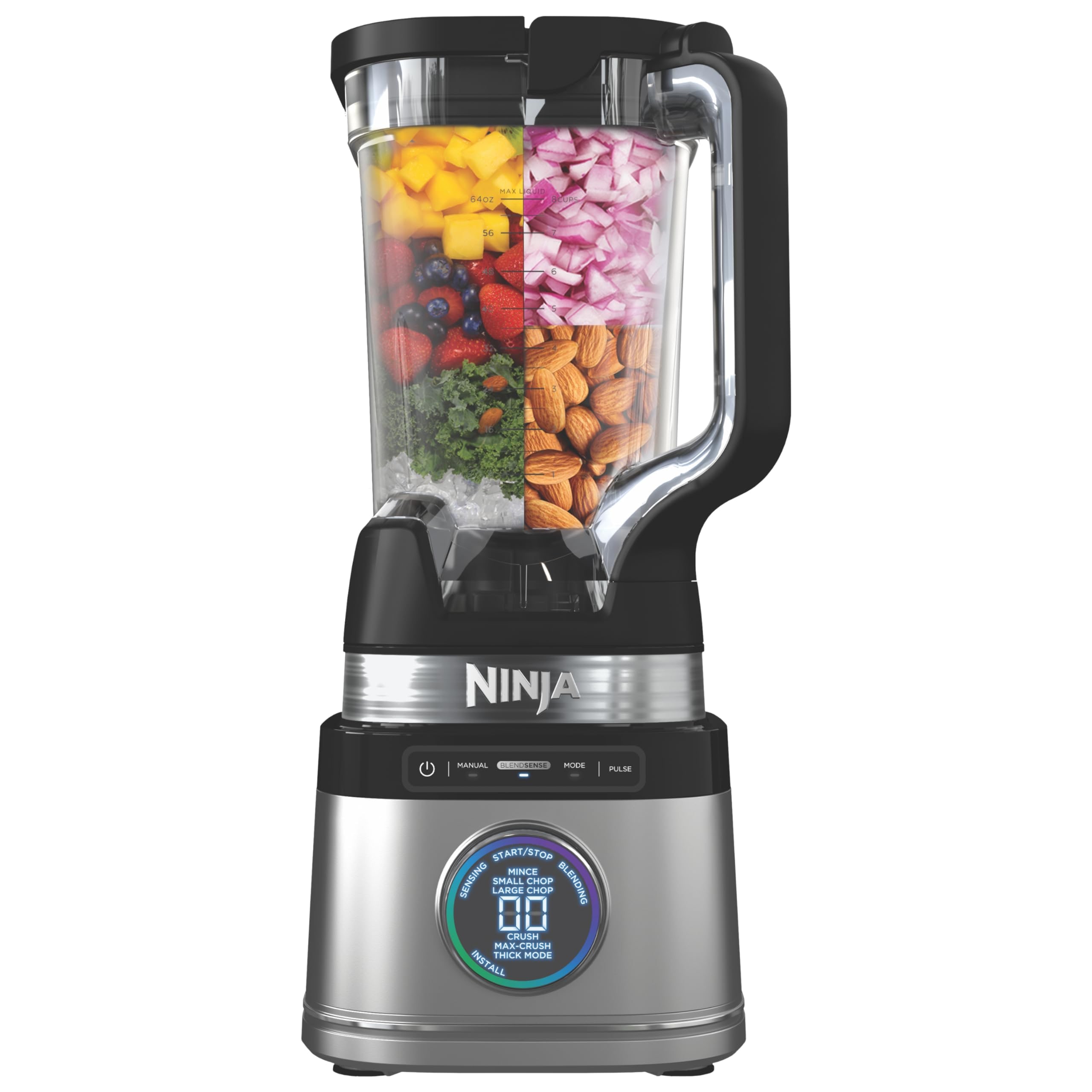
The Ninja Detect Power Blender Pro TB201 is worth considering when you want a shared pitcher with manual speed and program choices. Its large start/stop dial is only half the buying decision. The pitcher, locking lid and separate stacked blade create a handling routine that continues after the cycle ends. Choose it when those parts fit the way you prepare, serve and wash up. Ninja TB201 product information Detect Duo pitcher demonstration Detect TB401 demonstration
Loading, seating and serving
Ninja’s TB201 product information lists the pitcher lid with pour spout and stacked blade assembly. The related Detect Duo demonstration shows removing a separate blade before emptying onion and salsa. Together these explain the shared physical handling task: a pitcher to serve from, a lid to manage and a blade that can be handled separately. They do not establish equal recipe results across models. Ninja TB201 product information Detect Duo pitcher demonstration
Think through both pouring and emptying. A pour spout is one way to serve a drink; opening the lid and removing a separate blade is a different handling job when emptying a thicker preparation. A buyer who dislikes washing or storing loose blade assemblies should give that difference real weight. The measurements and suction-foot comments in those related-kit reviews do not establish the TB201’s fit in your kitchen. Detect Duo pitcher demonstration Detect TB401 demonstration
What you choose during a cycle
Ninja lists manual variable speed and pitcher chop programs for the TB201. The Detect Duo demonstration illustrates changing speed with the large dial; the TB401 demonstration explains pressing that dial to start or stop. These shared control actions help explain the panel, while the results and other attachments of those larger systems remain separate. Ninja TB201 product information Detect Duo pitcher demonstration Detect TB401 demonstration
One related-system demonstration includes an initial choice between manual operation and a mode. That is the small learning step to anticipate rather than assuming that a large dial makes all choices disappear. The controls offer more routes than a three-speed blender, while still leaving you responsible for selecting the appropriate route. Nothing here extends the TB201 judgment to the separate cups or food processors shown with other kits. Detect Duo pitcher demonstration Detect TB401 demonstration
What remains after the powered wash
The Detect Duo demonstration describes a soap-and-water cycle, rinsing and further attention to lid components. The TB401 account also describes removable blades and handwashing. With the TB201’s separately listed blade and lid, the buyer implication is to plan for those pieces during cleanup. Neither demonstration proves how a specific residue will wash off the TB201. Detect Duo pitcher demonstration Detect TB401 demonstration
If you want a jar that stays together from loading through rinsing, this is the friction to compare first. Removing parts can make the process more explicit, but those parts still need attention and somewhere to rest. Use the instructions supplied with your exact machine for washing directions. We are not giving dishwasher placement or heated-dry directions from a different Detect kit. Detect Duo pitcher demonstration Detect TB401 demonstration
Keep the TB201 pitcher separate from larger kits
Ninja’s TB201 product information identifies the pitcher lid with pour spout and stacked blade assembly, and describes manual variable speed and pitcher chop programs. Those details establish the components and choices being discussed here. The accompanying demonstrations cover the Detect Duo and TB401 systems. Their shared pitcher tasks help explain loose-blade and lid handling, but their cups and processor accessories do not establish what the TB201 does. Ninja TB201 product information Detect Duo pitcher demonstration Detect TB401 demonstration
For your shortlist, write down whether you actually want a pitcher or were attracted by a different attachment seen in a video. If the latter, this review cannot settle that purchase. Keeping the vessel in view also makes the comparison fairer: a serving cup and a pitcher ask different things of the user even when their control panels look related. The TB401 presenter disclosed receiving the machine from Ninja and said the company had no input into the review.
Think beyond pressing start
In the Duo demonstration, the presenter removes the stacked blade before emptying chopped onion and salsa. That illustrates a shared physical task relevant to the TB201’s separate blade assembly; it is not a result test of the TB201. The useful buying question is whether you are comfortable having a blade assembly to manage separately when emptying the pitcher. Detect Duo pitcher demonstration Ninja TB201 product information
Plan space for the pitcher, lid and blade as separate pieces during serving and washing. This does not establish how much counter space your kitchen requires, but it prevents the large dial from dominating a decision that also involves physical handling. A buyer who is happy to organize loose parts may find this straightforward. A buyer who wants to carry one assembled jar to the sink should compare that preference carefully. Follow the directions supplied with the exact machine for removal and washing; the demonstrations are not a substitute for them.
Compare a pitcher interface with its handling cost
The KitchenAid K150 review gives you a useful baseline: place the jug, fit the lid, and choose among three speeds or pulse. Its shorter list of settings may suit you if you want a simple starting decision. The TB201’s manual speed and chop programs offer more choices, which are valuable only if they match tasks you intend to do. KitchenAid K150 Blender – Blender Review Ninja TB201 product information
The Breville Super Q review is the alternative to read if a timer and named programs are central to your purchase. Its separate personal-cup routine introduces its own blade-to-lid swap. The Vitamix 5200 review instead centers on a dial and tall narrow jar. These are choices about controls, vessels and parts; the available comparisons do not rank the machines’ recipe results against each other. ALL NEW Breville Super Q Blender Review w/Recipes! Best Vitamix Blender (Review Video!)
Who should put it on the shortlist
Shortlist the TB201 for its pitcher and control choices if you accept separate blade-and-lid handling. If a cup, processor or a particular cleaning outcome is the reason you want it, the related-kit demonstrations do not settle that question. A clear interface can be appealing while the physical routine remains the deciding compromise. Use the instructions supplied with the TB201 for exact assembly and washing directions. Ninja TB201 product information Detect Duo pitcher demonstration Detect TB401 demonstration
Compare the controls and handling
| Blender | Loading / 10 | Controls / 10 | Cleanup / 10 | Overall / 10 | Reason to consider | Compromise |
|---|---|---|---|---|---|---|
| Vitamix 5200 | 8 | 8 | 8 | 8 | Small preparations in a narrow jar | Keeping the tall jar assembled under a cabinet |
| Breville Super Q BBL920 | 9 | 9 | 9 | 9 | Choosing programs or manual speed | Wanting the same timed routine for jug and cup |
| Ninja Detect Power Blender Pro TB201 | 7 | 9 | 7 | 7.8 | Shared-pitcher preparation | Avoiding a loose blade and locking lid |
| KitchenAid K150 3 Speed Ice Crushing Blender | 9 | 9 | 9 | 9 | A short choice of physical settings | Needing a timer or named programs |
These editorial scores compare loading, controls and routine cleanup. Use the adjacent tradeoffs to decide which routine fits; the numbers do not rate recipe results. The linked reviews explain the observations and limitations behind each choice.
Sources
Original TB201 product HTML; literal local excerpts; raw bytes bound separately
Received sibling-model demonstration; bounded shared physical task only
Received sibling-model demonstration; bounded shared physical task only
KitchenAid K150 Blender – Blender Review
ALL NEW Breville Super Q Blender Review w/Recipes!
Best Vitamix Blender (Review Video!)
Vitamix 5200 Blender Review, Still The Best in 2025?
Ninja Detect Power Blender Pro TB201
Ninja
Shared-pitcher preparation
The Ninja Detect Power Blender Pro TB201 is worth considering when you want a shared pitcher with manual speed and program choices. Its large start/stop dial is only half the buying decision. The pitcher, locking lid and separate stacked blade create a handling routine that continues after the cycle ends. Choose it when those parts fit the way you prepare, serve and wash up.
Reasons to choose it
- Shared-pitcher preparation
- Manual speed and chop programs
Tradeoffs to know
- Avoiding a loose blade and locking lid
Think twice if: Avoiding a loose blade and locking lid
Further reading
Ratings
Editorial score 7.8
Loading, seating and serving7
Ninja’s TB201 product information lists the pitcher lid with pour spout and stacked blade assembly. The related Detect Duo demonstration shows removing a separate blade before emptying onion and salsa. Together these explain the shared physical handling task: a pitcher to serve from, a lid to manage and a blade that can be handled separately. They do not establish equal recipe results across models.
Choosing and adjusting a cycle9
Ninja lists manual variable speed and pitcher chop programs for the TB201. The Detect Duo demonstration illustrates changing speed with the large dial; the TB401 demonstration explains pressing that dial to start or stop. These shared control actions help explain the panel, while the results and other attachments of those larger systems remain separate.
Washing the vessel and parts7
The Detect Duo demonstration describes a soap-and-water cycle, rinsing and further attention to lid components. The TB401 account also describes removable blades and handwashing. With the TB201’s separately listed blade and lid, the buyer implication is to plan for those pieces during cleanup. Neither demonstration proves how a specific residue will wash off the TB201.
Sources & further reading
sharkninja.com product information
youtube.com review
youtube.com review
youtube.com review
youtube.com review
User reports at youtube.com
User reports at youtube.com
User reports at youtube.com
youtube.com review
Keep reading
Something changed? Help us keep this useful.
Send a correction →