Instant Pot Duo 7-in-1 6 Quart Review (2026): The Classic Still Works — If Manual Steam Does Not Bother You
A practical look at the classic 6-quart Duo: manual steam release, seal setup, rice and slow-cook limits, cleanup habits, replacement parts, and whether it still fits your kitchen.
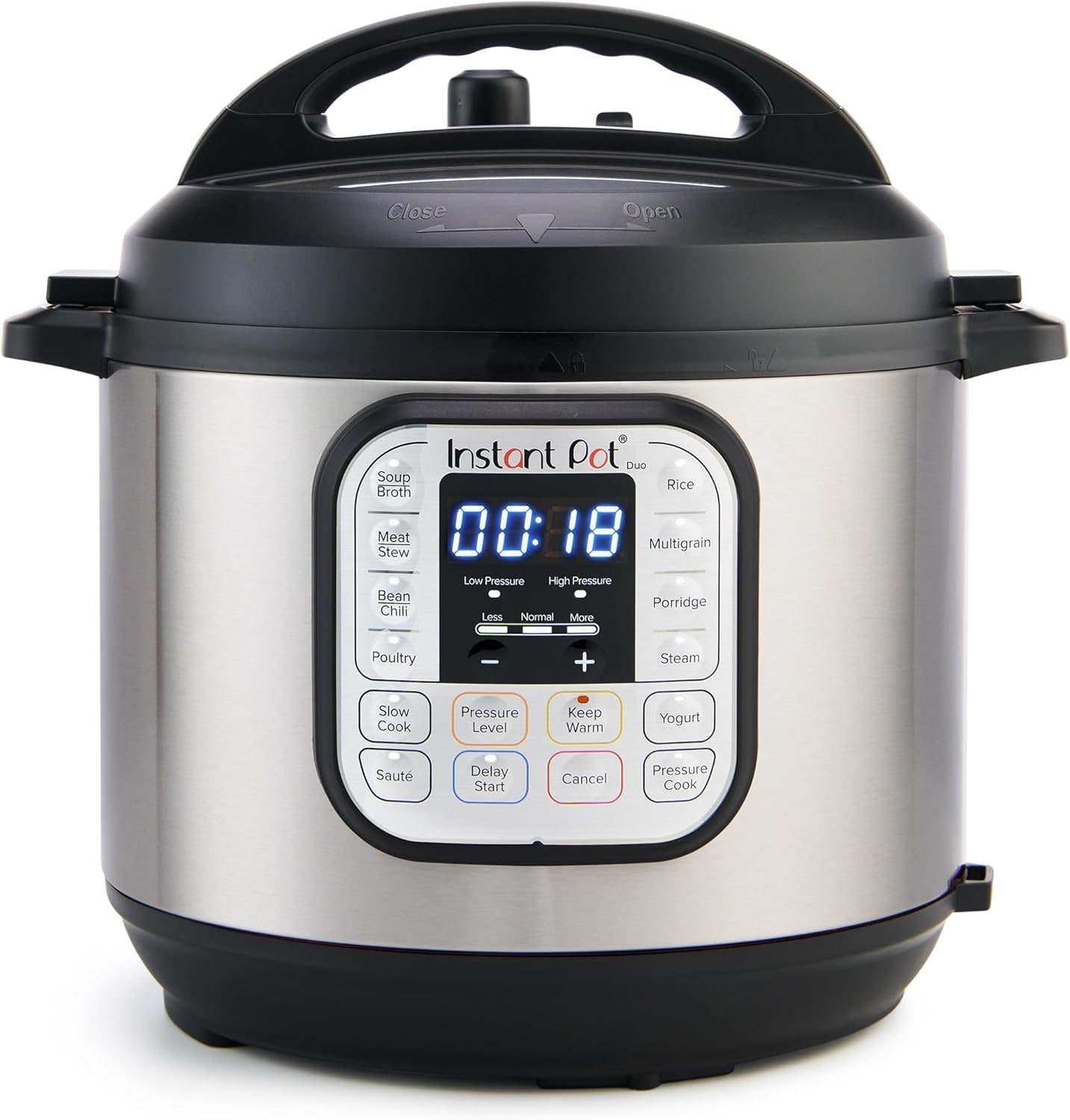
The Instant Pot Duo 7-in-1 6 Quart is still the classic baseline pressure cooker: familiar, widely supported, and useful for beans, soups, yogurt, steaming, and meal prep. Just know that manual steam release, seal upkeep, and rice/slow-cook limits matter more than the 7-in-1 label suggests.
MSRP
—
Amazon
$109.99
at writing · 2026-05-19
Buyer fit
The straightforward baseline pick if you want the classic Instant Pot shape, common replacement parts, and fewer smart features to learn.
MSRP
—
Amazon
$109.99
at writing · 2026-05-19
Score breakdown
How this product scored
Same rubric, but focused on one product so the reasons behind the score stay readable.
Pressure reliability
Instant Pot Duo 7-in-1 6 Quart scores 7/10 for pressure reliability based on seal/build-pressure evidence, burn-warning risk axes, and current-new listing confidence.
Steam & safety confidence
Instant Pot Duo 7-in-1 6 Quart scores 6/10 for steam & safety confidence because release design, vent clarity, and new-user confidence are central to this category.
Controls & menu logic
Instant Pot Duo 7-in-1 6 Quart scores 7/10 for controls & menu logic based on how clearly the product starts common programs, explains settings, and avoids menu clutter.
Cleaning & upkeep
Instant Pot Duo 7-in-1 6 Quart scores 7/10 for cleaning & upkeep based on lid/gasket/pot cleanup, odor risk, accessory burden, and replacement-part concerns.
Cooking fit
Instant Pot Duo 7-in-1 6 Quart scores 7/10 for cooking fit based on beans, rice, soups, meal prep, sauté/slow cook, and specialty modes that matter for the target buyer.
Counter fit & storage
Instant Pot Duo 7-in-1 6 Quart scores 8/10 for counter fit & storage based on 6-quart practicality, lid/accessory storage, weight, and whether it makes sense to leave out.
Support & durability
Instant Pot Duo 7-in-1 6 Quart scores 8/10 for support & durability based on warranty/support posture, parts availability, app risk where relevant, and long-term ownership signals.
Before You Buy
The Instant Pot Duo 7-in-1 6 Quart is the pressure cooker most people picture when they say “Instant Pot.” Instant Pot’s classic 6-quart model promises seven everyday jobs in one familiar stainless body: pressure cooking, slow cooking, rice, steaming, sauté, yogurt, and warming. That familiarity is the reason many buyers still start here.
The part to think through before checkout is not whether the Duo can cook dinner. It can. The better question is whether you will be comfortable with the older manual steam release, the black-on-black vent marking, the sealing-ring routine, and the pressure-cooker timing that starts only after the pot comes up to pressure. Owners eventually discover that the 7-in-1 label matters less than learning the float pin, using enough liquid, and following good recipes.
In our best multi-cookers and pressure cookers ranking, the Duo landed as the runner-up baseline rather than the overall winner. That is a compliment with boundaries: it is common, supported, and capable, but Duo Plus is calmer around steam and Pro feels nicer day to day. Product links can help you recheck the exact B00FLYWNYQ listing, current price, seller, condition, and availability, and they also help support KB4UB.
Quick Verdict
The Duo 7-in-1 is the dependable baseline pick, not the slickest pressure cooker in this set. It pressure cooks, slow cooks, cooks rice, steams, sautés, makes yogurt, and keeps food warm in the familiar 6-quart body. Its biggest strength is the world around it: recipes, videos, replacement rings, spare pots, and years of owner troubleshooting.
The best reason to buy it is confidence through familiarity. One setup source calls the 6-quart model “the medium standard middle of the road size that I recommend to almost everyone,” which is exactly this product’s lane. Another setup source gives the most useful beginner advice: “Just honestly, just stay with the pressure cook or the manual button and follow the recipes. You'll be totally fine.”
The reason it does not win is steam release. The older manual quick-release knob works, but it asks the cook to understand sealing, venting, natural release, the float pin, and hot steam. If that sounds manageable, the Duo still makes sense. If that sounds like the whole reason you have delayed buying a pressure cooker, start with Duo Plus Whisper Quiet, Pro, or Breville instead.
Score Breakdown
- Pressure reliability: 7/10. The Duo can be very dependable once the ring, valve, liquid level, and recipe timing are familiar. The score stays modest because seal setup is still a learned habit, and one long-term source said an older Duo had a “hard time pressurizing” even after a new gasket.
- Steam & safety confidence: 6/10. The lid locks and the basic safety system is mature, but manual quick release is louder and more hands-on than newer designs. This is the main reason the Duo sits below the Duo Plus.
- Controls & menu logic: 7/10. The buttons are old-school and usable, especially if you ignore most presets and follow recipes. The no-start-button behavior can surprise first-time owners.
- Cleaning & upkeep: 7/10. The stainless pot is dishwasher-safe and parts are easy to imagine replacing. Odors, sealing rings, the condensation collector, and the lid still need real attention.
- Cooking fit: 7/10. Beans, soups, stews, meal prep, yogurt, and steaming are strong fits. Rice and slow cooking are more recipe-dependent than the button labels imply.
- Counter fit & storage: 8/10. The 6-quart body is the practical middle size for most kitchens and avoids the extra-lid burden of Duo Crisp.
- Support & durability: 8/10. The ecosystem is the upside: recipes, replacement rings, spare pots, tutorials, and long-running owner familiarity are easier to find than with many challengers.
What Feels Great Right Away
The first good thing about the Duo is that it behaves like the pressure cooker the internet already knows. If a weeknight recipe says to use high pressure for 12 minutes, sauté the onions first, or let the pot naturally release for 10 minutes, it is usually speaking this language. That matters when you are new and do not want every dinner to become a model-specific translation exercise.
The controls look busy, but the practical advice from one 2026 setup source is reassuring: “Just honestly, just stay with the pressure cook or the manual button and follow the recipes. You'll be totally fine.” That quote explains the Duo better than the function list does. You can use the presets, but you do not have to master them before making beans, chicken, soup, or a simple pot-in-pot side.
The 6-quart size also helps the Duo feel normal on a counter. It is big enough for meal prep and family soup without feeling like the 8-quart model one source called “massive.” There is no air-fryer lid to store, no app to pair, and no guided recipe system asking for your attention. For a buyer who wants the category standard, that simplicity is the charm.
What Keeps Mattering After the First Week
After the first few cooks, the Duo’s real advantage is the ecosystem around it. You can find recipes, cookbooks, videos, sealing rings, and spare parts without much detective work. A review transcript noted that the inner pot can be taken out and run through the dishwasher, then added that if it wears over time, “you can get Replacements or maybe you want to get an extra one.” That is not glamorous, but it is exactly the kind of detail that keeps a countertop appliance useful.
The stainless inner pot is another long-term strength. It does not give you COSORI’s nonstick cleanup feel, and it can show wear, but it avoids the coating-anxiety problem that comes with ceramic or nonstick inserts. If you cook chili one night and rice pudding another, plan on spare sealing rings rather than expecting one silicone ring to stay neutral forever.
The Duo also rewards people who learn the pressure-cooking rhythm. The display saying “On” before pressure builds, the float pin popping up, the countdown starting only after pressure is reached, and the elapsed-time keep-warm count all become less mysterious after a few rounds. Once those signals click, the machine feels much less intimidating than it does out of the box.
The Annoyances to Know Before Buying
The Duo’s caveats should be taken seriously but not exaggerated. This is the runner-up baseline because the tradeoffs are learnable for many households. They are still the difference between loving it and leaving it in a cabinet.
Manual steam release is the big one. One setup source warns that quick release is “a little startling,” especially if pets, kids, or partners are nearby. Another Duo review says the steam-release handle marking is “black writing on a black lid” and “isn't particularly clear.” That is the exact confidence gap newer models try to fix. The Duo is safe when used correctly, but it does not make the stressful part feel as polished as the Duo Plus, Pro, or Breville.
The seal is the next habit. A setup transcript is blunt: if the silicone ring is not snug, “your Instant Pot will not come to pressure and your food will not come out the way you planned.” That is not a reason to avoid the Duo; it is a reason to do the water test, learn the lid parts, and inspect the ring before blaming the recipe.
Finally, do not buy the 7-in-1 label assuming every mode is equally good. A Sorted Food rice test found the basmati “a little stickier than I'd expect” and “overcooked,” while another long-term Instant Pot source criticized slow-cook temperature consistency on newer Instant Pot behavior. For soups, beans, stews, broth, yogurt, steaming, and meal prep, the Duo makes more sense than it does as a perfect rice cooker or beloved traditional slow cooker replacement.
How It Compares
Compared with Duo Plus Whisper Quiet, the basic Duo is cheaper-feeling but more familiar. Duo Plus is the better default if steam anxiety is part of the purchase. It keeps the Instant Pot lane while making the release experience feel calmer and more current.
Compared with Instant Pot Pro, the Duo is the lower-cost classic. Pro earns its keep if you want nicer controls, sous vide, better everyday polish, and an insert that feels more refined. The Duo is still the better choice if you mainly want the common recipe baseline and do not want to pay for extra modes.
Duo Crisp is a different compromise: pressure cooking plus air-fry finishing, with an extra lid and more storage burden. CHEF iQ is for people who want app guidance and a built-in scale. Breville is the premium pick for hands-free release and richer feedback. COSORI is the cleanup-value challenger with a ceramic nonstick pot and less Instant Pot ecosystem depth.
That leaves the Duo 7-in-1 in a very specific role: buy it when you want the reference model. Do not buy it because it has the most features or the calmest steam release.
Who Should Buy It
Buy the Instant Pot Duo 7-in-1 if you want the classic 6-quart Instant Pot for beans, soups, shredded meat, broth, yogurt, steaming, meal prep, and recipe-following. It is best for cooks who value a huge recipe universe, common replacement parts, a stainless pot, no app setup, and a familiar button panel over premium niceties.
It also fits buyers who are curious about pressure cooking but do not need the newest model. If you are willing to do the water test, learn sealing versus venting, keep spare rings around, and treat rice or slow cooking as recipe-specific rather than automatic wins, the Duo can still become a genuinely useful kitchen regular.
Who Should Skip It
Skip it if the steam-release moment is the part that makes you hesitate. Duo Plus Whisper Quiet, Instant Pot Pro, and Breville Fast Slow Pro are better starting points for nervous pressure-cooker buyers.
Skip it if you want air frying from the same appliance; Duo Crisp is the relevant Instant Pot comparison there, though you should accept the extra lid before buying. Skip it if guided recipes, automatic pressure release, and a built-in scale sound useful; CHEF iQ is the more natural match. Skip it if cleanup is your main frustration and you would rather have a ceramic nonstick pot than the Instant Pot stainless ecosystem; COSORI deserves a look.
And skip it if you expect the presets to do all the thinking. The Duo is friendliest when you follow good recipes, understand pressure timing, and use manual pressure cooking without treating every front-panel label as a promise.
Bottom Line
The Instant Pot Duo 7-in-1 6 Quart is still easy to recommend to the right buyer because it is the category’s common language. It is the pot many recipes assume, the size many households can live with, and the model with enough owner education around it that you are rarely stuck alone.
Its weak spots are also clear. Manual venting is less comforting than newer steam-release designs. The control panel takes a little learning. Sealing rings and odors need attention. Rice or slow cooking can disappoint if you expect appliance magic from a button label. Those are not dealbreakers for a baseline pick, but they are exactly the details that decide whether it becomes a weekly helper or a cabinet resident.
Buy it if you want the classic, well-supported Instant Pot and you are comfortable learning manual release. If you want the calmest or nicest version of the Instant Pot idea, pay up for Duo Plus Whisper Quiet or Pro instead.
Tell us what this page missed
These pages get better when real buyer complaints make it back into the scoring model. If something important is underweighted, say it.
Rate this review
Give it a score from 1-10 and tell us what to improve.
0/4000 characters