
The recommendation
The HCM350 design offers three local fan choices and separates into a housing, tank, wick and base. The screw-cap tank involves inversion, and the wick remains a recurring handling task.
Grades at a glance
| Product | Overall | Filling and handling | Controls | Routine care access |
|---|---|---|---|---|
| Honeywell HCM350B Cool Moisture Humidifier | 7.7 | 7.0 | 8.0 | 8.0 |
Does it fit your life?
Start with the tasks you repeat
Who it suits · Filling · Controls · Care access · Alternatives · Product details
The HCM350 design offers three local fan choices and separates into a housing, tank, wick and base. The screw-cap tank involves inversion, and the wick remains a recurring handling task. HCM350 walkthrough.
Choose it if: You prefer three local fan choices and an assembly with clearly separated main pieces.
Look elsewhere if: You want remote settings or dislike an inverted screw-cap refill and recurring wick handling.
Who should choose the HCM350B
The HCM350B is worth a look for straightforward local selection, based on the shared HCM350-family layout described below. The HCM350-family demonstration shows three fan selections and an assembly that separates into recognizable main pieces. If you prefer choosing a level at the appliance to managing an app, that limited set of choices can be a practical benefit. A shorter menu can fit your habits better than a longer one. HCM350 walkthrough.
The important tradeoffs sit on either side of that simple selector. Filling uses a removable screw-cap tank that is turned over, and care includes handling a wick. The design is therefore simple to understand without being free of recurring chores. This is a better fit for someone comfortable with those physical steps than for someone trying to eliminate all tank inversion or replacement parts.
The detailed account identifies HCM350 rather than establishing every aspect of the HCM350B retail version. The observations used here concern the shared tank, cap, three-speed control and wick arrangement. Before buying, compare the exact listing and supplied instructions with those physical features. The recommendation does not depend on color, a claimed room size or a broad promise associated with the model's marketing name.
The screw-cap refill tradeoff
The HCM350-family demonstration shows a removable tank with a screw cap and a refill sequence that changes the tank's orientation. The arrangement is easy to follow, but it asks you to manage both the cap and the filled tank. It is a better fit when you have a convenient sink and a surface for the separate pieces. HCM350 walkthrough.
This matters most when you picture your own refill route. Consider the space available beside the sink and where you would set a cap while handling the tank. Those questions are more useful than assuming that a recognizable tank shape will automatically be comfortable in a cramped bathroom. The demonstration supports the architecture, while the fit with your sink remains yours to judge.
If you have used a similar cap-fill tank comfortably, the familiar arrangement may be a good fit. If turning the tank is the step you are trying to avoid, look for a different filling layout. That decision is separate from wick replacement: liking the refill sequence does not require liking every other part of the routine.
Three local choices
Three fan selections are the main control attraction. You do not need a long list of possible programs to understand that arrangement. For a person who wants to choose a level and move on, the narrow menu can be easier to live with than repeatedly checking which mode is active. HCM350 walkthrough.
The three-choice selector is most useful when you want a short, repeatable interaction. You can decide whether you prefer a lower, middle or higher fan selection without navigating a collection of menus. If the appliance will be easy to reach and these are the only changes you expect to make, a broader interface may add little.
Decide whether you actually want additional interfaces. If remote selection matters because the appliance will be across the room, a local-only routine may feel limiting. If you would always walk over to check the tank anyway, an app may add little. The HCM350B makes most sense when the simple selector matches the way you expect to use the appliance, rather than when simplicity is treated as an automatic virtue for everyone.
Recognizable pieces and a recurring wick
The HCM350 walkthrough takes off the tank and main housing to expose the wick and base. This separation is a useful design detail. It gives the user access to broad main pieces rather than making every task depend on reaching through the tank opening. The wick is easy to identify as a distinct part of the assembly. HCM350 walkthrough.
The wick is also a recurring item to handle and replace. Consider whether keeping replacements available fits your habits before choosing this layout. The main pieces can be accessible while the supply routine remains inconvenient for someone who wants fewer things to remember when shopping.
For care, the appealing feature is the separation of the main housing, tank, wick and base. You can think through where each piece would go at the sink instead of judging the appliance only when assembled. Use the instructions for the exact version to check permitted procedures; the cap and other components should not be treated as interchangeable.
Three alternatives to weigh
Compared with Vicks V745
Honeywell and Vicks both show an inverted screw-cap refill sequence, so neither earns an advantage simply by being familiar to carry. Honeywell offers three fan selections and a wick in its separated assembly. Vicks offers a high/low dial without a wick-change chore, but the reviewer explicitly finds its care routine tedious and notes the illuminated ring staying on. Avoid reducing this comparison to filter versus filter-free. The recurring wick is one task, while the Vicks cup, chamber and tray create another kind of parts routine. HCM350 walkthrough · Vicks hands-on review.
Compared with Carepod One
The HCM350-family demonstration exposes a wick and broad main pieces, while Carepod's reports emphasize the removable steel bowl and few washable pieces. If you want to avoid recurring wick handling, Carepod's design has a clear appeal. If local selection is the priority, Honeywell's three fan choices are uncomplicated, while the Carepod purchase account raises a specific complaint about bright unadjustable indicators. Carepod also has a reported heavier feel and inconvenient refill indication. Compare the actual chores you want to avoid rather than equating an attractive bowl with an effortless overall routine. Carepod One purchase account.
Compared with Canopy Bedside Humidifier 2.0
Canopy and the HCM350B both involve a filter or wick routine, but their control and filling tradeoffs differ. An incentivized Jade Canopy 2.0 account describes easy filling, while the HCM350-family demonstration shows a screw-cap tank and inversion. Honeywell's three local fan choices make a short menu; Canopy adds light and sound functions, with a reported crowded button layout. Prefer Honeywell if those extra functions add little for you and the cap-fill sequence suits your sink. Prefer Canopy if its reported filling and removable-parts routine are the stronger attraction. Canopy incentivized reports.
Also consider DREO HM713S
Honeywell's three local fan choices are a direct alternative to DREO's broader menu and remote access. The HCM350-family layout also introduces a wick and an inverted cap-fill tank; DREO's demonstration shows a lift-out tank and multiple control routes. The decision is not whether more features are inherently better. It is whether you will use remote selections enough to welcome the extra interface and accept DREO's small care pieces. If a local selector is all you want, Honeywell's simpler menu may be a better match despite its separate refill and wick chores. HM713S supplied-unit review.
Also consider LEVOIT LV600S
The LV600S offers more filling and control choices than the HCM350-family arrangement shown in the Honeywell demonstration. LEVOIT shows top filling, a folding handle, app access and display darkening; Honeywell shows a screw-cap tank with inversion and three local fan selections. Care creates a different comparison: Honeywell has a wick among separated main pieces, while LEVOIT has several smaller removable components. If remote selection would make little difference to you, Honeywell may still be the better fit. If avoiding tank inversion matters, LEVOIT provides a directly demonstrated alternative. LV600S hands-on demonstration.
The three tasks at a glance
| Everyday task | What to expect |
|---|---|
| Filling and handling | HCM350-family screw-cap tank with inversion. |
| Controls | Three local fan choices in the HCM350 demonstration. |
| Routine care access | Housing, tank, wick and base separate; the wick is a recurring item. |
Details to check before buying
The detailed demonstration identifies HCM350, without establishing the exact B retail revision. This review uses its shared tank, cap, three-speed selector and wick arrangement. Match those features to the HCM350B version offered to you before relying on the description. HCM350 walkthrough.
That check matters most if your purchase depends on a particular removable component or control layout. Once the arrangement matches, the choice is straightforward: accept a cap-fill tank and recurring wick in return for a short local menu and clearly separated main pieces.
Make the choice around your routine
Before choosing Honeywell, decide whether a wick is an acceptable recurring item. The separated main pieces make the assembly understandable, but the wick is part of the design rather than an optional detail. If that task is familiar and acceptable, the local fan selector can keep the interaction pleasantly short. If replacement handling is what you most want to avoid, start with a different care arrangement. HCM350 walkthrough.
Then picture the cap-fill routine at your own sink. Tank inversion is a real distinction from a broad top opening, but it is not automatically a problem. The question is whether the available space and your handling preferences fit it. A short trip with a convenient surface can make the same sequence feel different from working in a crowded corner.
The clearest reason to buy is that the three local choices and separated main pieces suit you. The clearest reason to pass is wanting remote settings, top filling or a routine without a wick. Confirm the physical arrangement of the exact HCM350B version before relying on the HCM350-family description. That keeps a useful architecture comparison tied to the product you will receive.
Questions that can settle the choice
Is a three-speed menu too limited?
Only if it leaves out an interaction you expect to use. Three local fan choices may be exactly what you want when you prefer a short menu and are comfortable walking to the appliance. It is less suitable if remote changes or a phone-based schedule are part of your intended routine. The number of choices alone does not decide ease of use. What matters is whether the available selections cover the task that would otherwise annoy you. HCM350 walkthrough.
Should I avoid the screw-cap tank automatically?
No. The cap-fill sequence is a tradeoff to picture at your own sink. If you have a convenient surface and are comfortable changing the tank's orientation, the familiar arrangement may work well. If avoiding inversion is your main reason for shopping, it points you toward a different layout. The useful distinction is physical handling, not whether the tank looks modern or traditional. Keep that separate from the wick routine, which is another task entirely.
What should I verify about the B version?
Look for the tank, cap, three-choice selector and wick arrangement described in the HCM350-family demonstration. Those shared physical details support this discussion. The account does not establish every exact retail revision of HCM350B. If the offered version differs in its controls or removable parts, do not assume the familiar name makes it equivalent. Matching those visible tasks is more useful than relying on color or broader marketing language to establish the design you will receive.
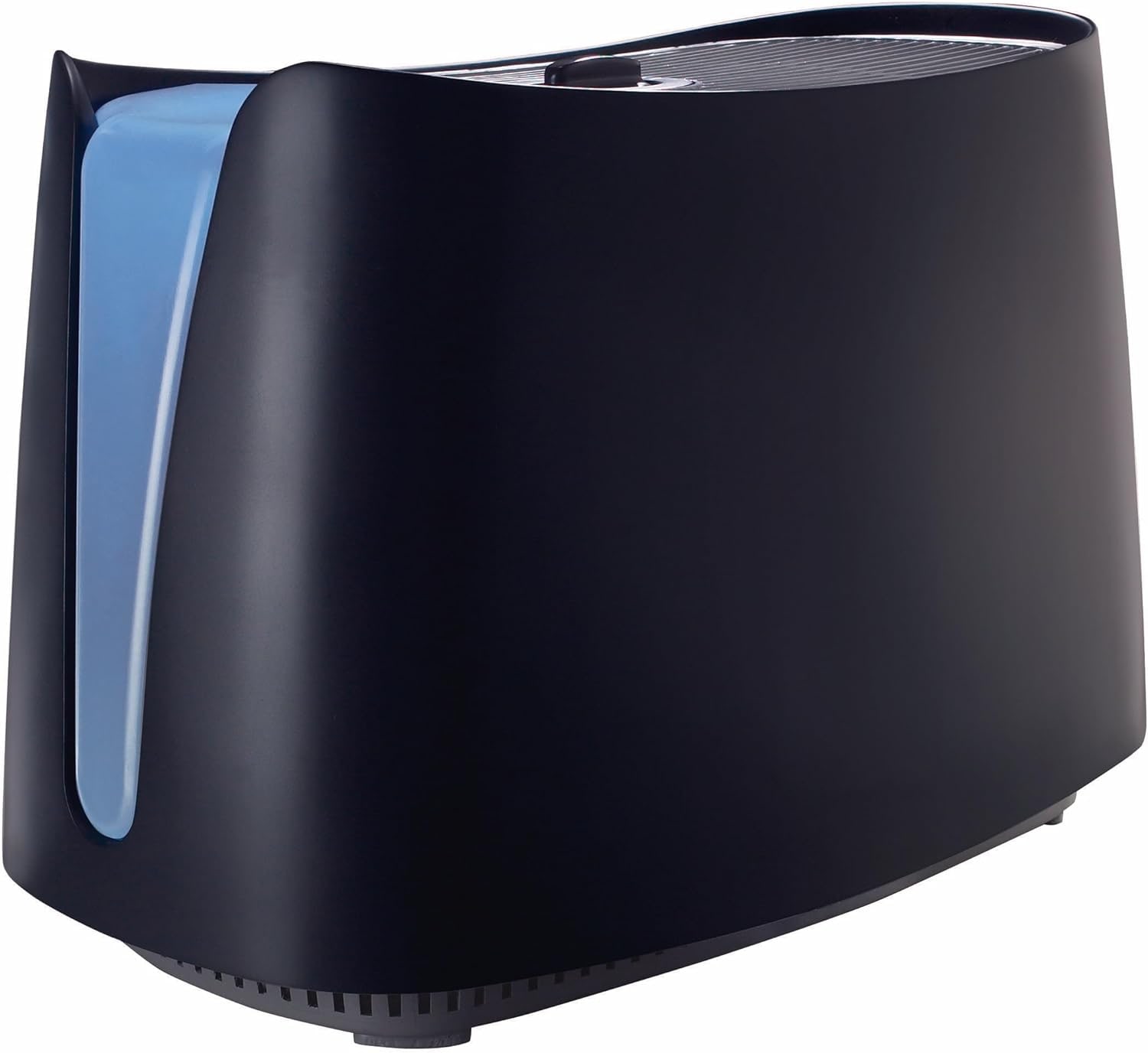
Honeywell HCM350B Cool Moisture Humidifier
Honeywell
You prefer three local fan choices and an assembly with clearly separated main pieces.
The HCM350 design offers three local fan choices and separates into a housing, tank, wick and base. The screw-cap tank involves inversion, and the wick remains a recurring handling task.
Reasons to choose it
- Three local fan selections keep ordinary adjustment uncomplicated.
- Housing, tank, wick and base separate for access.
- The fill cap and lift-out tank are easy to identify in the demonstration.
Tradeoffs to know
- Refilling involves turning the tank and handling a screw cap.
- A wick is part of the recurring routine.
- The detailed source demonstrates HCM350 architecture rather than proving the exact B retail revision.
Think twice if: You want remote settings or dislike an inverted screw-cap refill and recurring wick handling.
Further reading
Ratings
Editorial score 7.7
Filling and handling7
The HCM350-family demonstration shows a removable tank with a screw cap and a refill sequence that changes the tank's orientation. The arrangement is easy to follow, but it asks you to manage both the cap and the filled tank. It is a better fit when you have a convenient sink and a surface for the separate pieces.
Controls8
Three fan selections are the main control attraction. You do not need a long list of possible programs to understand that arrangement. For a person who wants to choose a level and move on, the narrow menu can be easier to live with than repeatedly checking which mode is active.
Routine care access8
The HCM350 walkthrough takes off the tank and main housing to expose the wick and base. This separation is a useful design detail. It gives the user access to broad main pieces rather than making every task depend on reaching through the tank opening. The wick is easy to identify as a distinct part of the assembly.
Sources & further reading
youtube.com review
youtube.com review
manuals.plus product information
youtube.com review
youtube.com review
youtube.com product information
youtube.com review
youtube.com review
youtube.com review
User reports at api.okendo.io
youtube.com review
User reports at goalstogetglowing.com
Keep reading
Something changed? Help us keep this useful.
Send a correction →