
The recommendation
The 400S suits a permanent shared-room location when scheduling and a visible interface matter. Its size and changes in sound are the checks that should decide whether it belongs in your home.
Grades at a glance
| Product | Overall | Living with it | Controls and feedback | Upkeep and ownership |
|---|---|---|---|---|
| Coway Airmega 400S | 7.3 | 7.0 | 8.0 | 7.0 |
Does it fit your life?
A purifier to give a permanent place
Give the Airmega 400S a place you are happy to look at every day. A 400S owner with units in the kitchen and living room likes the appearance, interface and prefilters, while comparing the machines to small fridges. The comparison is about their presence in the room, and it captures this model’s central buying condition: the controls must appeal enough to make a conspicuous appliance welcome.
Imagine the machine in the view you see most often, not only in an empty corner while shopping online. Would you be happy seeing it beside the furniture you use every day? Can it stay where you want it without becoming something you repeatedly move out of the way? The owner’s favorable interface experience gives a reason to consider the 400S, but the same account makes clear that it will be noticed. It is a better candidate for someone who accepts a visible appliance than for someone hoping to forget a purifier is in the room.
Controls you will use every day
The kitchen and living-room owner’s praise for the interface matters because this is something you interact with repeatedly. A purifier can have many options and still be irritating if ordinary adjustments feel awkward. Here, at least one owner specifically likes using the 400S interface, while also acknowledging the machine’s appearance.
That is a personal preference, not proof that every buyer will find it intuitive. Before choosing, decide what you want to know at a glance and which adjustments you expect to make. If you mainly want to leave a schedule in place, the interface may matter most during setup and occasional changes. If you expect to adjust speed through the day, everyday access matters more. The strongest reason to consider this model is that its particular interaction appeals to you. A favorable account is a useful starting point for that decision, rather than a substitute for checking the controls you will rely on.
Scheduling has a clear everyday role
A 400S owner who likes its schedules also wishes the air-quality display offered more information. The complaint is specific: it gives broad categories rather than numerical levels. That combination helps clarify the choice. A timetable may be enough if you want predictable operation through the week, but a buyer who wants to inspect a number on the purifier could find the feedback frustrating even while appreciating the schedule.
Write down the schedule you would use and who would need to change it. A timetable that reflects a real workday or household habit has a clearer purpose than one set only because the feature exists. Consider what happens on days when the routine changes too. The account supports a useful scheduling workflow, but it does not establish that every household will find the same controls sufficient. For the 400S, buying around a simple, named use is more persuasive than assuming the connected features will become useful once the appliance arrives.
The sound of an automatic change
An owner with 400S units describes the automatic fan changes as distinct steps that grab attention. This is a different concern from asking only how loud a fan is at one setting. Someone can tolerate a steady background sound while repeatedly noticing a change that breaks the room’s rhythm.
We do not have a measured sound comparison here. The account also mentions a different Blueair variant, so it cannot establish how the 311i Max in this guide behaves. For your decision, focus on the 400S observation itself. If you will use automatic mode while working, reading or watching television, try the machine during those activities and notice how you react when its sound changes. A stable manual routine may be preferable for some people, but choose that deliberately rather than discovering you dislike the automatic behavior after building your purchase around it. The useful question is whether its transitions fit your room.
Using a separate monitor
Another 400S owner describes using an AirGradient monitor to guide daily speed choices. That gives the purifier a different role from the scheduling account: the owner uses information from a separate device when deciding how to run it. It is an example for someone who already likes checking an external display.
This does not show that the monitor and purifier agree numerically or establish a measured removal result. It also does not mean you need to buy another device to consider the 400S. Ask whether this kind of involvement would make you more comfortable or simply add another thing to watch. If you already use a monitor, the account is relevant to the way you might work. If your aim is to stop thinking about the appliance, the schedule may be the more useful feature to assess. Both routines are plausible; the better one is the one you will actually maintain.
Broad feedback can be enough or too little
The owner who values scheduling is dissatisfied with the amount of information in the air-quality feedback. Broad categories can be convenient when you want a quick prompt, but they cannot answer every question someone might bring to a display. Decide whether your interest is simply noticing a change or following numerical detail.
That distinction matters because a satisfying display is partly about expectation. If you buy hoping to inspect a number whenever cooking or another activity occurs, a broad category may feel limiting even when the purifier follows the routine you set. If you prefer a glance and an occasional speed change, the same simplicity may suit you. We do not use the account to assess sensor accuracy. It tells us about the information one owner sees and how that fits a scheduling workflow. Choose with that level of feedback in mind, and avoid reading a favorable category as proof that every part of the room has reached a particular condition.
Prefilters and consumable planning
The owner with kitchen and living-room units is positive about the 400S prefilters. For someone who plans to keep the machines in regular use, that is encouraging, though the account gives little detail about the work involved. Before buying, look at the exact-model upkeep instructions and decide where you would carry out the recurring tasks. Keep the replacement-filter purchase separate in your budget: a pleasant control routine and a favorable prefilter comment do not establish the ongoing bill.
Before ordering, find the replacement parts for the exact 400S listing you are considering and check the present total. Include the next consumable purchase in your budget rather than comparing only appliance prices. Keep the model details and instructions somewhere you can find them later, particularly if someone else in the household may handle upkeep. The right conclusion here is modest: there is a favorable prefilter experience, while long-term upkeep costs remain open. That supports a reasonable ownership expectation with a check still to do, rather than a claim that this is the lowest-effort or cheapest purifier to maintain.
Why the overall grade is 7.3 out of 10
The 400S receives 7.3 out of 10 overall. Living with it is 7, controls and feedback 8, and upkeep and ownership 7. These grades describe everyday strengths and compromises; they are not laboratory performance scores or estimates of owner satisfaction.
The control judgment recognizes useful scheduling, a liked interface and a separate-monitor workflow. Living with it is more conditional because the machine is visually conspicuous in one home and its automatic speed changes draw attention in another. Upkeep has a favorable prefilter account but less detailed maintenance history than would justify a stronger conclusion. Read that combination as a specific kind of recommendation: the 400S can make sense when you want its interface and routines enough to accommodate its presence. If you want an appliance that disappears into the background, the size and sound-transition accounts deserve more influence than the overall number. A close score should never outweigh a room-fit issue you already know matters to you.
Compare the 400S with Blueair and Levoit
The Blueair 311i Max is worth considering if your scheduling wish is a different timetable for weekdays and weekends. An owner describes that exact pattern and Homebridge integration. Its separate shutoff and replacement histories keep the ownership decision mixed. We cannot infer that it has smoother fan behavior from the 400S account, which discusses another Blueair variant.
The Core 600S offers another connected route, with an external-monitor and Alexa account and a specific cooking-response example. It also has a report of a high-pitched whine at one speed. These are useful comparisons because they show different ways a purifier might enter your day. Choose the 400S when its own scheduling and interface appeal, you have a place you are happy to see it and its automatic transitions do not bother you. Choose another routine if you would otherwise spend your time working around the appliance. The names and the overall grades matter less than that daily fit.
Make the first week answer the open questions
Begin with the location you intend to keep, rather than repeatedly moving the 400S to find somewhere it is less noticeable. Live with the view from your normal seats. Try the timetable you actually want, and listen while automatic mode changes during the activities you care about. If you plan to use a separate monitor, test that decision routine too, without turning every changing display into a reason to intervene.
Keep it if these pieces make an ordinary day easier: the interface makes sense, the schedule has a purpose and the sound changes are acceptable. Reconsider if the visual presence or transitions become a recurring irritation. Then confirm that the replacement-filter plan still feels reasonable alongside the purchase. The 400S is a considered choice for a permanent role in a room. It is less persuasive when the plan depends on hiding it, ignoring a sound you already dislike or assuming filter economics that you have not checked.
Decide how much attention you want to give it
Choose how involved you want to be before adding an external monitor to the purchase. The AirGradient owner already has a reason to consult another display and use that information when choosing speed. If you enjoy that approach, it is a relevant example. If your aim is to make fewer adjustments, copying the setup could give you another device to watch without solving a problem you actually have.
Try writing down one ordinary day: when would the schedule run, when would you override it and what information would prompt the change? A short answer is often enough to reveal whether the 400S suits you. A schedule may handle most of the routine; a separate monitor may be useful to someone who wants more involvement. Neither choice removes the other buying conditions. You still need a location you accept visually and automatic fan transitions you can live with. The 400S makes sense when those pieces fit together, rather than when another accessory is needed to justify the original purchase.
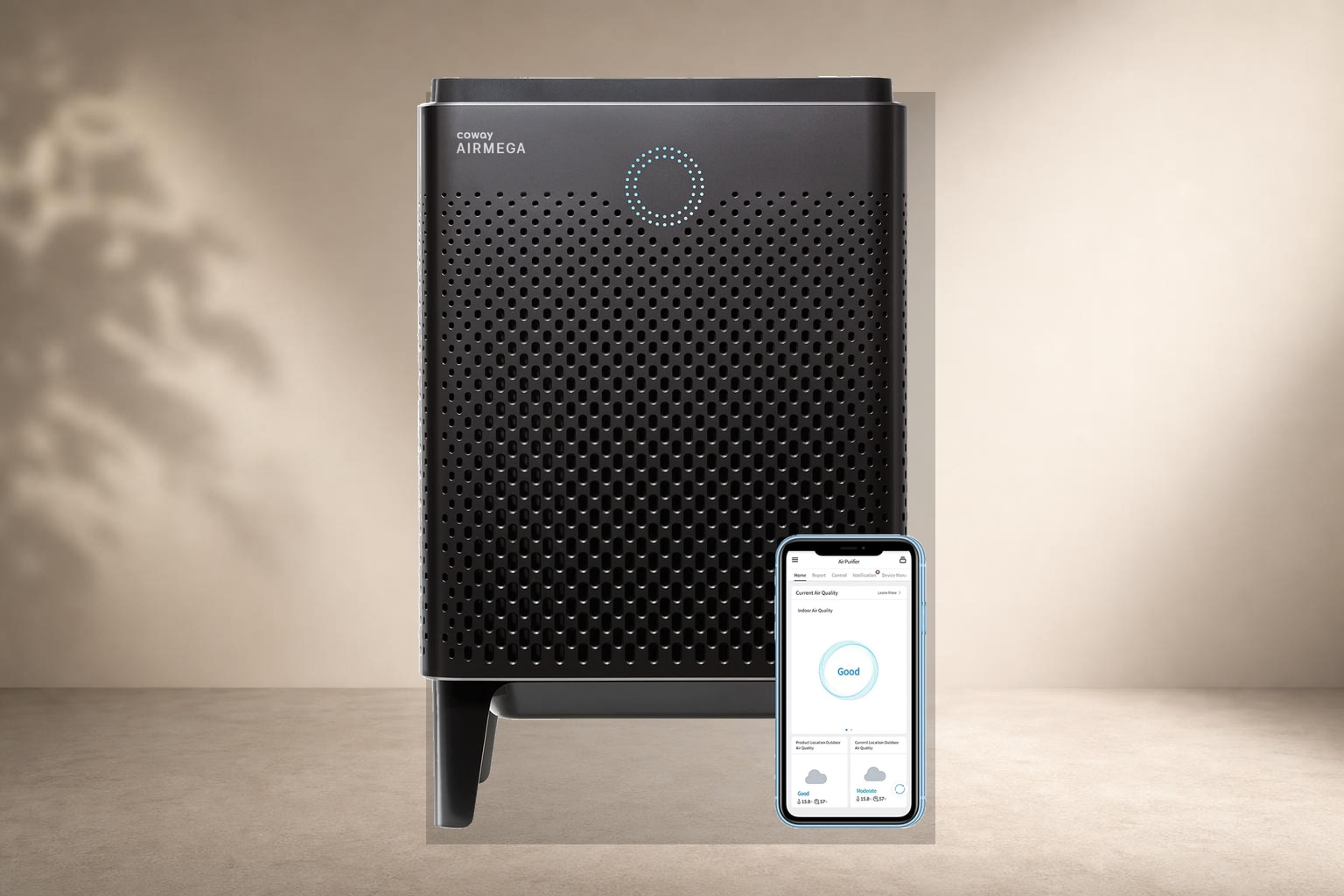
Coway Airmega 400S
Coway
A buyer who has a permanent visible location and values scheduling or a separate-monitor routine.
The Airmega 400S is a candidate for a permanent place in a kitchen or living area, especially if you value scheduling and an interface you can glance at. One owner likes the interface and prefilters but compares the appliance’s visual presence to a small fridge. Another describes using a separate AirGradient monitor to guide speed choices.
The important sound issue is change as much as loudness. An owner of 400S units finds the automatic speed steps attention-grabbing. A separate owner likes scheduling but wishes the broad air-quality categories provided numerical detail. Scheduling is the attraction; space, the level of detail shown and changes in background sound are the compromises to consider.
The takeaway
Buy the 400S when its interface and scheduling justify giving it a permanent place, and its changes in sound do not distract you.
Reasons to choose it
- One kitchen and living-room owner likes the interface and prefilters.
- Scheduling is useful in a separate owner’s routine.
- Another owner uses an external monitor to guide speed selection.
Tradeoffs to know
- One owner describes a small-fridge visual presence.
- An owner finds the stepped automatic speed changes noticeable.
- Check present replacement-filter costs before deciding on the ownership budget.
Think twice if: You want the purifier to disappear visually or find distinct automatic fan-speed changes distracting.
Further reading
Ratings
Editorial score 7.3
Living with it7
Useful kitchen and living-room use is balanced by considerable visual presence and noticeable automatic speed steps.
Controls and feedback8
An owner values scheduling but wants more informative feedback; another finds the automatic speed steps noticeable.
Upkeep and ownership7
A positive prefilter account helps, but detailed maintenance and current consumable costs remain limited.
Sources & further reading
User reports at Reddit
User reports at Reddit
User reports at Reddit
User reports at Reddit
User reports at Reddit
User reports at Reddit
User reports at Reddit
User reports at Reddit
User reports at Reddit
User reports at Reddit
Keep reading
Something changed? Help us keep this useful.
Send a correction →