
The recommendation
Choose the 3882 for deliberate dry pickup before mopping, and keep disposal, washing and drying in the plan.
Grades at a glance
| Product | Overall | Steering, carry and placement | Controls and mode selection | Tank, roller and post-use care |
|---|---|---|---|---|
| BISSELL CrossWave OmniForce 3882 | 8.4 | 9.0 | 9.0 | 7.0 |
Does it fit your life?
The useful distinction is the order of work
The BISSELL CrossWave OmniForce 3882 makes the most sense when you already like to collect dry debris before mopping. That order is essential to its appeal: start with a dry roller and interior, do the dry pickup, then move to wet cleaning. Switching water off after mopping does not restore the original dry condition. Its 8.4/10 overall usability grade rewards the reported easy movement and understandable controls, while accounting for the disposal, washing and drying that follow.
That makes the OmniForce a more specific purchase than a general promise of two machines in one. Picture dry crumbs on the kitchen floor before a planned mop. The separate dry routine has a clear role there. Picture deciding to vacuum dry debris immediately after a wet spill, with the roller already wet. The same convenience no longer applies in the same way, because material can stick to the wet parts. Your habits should decide whether that sequence is useful.
This review concerns the ordinary CrossWave OmniForce 3882. It does not import another OmniForce variant's features or recommend it as a whole-house carpet vacuum. The main account is a follow-up by a reviewer who says he bought the unit, explains what he missed initially and discloses affiliate commissions. His correction is more helpful to a buyer than an unqualified claim that the washer handles everything in any order.
Usability at a glance
| Everyday task | Grade out of 10 | What supports it |
|---|---|---|
| Steering, carry and placement | 9 | Easy rolling and portable movement in the demonstrated routine |
| Controls and mode selection | 9 | Separate suction and water selection, with a crossed-out water indication |
| Tank, roller and post-use care | 7 | Disposal, cleaning and drying remain; wetting the filter adds waiting |
| Overall usability | 8.4 | Direct operation with a meaningful finish afterward |
These grades describe everyday use, not stain removal, suction measurements or carpet performance. The handling grade does not establish a measured weight or make it suitable for every person to carry. The control grade recognizes that the reviewer can demonstrate the selection clearly; it does not remove the need to remember whether the roller is already wet.
For a quick comparison, the Roborock F25 GT receives 9 overall for its ordinary routine and accessible care. The corded Eureka NEW200 also receives 8.4, with a different cable-and-button workflow. The full floor-washer guide compares all six selected models.
Why the follow-up matters
In the published 3882 follow-up, the reviewer explains that his first impression treated dry vacuuming as merely picking up debris while mopping. With further use he identifies a separate dry mode and demonstrates low and high suction selection before enabling water. That changes the practical interpretation of the machine. It gives the dry portion of a planned routine its own place rather than making wet cleaning unavoidable.
The same account repeatedly returns to the limitation: do the dry part before the mop roller and interior get wet. Later, after mopping, the reviewer points out that material can adhere to those wet surfaces. This is a useful correction from the same experience, not a second independent owner endorsement. It also puts a sensible boundary around his enthusiasm for the machine.
The reviewer says he bought the machine and discloses affiliate commissions. His follow-up is especially useful because it changes the purchase advice: the separate dry selection deserves attention, but so does the order in which you use it. Treat the video as one person's evolving experience. It gives a concrete view of the controls and cleanup, while leaving you to decide whether a dry-first routine matches the jobs you would actually use this machine for.
The controls separate suction choice from water
The demonstrated interface uses a crossed-out water indication for the dry routine. The reviewer moves between low and high suction, then enables water separately when he wants to mop. Those visible distinctions are the reason for the strong control grade. They help answer an ordinary question before a pass: am I doing the dry stage, or have I enabled the wet stage?
The useful habit is to make that choice before starting the relevant task. If several people share the washer, they need to understand the condition of the roller as well as the selected indication. A dry indication describes water selection; it does not tell you that a previously wet roller has become clean and dry. That difference is especially important when one person mops and another immediately wants to use the cleaner for crumbs.
Before buying, think about how you will know whether the cleaner is ready for the job you have in mind. If you alone use it, remembering the last session may be straightforward. If it is shared, someone else may have just finished mopping. The crossed-out water indication helps explain the selected action, but the condition of the roller is a separate question. Check the supplied 3882 instructions for the operating and care steps that apply to your unit.
Movement looks manageable in the shown use
The same reviewer describes easy rolling during the routine and calls the machine portable. Those observations support a 9 handling grade for the use actually shown. They suggest a cleaner that is approachable for moving around a local task rather than something whose selection is attractive only while it stays on a base. We do not turn the description into an exact lifting measurement.
For your own home, separate rolling from carrying. If the machine will live beside the kitchen, the important transition may be moving around the table and returning to the base. If it will live on another level, the carrying question is much larger. A reviewer finding it portable cannot answer whether the handle, mass or balance will suit your particular reach and strength.
Include the return trip when considering where to store the OmniForce. After a wet job you will need somewhere to dispose of the contents, clean the relevant parts and let them dry as instructed. A base close to the floor you clean may make fetching the machine convenient, yet leave a long trip for the dirty tank. Compare both routes. The easier arrangement is the one you are willing to use after a small job as well as a larger session.
Dry pickup has a clear place, but a limited one
The dry-first routine is most attractive when you already prefer to remove dry material before washing a floor. It lets the two stages happen in an intentional order. The reviewer demonstrates dry collection and then wet use, with the control change making the transition explicit. That is enough to support the workflow recommendation without promising a cleaning outcome for every material.
The account also warns against treating the machine as a complete household vacuum replacement. After trying thicker carpet again, the reviewer limits that idea. We retain that boundary. A useful local dry routine before mopping does not establish deep-carpet capability, whole-house coverage or suitability for every rug. Decide what work your existing dry vacuum still needs to do before assuming the purchase makes it redundant.
If your usual mess is already wet, the separate dry stage may not be the reason to choose the OmniForce. Compare the care and handling routine with the GT instead. If your usual task is dry material followed by a planned mop, this distinction may matter more than a large screen. A feature is valuable when it matches the sequence you will actually follow, not simply because it appears on the box.
The dirty contents still need your attention
After the demonstrated dock cycle, the reviewer opens the dirty collection area and deals with the contents manually. Larger solids need disposal, parts need cleaning, and drying remains part of the finish. The dock therefore helps with a stage of care rather than replacing the entire task. This is why the care grade is 7 rather than matching the stronger handling and control grades.
A particularly relevant detail is the filter. The reviewer notes that a filter which gets wet needs drying. That can affect the next use, especially if you are expecting to return immediately to a clean dry-pickup routine. We do not prescribe his exact washing method or a fixed waiting time as a model instruction; the supported point is that wet components introduce a care and drying obligation.
Before buying, choose a place where you can handle dirty parts without balancing them awkwardly. Think about the disposal stage separately from the rinse stage, and about where the appropriate parts can finish drying under the supplied instructions. If you dislike that whole activity, a self-clean button will not erase the objection. The OmniForce is convenient only if you are willing to finish its work.
A realistic kitchen routine
Picture an evening when the kitchen needs dry crumbs collected and then a mop. This is the strongest reason to consider the OmniForce: the demonstrated selections fit that deliberate sequence. Before ordering, decide whether you normally tackle the whole area in those two stages or move back and forth between dry and wet jobs. The first pattern gives the dry-first feature a clear purpose. The second makes the roller's condition a more frequent consideration, even when water selection is easy to understand.
Now consider the next person reaching for it after mopping has finished. They may see the water selection switched off, yet the roller and interior can still be wet. This is where a shared understanding matters more than memorizing a button. If the household tends to hand machines from person to person without discussing their condition, the dry-first advantage may require more attention than expected.
There is no need to turn that into an elaborate household rule. Simply be honest about whether you will remember the sequence and complete the care routine. If you routinely leave a wet cleaner untouched until the next day, the proposed convenience is unlikely to feel as smooth as it does in a staged demonstration. Choose the workflow you can maintain on a busy evening.
OmniForce versus Roborock F25 GT
The GT review is the best alternative to read if your main complaint is post-use access. A purchased GT reviewer describes balanced movement and an uncomplicated mop compartment; a narrower household demonstration shows tank opening, dumping and rinsing. The purchased report discloses affiliate commissions, while funding is not stated in the second demonstration. Those accounts support accessible care without a no-maintenance guarantee.
GT controls are explained through official GT manuals: separate Power, Switch Mode and Self-Clean functions, with ECO/MAX selection and state-dependent care. That is documentation, not a hands-on label or button-position inspection. It gives the GT a direct ordinary control story, but it does not establish the specific dry-first flexibility demonstrated for the OmniForce.
Choose the BISSELL when its staged dry-then-wet routine answers a recurring need. Choose the GT when the described care access is the stronger attraction and you do not need that particular sequence. Neither comparison proves better cleaning, stronger suction or less work for every mess. They point to different reasons you might fetch one cleaner more readily than the other.
The other comparisons worth making
The Eureka NEW200 shares a strong control grade through a direct corded demonstration: a hard-floor selection, blue mopping button and separate self-clean start. Its presenter approached Eureka to make the video, and payment or free-unit status is not stated. The spoken model number is absent, so application remains limited to the matching corded routine. Its cable and drying parts create a different set of decisions from the BISSELL's dry-first sequence.
The Tineco S9 Artist Steam is worth reading if prompts matter. An affiliate-disclosed hands-on report describes a drying countdown and animated tank guidance, alongside carry weight and historical repeat-drying burden. The Dreame H15 Pro Heat similarly has explicit controls, but its Heat-specific account describes bulk, limited head-following and care checks. Neither is recommended here on thermal or cleaning outcomes.
The Shark AW261 offers a simpler operating selection in its purchased, affiliate-disclosed setup account. That one historical session also shows an unexpected tank-empty indication. We retain it as an initial-use event, not a recurring defect. Read these alternatives to choose the inconvenience you can accept, rather than expecting one machine to lead every category.
Buying verdict
Buy the OmniForce 3882 for a routine you understand in advance: dry pickup first, wet cleaning afterward, then disposal, cleaning and drying. Its 8.4 usability grade makes sense when those steps fit your habits. Avoid choosing it solely because you expect a wet roller to become a clean dry-vac roller as soon as you switch off water, or because you hope to retire a whole-house carpet vacuum.
Verify 3882 on the listing and check the current contents if a pictured accessory matters. This review covers the ordinary OmniForce, with no transfer of Edge-variant features. It was updated October 16, 2026 from published material, without a fresh price or stock check or our own laboratory testing. Once the model is confirmed, put the care routine ahead of the bundle: an extra accessory cannot decide whether you will enjoy emptying, washing and drying the parts after use.
Choose it if dry-then-wet already describes the way you want to work. The easy rolling and separate selections in the follow-up make that recommendation concrete. If you mainly want a cleaner for jobs that begin wet, or if someone will regularly reach for it immediately after another person has mopped, compare the GT's access-focused routine before deciding. The OmniForce's best feature is most useful when the household understands the starting condition and is willing to restore it through appropriate care.
BISSELL CrossWave OmniForce 3882
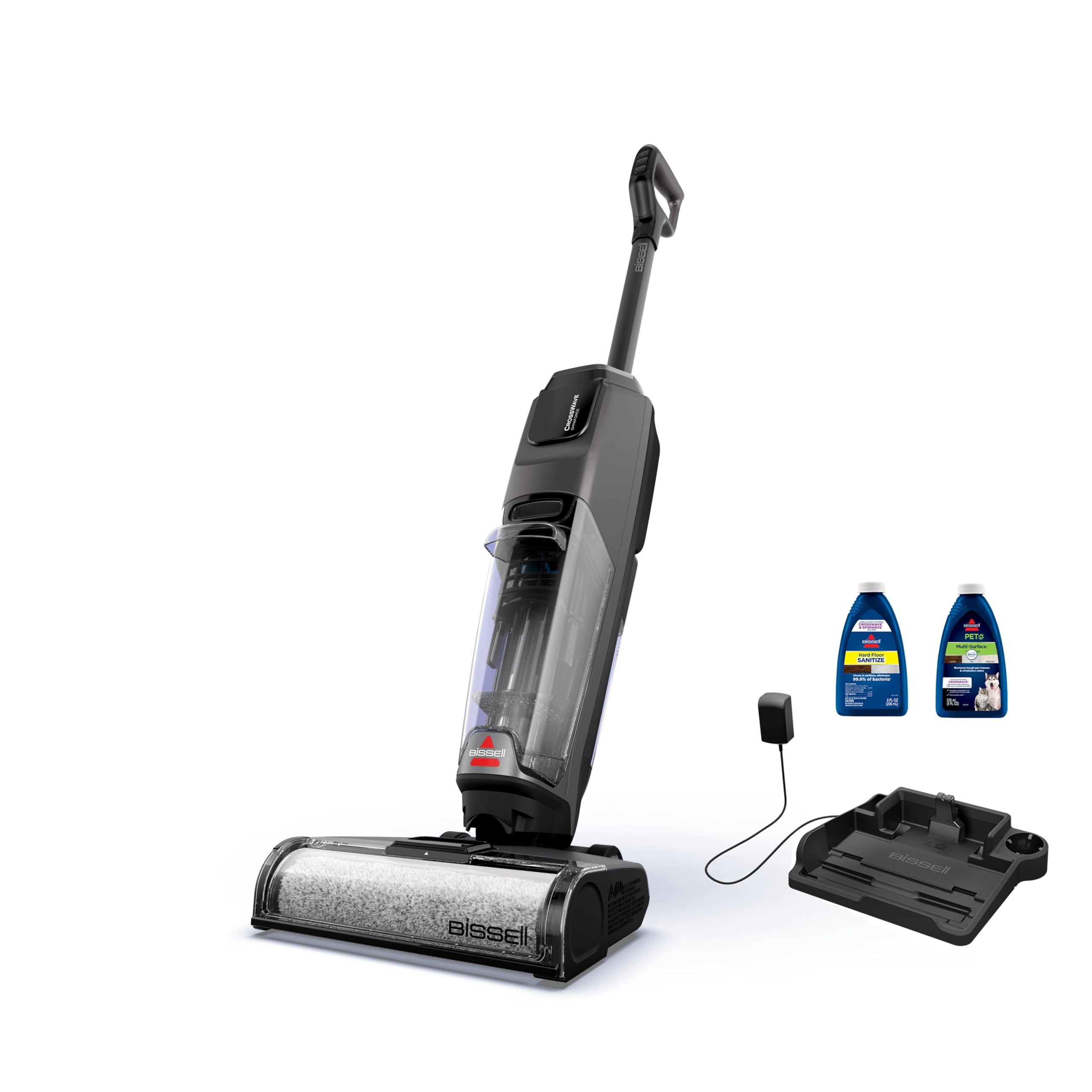
BISSELL
Buyers who want dry pickup before starting a wet-cleaning routine.
A purchased follow-up demonstrates separate dry selection before wet use, easy rolling and a manual cleanup routine afterward.
Reasons to choose it
- Separate suction and water selection in the demonstrated routine.
- Crossed-out water indication clarifies the dry stage.
- Easy rolling and portable movement described by the reviewer.
Tradeoffs to know
- Dry pickup is best planned before wetting the roller and interior.
- Solids disposal, cleaning and drying remain after dock care.
- A wet filter adds drying work before reuse.
Think twice if: You want a wet roller to become a clean dry-vac roller immediately or to replace a whole-house carpet vacuum.
Further reading
Ratings
Editorial score 8.4
Steering, carry and placement9
The purchased, affiliate-disclosed 3882 follow-up describes easy rolling and portable movement in the shown routine. This does not establish a measured lifting effort.
Controls and mode selection9
The follow-up shows low/high suction selection, separate water-on selection and a crossed-out water indication. Dry pickup belongs before wetting the roller; switching water off later does not recreate a clean dry starting condition.
Tank, roller and post-use care7
Collected solids need disposal and parts need cleaning and drying after dock care. The reviewer notes that a filter which gets wet needs drying, adding follow-through before reuse.
Sources & further reading
youtube.com review
youtube.com review
youtube.com review
cdn.awsusor0.fds.api.mi-img.com product information
cdn.awsusor0.fds.api.mi-img.com product information
youtube.com review
youtube.com review
youtube.com review
youtube.com review
youtube.com review
Keep reading
Something changed? Help us keep this useful.
Send a correction →